


Introduction:
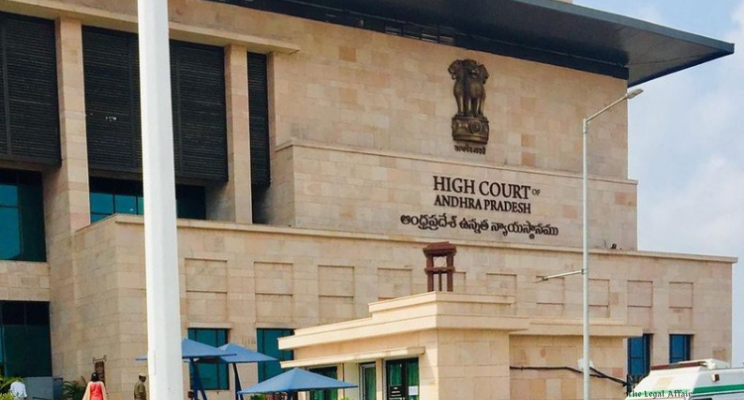
In a landmark judgment delivered in Sri Potti Sriramulu Upper Primary SPSUP School vs The State Of AP & Ors. (W.P.No.7036 of 2025 & batch), the Andhra Pradesh High Court has struck down the State’s attempt to reintroduce a computer-based system for the selection and appointment of teachers in grant-in-aid schools through an executive instruction, observing that such a move lacked the requisite statutory backing. Justice Gannamaneni Ramakrishna Prasad presided over the matter and ruled that in the absence of a legislative or subordinate legislative framework, the executive could not enforce a Computer-Based Test (CBT) system either directly or indirectly. The decision follows a contentious legal journey, beginning with the 2018 amendment to Rule 12 of the Andhra Pradesh Educational Institutions (Establishment, Recognition, Administration and Control of Schools in Private Management) Rules, 1993, which originally introduced CBT through G.O. M.s. No. 43. This government order was subsequently quashed in 2019 by a Division Bench of the High Court. The petitioners in the present writ petition contended that the District Educational Officer, Guntur (Respondent No. 4), had sought to indirectly resurrect this quashed G.O. by issuing proceedings that enforced the same computer-based recruitment mechanism under a different guise. On the other hand, the State argued that the previous judgment had not invalidated the concept of CBT per se and that executive authorities were free to adopt technology-enabled procedures that would ensure transparency. The High Court disagreed with the State’s interpretation, finding that the new proceedings were a mirror image of the earlier invalidated system and thus could not be enforced without express statutory amendments to Rules 12 and 13 of the 1993 Rules. The Court ruled in favour of the petitioners, setting aside the impugned proceedings and directing the State to proceed with teacher recruitment in strict compliance with the existing rules within three weeks, given the urgency arising from the reopening of schools after the summer break.
Arguments by the Petitioners:
The petitioners, who included multiple schools and affected stakeholders, challenged the proceedings initiated by Respondent No. 4 that introduced a computer-based method for selection and appointment of teachers. Their contention primarily revolved around the claim that this new method was a thinly veiled attempt to revive G.O. M.s. No. 43, S.E. (PS) Dept., dated 09.08.2018, which had been expressly struck down by a Division Bench of the same High Court in a previous judgment dated 16.04.2019. According to the petitioners, the amendment introduced by G.O. M.s. No. 43 to Rule 12 of the 1993 Rules had originally replaced the written examination-cum-interview model with a purely computer-based examination. After the Division Bench invalidated that amendment and revived the original Rule 12, the current attempt by the authorities to again impose CBT through executive proceedings was wholly without legal sanction. The petitioners argued that this reintroduction of the quashed system through administrative action, instead of a fresh legislative amendment, was constitutionally impermissible. They emphasized the well-settled principle of law that what cannot be done directly by a State authority cannot be achieved indirectly through administrative camouflage. The petitioners further submitted that executive instructions or proceedings cannot override statutory rules, particularly when those very rules had already been restored by a binding judicial order. They insisted that until the rules were amended through proper legislative channels, the State must comply with the written examination-cum-interview model laid down in the revived Rule 12. Additionally, the petitioners argued that reintroduction of CBT not only lacked legality but also imposed an undue burden on candidates and school administrations who were not prepared or equipped for such a method, especially in rural or underdeveloped areas with limited digital infrastructure. They pleaded for immediate judicial intervention to protect the sanctity of prior court orders and uphold the rule of law.
Arguments by the Respondents:
The State, through its counsel and Respondent No. 4—the District Educational Officer, Guntur—attempted to defend the introduction of the computer-based recruitment system by arguing that the Division Bench’s 2019 judgment had not invalidated CBT as a concept. Rather, they argued, it merely struck down the G.O. that attempted to introduce CBT without appropriate procedural backing. According to the State, the core idea behind implementing CBT was to bring greater transparency, efficiency, and objectivity into the recruitment process. The respondents emphasized the growing volume of teacher recruitment applications and the need for streamlined selection methods suited to the present digital era. They contended that technological advancement must be integrated into public service appointments to ensure meritocracy and minimize human errors or subjective biases. In furtherance of this goal, the respondents claimed that the competent authority retained administrative discretion to prescribe testing modalities in the absence of express prohibition. It was submitted that the CBT method, now framed as an internal administrative measure, was well within the powers of the executive to ensure procedural efficiency. Moreover, the State took the position that introducing CBT through an administrative instruction did not amount to reintroducing the quashed G.O. since no new amendment was being made to Rule 12. Instead, it was argued that CBT was a permissible format under the broad umbrella of written tests already contemplated by Rule 12 and that interview as a second stage could still be conducted. This attempt to separate the format of CBT from the previously quashed G.O. was a key plank of the State’s defence. Finally, the respondents assured the Court that no prejudice was being caused to the candidates or institutions and that suitable accommodations would be made for those unable to access digital facilities.
Court’s Judgment and Reasoning:
The Andhra Pradesh High Court, after carefully considering the submissions from both sides and examining the legal framework, ruled decisively in favour of the petitioners. Justice Gannamaneni Ramakrishna Prasad began by emphasizing the inviolability of judicial decisions, stating that once a particular procedure or amendment has been invalidated by a Division Bench, its revival—either explicitly or in a disguised form—cannot be tolerated unless backed by proper legislative action. The Court noted that the new proceedings issued by Respondent No. 4 were in essence identical to the framework created by G.O. M.s. No. 43. The method, the reliance on CBT as the exclusive evaluation tool, and the exclusion of interviews clearly mirrored the earlier quashed policy. The Court pointed out that a reading of Rule 12 and Rule 13 of the 1993 Rules in their revived form did not authorize any executive body to implement such a drastic procedural overhaul without a legislative or subordinate legislative amendment. In powerful language, the Court reiterated the maxim that what cannot be done directly, cannot be done indirectly—a principle that safeguards against arbitrary and surreptitious governance. Justice Prasad observed that however noble the goal of transparency or digitisation may be, executive action must still comply with existing laws and procedural safeguards. If the government truly believes that CBT is a necessary innovation for teacher recruitment, the proper course would be to introduce suitable amendments to Rule 12 and Rule 13 through a legislative or delegated legislative process, rather than through unilateral administrative action. The Court acknowledged the State’s concern over growing applications and the need for digital reforms but underscored that expediency cannot override legality. Importantly, the Court also addressed the practical need for timely teacher appointments ahead of school reopening. Recognizing the urgency, it directed the State to fill the vacant posts by following the existing statutory procedure under Rules 12 and 13 and complete the entire process within three weeks. This timeline was prescribed to ensure that students’ academic needs are not hampered due to administrative confusion or legal uncertainty. Concluding its judgment, the Court invalidated the new system in its entirety and warned the State against any future attempts to reintroduce policies already struck down by constitutional courts without lawful mandate. The ruling is a significant assertion of judicial oversight over executive action and reinforces the importance of respecting procedural legitimacy in governance.