


Introduction:
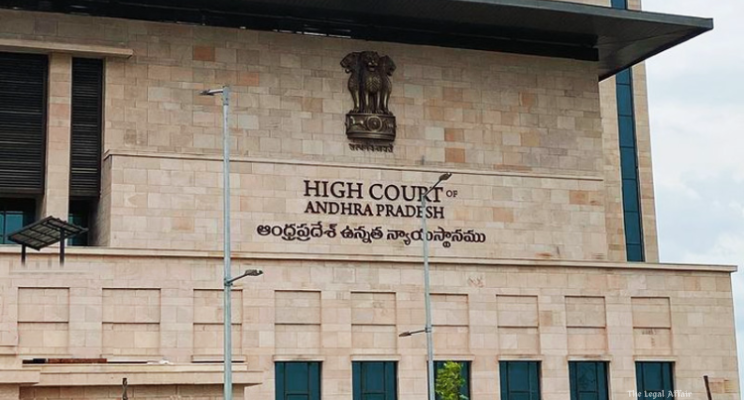
The case of Kota Venkata Narayana v. The State of Andhra Pradesh came before the Andhra Pradesh High Court, presenting a nuanced legal issue at the intersection of contractual disputes and procedural law relating to court fees. The matter was adjudicated by Justice Subba Reddy Satti, who was called upon to determine the maintainability of a single writ petition encompassing multiple contractual claims arising from distinct agreements.
The petitioner, a contractor, approached the High Court seeking directions against the State authorities for non-release of an amount totaling ₹31,18,844/-, allegedly due in respect of 19 drainage works assigned by a Gram Panchayat in the year 2024. Each of these works was governed by separate agreements, thereby giving rise to distinct causes of action. However, instead of filing separate writ petitions, the petitioner chose to file a single writ petition consolidating all claims and paid a nominal court fee of ₹100/-.
This procedural choice gave rise to critical legal questions, including whether such a consolidated writ petition was maintainable, whether the court fee paid was adequate, and how Section 6(3) of the Andhra Pradesh Court-Fees and Suit Valuation Act, 1956 should be interpreted in the context of writ jurisdiction.
The Court was thus tasked with balancing procedural requirements with substantive justice, while also examining the nature and purpose of court fees within the broader framework of constitutional rights and access to justice.
Arguments by the Petitioner:
The petitioner, Kota Venkata Narayana, advanced his case by emphasizing the substantive injustice caused by the State’s failure to release the payment for the completed works. It was contended that the petitioner had duly executed 19 drainage projects as per the agreements entered into with the Gram Panchayat and that the amount claimed was legitimately due and payable.
On the issue of maintainability, the petitioner argued that although the claims arose from separate agreements, they were interconnected in nature as they involved the same parties, the same authority (Gram Panchayat), and similar subject matter. Therefore, filing a single writ petition was both practical and efficient, avoiding multiplicity of proceedings and unnecessary burden on judicial resources.
The petitioner sought to rely on the underlying rationale of Section 6(3) of the Andhra Pradesh Court-Fees and Suit Valuation Act, 1956, which permits consolidation of claims arising from multiple causes of action, subject to payment of appropriate court fees. It was argued that the provision should be interpreted liberally in the context of writ jurisdiction, where procedural technicalities should not override substantive justice.
With respect to the court fee, the petitioner contended that the amount paid was sufficient in the context of writ proceedings, which are fundamentally different from civil suits. It was submitted that court fees in writ jurisdiction should not be treated as a rigid or determinative factor, especially when the petition seeks enforcement of legal and constitutional rights.
The petitioner also argued that court fees are intended to facilitate the administration of justice and not to act as a barrier to access. In cases involving enforcement of rights, particularly under Articles 14, 19, and 300-A of the Constitution, the imposition of excessive court fees could deter litigants from approaching the courts.
Furthermore, the petitioner emphasized that the State’s action in withholding payment was arbitrary and violative of his legal rights. It was argued that the delay in releasing the amount had caused significant financial hardship and that the Court should prioritize substantive relief over procedural objections.
Arguments by the Respondents (State of Andhra Pradesh):
The State of Andhra Pradesh, representing the respondents, raised objections primarily on procedural grounds, focusing on the maintainability of the writ petition and the adequacy of the court fee paid.
At the outset, the State contended that the petitioner’s claims arose from 19 separate agreements, each constituting an independent contract with distinct terms, conditions, and obligations. Consequently, each agreement gave rise to a separate cause of action, necessitating the filing of individual writ petitions.
The respondents argued that the consolidation of multiple claims into a single writ petition was legally impermissible, as it circumvented the statutory requirement of paying court fees for each cause of action. Allowing such consolidation, it was contended, would undermine the provisions of the Andhra Pradesh Court-Fees and Suit Valuation Act, 1956.
With respect to court fees, the State argued that the petitioner had grossly underpaid the required fee by paying only ₹100/- for claims arising from 19 distinct agreements. It was submitted that Section 6(3) of the Act clearly mandates payment of aggregate court fees in cases involving multiple causes of action, and the petitioner’s failure to comply with this requirement rendered the petition defective.
The respondents also emphasized the distinction between “fee” and “tax,” arguing that court fees are a legitimate charge for the services rendered by the judicial system. They contended that the petitioner, by seeking relief from the Court, was obligated to pay the prescribed fee in accordance with the law.
Additionally, the State maintained that writ jurisdiction in contractual matters should be exercised sparingly, particularly when the dispute involves questions of fact and performance under contracts. It was argued that such disputes are better suited for adjudication in civil courts.
However, the respondents did not substantially dispute the petitioner’s claim regarding the execution of the works or the amount due, focusing instead on procedural compliance.
Court’s Judgment:
The Andhra Pradesh High Court delivered a well-reasoned judgment addressing each of the issues raised in the case, ultimately striking a balance between procedural requirements and substantive justice.
On the question of maintainability, the Court held that a single writ petition encompassing multiple causes of action is maintainable, provided that the petitioner complies with the requirement of paying aggregate court fees as envisaged under Section 6(3) of the Andhra Pradesh Court-Fees and Suit Valuation Act, 1956. The Court observed that while the normal rule would require filing separate petitions for each agreement, the law permits consolidation to avoid multiplicity of proceedings, subject to appropriate payment of fees.
The Court clarified that each agreement constituted a distinct cause of action, and therefore, the petitioner was required to treat each claim separately for the purpose of calculating court fees. The analogy of Section 6(3) was applied to writ proceedings to ensure consistency and fairness.
On the issue of court fees, the Court held that the amount paid by the petitioner was insufficient. It observed that paying ₹100/- for 19 separate agreements did not meet the statutory requirement, and the petitioner was directed to make good the deficit by paying an additional ₹1,800/-.
Importantly, the Court examined the nature of court fees and reiterated that they are not taxes but fees charged for the services rendered by the judicial system. The Court explained that a tax is a compulsory exaction of money for general public purposes, whereas a fee is a payment for a specific service or benefit.
At the same time, the Court emphasized that in matters involving enforcement of fundamental and constitutional rights, revenue generation should not be the dominant objective. The Court observed that access to justice must not be hindered by rigid insistence on court fees, particularly in writ jurisdiction.
On the substantive issue, the Court found merit in the petitioner’s claim regarding non-payment of dues. It noted that the petitioner had executed the works and was entitled to the amount claimed. Accordingly, the Court directed the State to release the sum of ₹31,18,844/- to the petitioner.
The judgment thus reflects a pragmatic approach, allowing the petitioner to pursue his claims in a single proceeding while ensuring compliance with statutory requirements relating to court fees.