


Introduction:
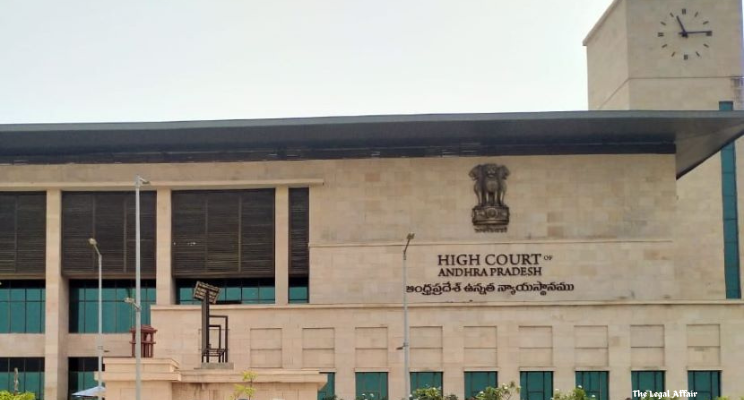
In the landmark case of Kosuri Radha vs. The State of Andhra Pradesh and Others, the Andhra Pradesh High Court addressed the contentious issue of the applicability of the Doctrine of Pleasure in the removal of nominated members from statutory bodies. The Division Bench, comprising Chief Justice Dhiraj Singh Thakur and Justice Ravi Cheemalapati, set aside the order of a Single Judge who had upheld the removal of a nominated member from the General Body of the District Livestock Development Association (DLDA), Ongole, invoking the Doctrine of Pleasure. The Court emphasized that in the absence of explicit statutory provisions granting the authority to remove such members, the Doctrine of Pleasure cannot be arbitrarily applied.
Arguments of Both Sides:
The appellant, Kosuri Radha, challenged her removal from the membership of the DLDA, Ongole, asserting that her nomination was for a fixed tenure of five years, commencing from September 4, 2023. She contended that the District Collector lacked the authority to demand her resignation, as the bye-laws governing the DLDA did not confer any power to curtail the tenure of nominated members prematurely. The appellant argued that her removal was arbitrary and devoid of legal backing, and that the Single Judge erred in invoking the Doctrine of Pleasure without considering the absence of statutory provisions permitting such removal.
On the other hand, the respondent authorities maintained that the nomination was made on political considerations and that the Doctrine of Pleasure was applicable, allowing the government to remove nominated members at its discretion. They argued that since the nomination was not under any specific statute or act, the government retained the authority to terminate the appointment without assigning reasons, especially when the removal did not carry any stigma or reflect on the appellant’s performance or character.
Judgement:
The Division Bench meticulously examined the arguments and the relevant legal provisions. The Court noted that while the bye-laws allowed for nomination by the Collector to the General Body of the DLDA, there was no specific provision authorizing the Collector to curtail the tenure of such nominated members prematurely. The Court emphasized that the Doctrine of Pleasure, as enshrined in Article 310 of the Constitution, primarily applies to civil posts under the Union or the State and cannot be extended indiscriminately to appointments made under the aegis of a society governed by its own bye-laws, especially where there exists no express authority to remove a nominated member. The Division Bench held that the Collector’s act of seeking the resignation of the appellant was beyond the powers conferred upon him by the bye-laws of the DLDA, and therefore, the invocation of the Doctrine of Pleasure in such a scenario was legally unsustainable.
In arriving at its decision, the Court drew a critical distinction between statutory and non-statutory appointments. It emphasized that unless a statute or the bye-laws explicitly provide for the termination of a nominated member’s tenure at the pleasure of the appointing authority, the Doctrine of Pleasure cannot be presumed to apply. Citing the Supreme Court’s ruling in Om Narain Agarwal and others v. Nagar Palika Shahjahanpur and others [(1993) 2 SCC 242], the Court noted that in cases where appointments were made on political considerations, the termination could be justified only if such power was authorized by law. In the present case, neither the relevant statute nor the bye-laws of the DLDA granted any such power to the Collector or the State Government. Therefore, the High Court ruled that the reliance on precedents involving clear statutory backing for removal was misplaced.
The Court further explained that political considerations, though often influential in nominations to public bodies, cannot alone be a basis to justify removal unless explicitly recognized by the governing rules or statute. The Single Judge’s reasoning that the absence of any stigma in the removal process negated the necessity of following principles of natural justice was also found to be flawed. The Division Bench reiterated that even if the removal was not punitive in nature, it must still adhere to the framework of law and due process, especially when a fixed tenure of office is involved.
Highlighting the importance of legal sanctity and procedural propriety, the Court criticized the government’s directive asking for the appellant’s resignation as an overreach. It held that any action affecting a citizen’s civil rights, including the right to hold a public or quasi-public office, must be rooted in lawful authority. In the absence of any express or implied power in the governing bye-laws allowing for the termination of a nominated member’s term, the government’s directive could not be upheld. The fact that the nomination had political backing was irrelevant in the absence of a legal mechanism for removal.
The Court also acknowledged that changes in political regimes often lead to reshuffles in various public bodies and associations, but such administrative actions must still conform to legal standards. Arbitrary or whimsical exercises of power, cloaked under vague interpretations of the Doctrine of Pleasure, would erode the rule of law. The Division Bench, thus, not only defended the appellant’s right to serve her full term but also reaffirmed the limited scope of the Doctrine of Pleasure in non-statutory organizational frameworks.
Ultimately, the High Court allowed the writ appeal, quashing the Collector’s communication dated 15.06.2024, which sought the appellant’s resignation. The Court also set aside the Single Judge’s order dated 25.07.2024, observing that the legal foundation relied upon for upholding the removal was inapplicable in the specific facts of this case. It held that there was no statutory or legal basis for the government’s action and reinstated the appellant’s right to hold office until the end of her five-year term, barring any legally valid process to the contrary.
By reinstating the appellant and setting clear boundaries on the use of the Doctrine of Pleasure, the Andhra Pradesh High Court has provided critical jurisprudence on the limits of executive discretion in organizational governance. The judgment acts as a vital precedent in ensuring that political transitions do not result in arbitrary dismissals from public and quasi-public positions in the absence of lawful authority.