


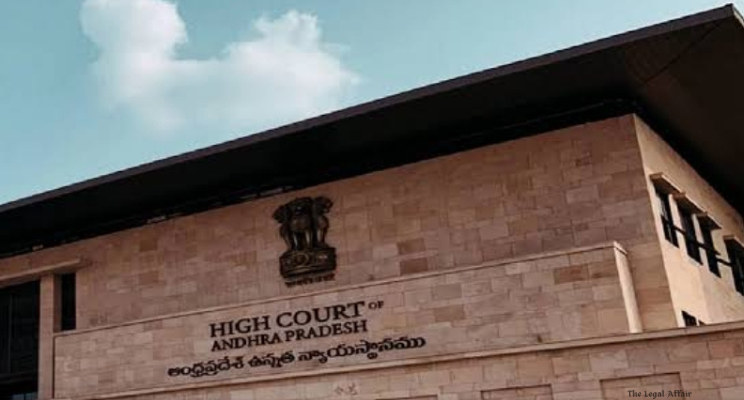
Introduction:
In the matter of Viswanathan Krishna Murthy v. State of Andhra Pradesh (Criminal Petition No. 6783 of 2022), the Andhra Pradesh High Court addressed a significant and evolving intersection of gender identity and legal rights under criminal and matrimonial law. The case revolved around the legitimacy of a criminal complaint filed by a transgender woman under Section 498A of the Indian Penal Code and Section 4 of the Dowry Prohibition Act, 1961, against her husband and in-laws. The petitioner-husband, Viswanathan Krishna Murthy, had approached the High Court seeking quashing of the complaint, challenging its very maintainability on the ground that his spouse, being a transgender woman, could not invoke Section 498A IPC, a provision that explicitly protects “women” from cruelty by the husband or his relatives. Represented by Advocate Thandava Yogesh, the petitioner contended that since the complainant is a transgender individual, she cannot fall within the statutory definition of “woman” under Section 498A IPC, thereby rendering the complaint unsustainable in law. The counsel relied heavily on the Supreme Court’s Constitution Bench decision in Supriyo @ Supriya Chakraborty & Anr. v. Union of India (2023) to argue that family law rights do not extend to same-sex or non-traditional gender identity relationships and that legislative intent has not yet evolved to provide such recognition.
Arguments:
The complainant-wife, who identifies as a transgender woman and has undergone the necessary medical evaluation to that effect, argued through her version of facts that she was married to the petitioner in accordance with Hindu rites and customs, and that the petitioner was well aware of her gender identity at the time of marriage. She alleged that her family had paid a dowry consisting of ₹1,00,000 in cash, 25 sovereigns of gold, 500 grams of silver, and household articles worth ₹2,00,000. After a brief period of cohabitation, the petitioner allegedly abandoned her. Thereafter, she claimed to have received threatening and obscene messages from the husband’s phone and alleged that her in-laws were responsible for orchestrating these abusive acts. She filed a formal complaint under Section 498A IPC and Section 4 of the Dowry Prohibition Act before the competent authorities. The prosecution, represented by Assistant Public Prosecutor K. Priyanka Lakshmi, asserted that the allegations raised were of a serious nature and necessitated a full-fledged trial to assess the veracity of the claims and the role of each accused, opposing the plea to quash the complaint at the preliminary stage.
Justice Venkata Jyothirmai Pratapa, presiding over the matter, began the judicial analysis by addressing the larger question of whether a transgender woman who identifies and lives as a woman in a heterosexual marriage can be treated as a “woman” for the purposes of Section 498A IPC. The Court engaged with multiple layers of constitutional and statutory interpretation to arrive at a nuanced position. Firstly, the bench referred to the landmark judgment of the Supreme Court in National Legal Services Authority v. Union of India (2014) (popularly known as the NALSA judgment), which unequivocally recognised the right of transgender individuals to self-identify their gender and affirmed that such identity forms a core part of Article 14 (right to equality), Article 15 (protection against discrimination), and Article 21 (right to life and dignity) of the Constitution. The NALSA judgment laid down that gender is not to be determined solely by biological criteria but includes the psychological and social identity of the person.
Judgement:
Building upon this jurisprudential foundation, the Andhra Pradesh High Court reiterated that the right to self-perceived gender identity is a constitutionally guaranteed right and that excluding a transgender woman from the protective scope of Section 498A IPC would be discriminatory and legally impermissible. The Court noted that to deny the protection of Section 498A IPC to a trans woman in a heterosexual marital setup on the narrow ground of biological non-reproductivity is not only antithetical to the Constitution but also tantamount to perpetuating social exclusion. The judge remarked, “The argument of the learned counsel for the Petitioner that the Respondent No.2, being a trans woman, cannot be regarded as a ‘woman’ merely because she is incapable of biological reproduction, is deeply flawed and legally impermissible. Such a narrow view of womanhood with reproduction undermines the very spirit of the Constitution, which upholds dignity, identity, and equality for all individuals, irrespective of gender identity.”
Further, the bench delved into the Transgender Persons (Protection of Rights) Act, 2019, which legally upholds the right of every transgender person to self-perceive their gender identity. The Court noted that under this Act, no medical or surgical procedure is mandated for a person to identify as transgender, thus reinforcing the self-identification principle laid down in NALSA. The High Court also cited a relevant ruling by the Madras High Court wherein the term “bride” under the Hindu Marriage Act was interpreted to include transgender women, thereby legally validating such marriages. This interpretative approach was key to acknowledging the marital relationship between the complainant and the petitioner as falling within the legal ambit of protections afforded under criminal law to women in domestic setups.
Despite upholding the larger principle that a transgender woman has the legal right to invoke Section 498A IPC, the Andhra Pradesh High Court proceeded to examine the facts and evidence of the present case on merit to decide whether the complaint disclosed a prima facie offence. The bench carefully scrutinised the statements and evidence presented in the charge sheet and found that the allegations made against the husband and his family were general in nature, vague, and lacked corroborative detail or documentary support. No specific incident or date of cruelty or dowry demand was cited with clarity. The Court concluded that apart from the mere assertion of abuse and dowry harassment, no substantial material was on record to suggest the involvement of the petitioner or his relatives in any cognizable offence. Accordingly, it held that continuing criminal proceedings against the petitioner and his family would amount to an abuse of judicial process and would be unjust.
The Court thus adopted a dual-pronged approach in this landmark decision. On one hand, it firmly established that transgender women living in heterosexual marriages with men are entitled to the protection of Section 498A IPC and related matrimonial legislations. This was a bold and forward-looking affirmation of constitutional values of inclusion, dignity, and legal recognition of gender diversity. On the other hand, it equally emphasized the need to balance rights with procedural fairness and evidentiary sufficiency. Since the factual allegations in the case lacked the required legal foundation to proceed with criminal prosecution, the Court exercised its inherent powers under Section 482 CrPC to quash the proceedings. Justice Pratapa underlined that misuse of legal provisions must be curbed, regardless of the gender of the complainant, and that every allegation must stand the test of legal scrutiny.
This judgment is a landmark for LGBTQ+ jurisprudence in India, particularly in the area of matrimonial rights and criminal protection under laws designed to protect women from domestic cruelty. It addresses a crucial legal vacuum concerning the rights of transgender individuals in heterosexual marriages and extends a progressive interpretation of gender under Indian law. It also reflects the growing acknowledgment within the Indian judiciary of the lived realities of transgender persons and the need to afford them equal protection under the law. By recognising that trans women are entitled to file complaints under Section 498A IPC, the High Court has sent a strong message that gender identity cannot be a ground for exclusion from legal remedies. At the same time, it reaffirms that allegations must be backed by material evidence and that the criminal justice process cannot be weaponised without substantiation. The petition thus stood allowed only to the extent of quashing the FIR and charges, while strongly validating the complainant’s right to file such a complaint based on her gender identity.