


Introduction:
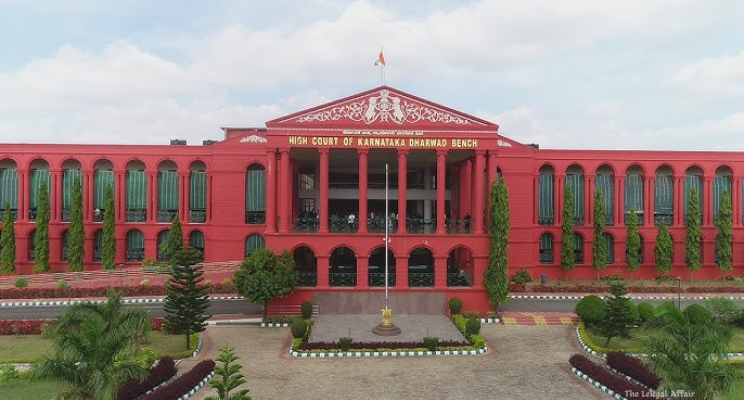
The Karnataka High Court, Dharwad Bench, while deciding a writ petition arising from a civil suit concerning title and possession over immovable property, delivered a significant ruling on the scope and interpretation of Order VI Rule 17 of the Code of Civil Procedure, 1908, particularly the proviso introduced by the 2002 amendment which imposes the due diligence requirement for amendments sought after commencement of trial, and in doing so clarified that the proviso does not create an absolute or universal bar on allowing amendments once trial has begun, especially when the nature of amendment is such that it is necessary for effective adjudication and for avoiding multiplicity of litigation, as Justice Anant Ramnath Hegde examined whether an amendment sought nearly ten years after filing of the plaint and after commencement of trial could still be allowed when it related to a subsequent event that allegedly occurred during pendency of the suit, namely dispossession of the plaintiffs from the suit property, and whether insistence on strict compliance with the due diligence test in every such case would defeat the larger purpose of civil adjudication which is to resolve all disputes comprehensively between the parties.
Arguments of the Petitioners:
The petitioners, who were plaintiffs in the original suit, had initially filed the suit seeking a declaration that a sale deed executed by the father of petitioner number one in favour of the defendants was void and liable to be cancelled, along with a permanent injunction restraining the defendants from interfering with their possession of the property, and after the evidence of the second plaintiff witness was recorded, they moved an application for amendment of the plaint seeking to incorporate an additional pleading that during the pendency of the suit they were dispossessed from the property on 29 March 2022 and consequently sought to add a prayer for recovery of possession, contending that the amendment was based on a subsequent development which directly impacted the relief to be granted and without such amendment the court would be unable to grant complete and effective relief, and they argued that Order VI Rule 17 explicitly permits amendment at any stage of proceedings and that the proviso regarding due diligence should not be interpreted so rigidly as to bar legitimate amendments arising from later events, especially when the amendment does not change the basic nature of the suit but only seeks to adapt the relief to the altered factual situation, and further submitted that their claim for possession was well within limitation under Articles 64 and 65 of the Limitation Act since the suit was still within twelve years from the alleged assertion of adverse possession by the defendants, and therefore the amendment could not be rejected merely on the ground of delay or on the basis that trial had commenced, particularly when denial of amendment would force them to initiate a separate suit and thereby multiply litigation.
Arguments of the Respondents:
The respondents opposed the amendment contending that the plaintiffs had not satisfied the statutory requirement of due diligence as mandated by the proviso to Order VI Rule 17, arguing that once trial had commenced, no amendment could be permitted unless the party established that despite exercising due diligence they could not have raised the matter earlier, and it was submitted that the plaintiffs had already led evidence and that in cross examination there was an admission that dispossession had occurred earlier than what was now being pleaded, and therefore the amendment was an attempt to contradict earlier admissions and to fill lacunae in their case, and it was further argued that the application was filed ten years after institution of the suit which clearly indicated lack of diligence and amounted to abuse of process, and that allowing such belated amendments would prejudice the defendants and prolong the litigation, thereby defeating the objective of speedy justice and finality of pleadings, and therefore the trial court was justified in rejecting the amendment application by strictly applying the due diligence test.
Court’s Judgment:
The High Court after examining the statutory framework, legislative intent, and judicial precedents held that the proviso to Order VI Rule 17 cannot be applied mechanically or with uniform rigidity to every application for amendment filed after commencement of trial and that the key consideration should be the nature of amendment sought and the surrounding circumstances, and the Court observed that prior to the 2002 amendment, Order VI Rule 17 permitted amendments at any stage of proceedings without restriction, but the proviso was introduced to curb misuse where parties were filing amendments merely to delay proceedings or to change the nature of the case after trial had commenced, and therefore the proviso was meant to regulate, not eliminate, the discretionary power of courts to permit amendments, and the Court reasoned that if Parliament intended to create two watertight compartments, one for pre trial amendments and one for post trial amendments with an inflexible bar in the latter category, it would not have retained the phrase at any stage of the proceedings in the main provision, which clearly indicates legislative intent to preserve judicial discretion even after trial begins, and the Court further held that the due diligence test does not have universal application and its relevance depends upon whether the amendment is of such nature that it could and should have been pleaded earlier or whether it arises out of subsequent developments or is necessary to clarify or perfect the existing pleadings, and in this context the Court identified several categories of amendments that may be permitted even without strict satisfaction of due diligence such as correction of typographical errors, correction of property descriptions, incorporation of subsequent events, addition of consequential or alternative reliefs, furnishing better particulars, and seeking ancillary reliefs based on existing pleadings, and applying these principles to the facts of the case, the Court held that the amendment sought by the petitioners was based on an alleged subsequent event of dispossession during pendency of the suit and was directly relevant to the relief to be granted, and denial of such amendment would compel the plaintiffs to file a fresh suit for possession, thereby leading to multiplicity of proceedings which the law seeks to avoid, and the Court further rejected the trial court’s reasoning that the application was barred merely because it was filed ten years after institution of the suit, holding that once the amendment was within limitation for seeking possession, the number of years elapsed since filing of suit was not determinative and what mattered was whether the relief itself was legally maintainable, and the Court also clarified that even if there was an admission in cross examination regarding earlier dispossession, such admission does not extinguish the statutory right of a person to seek recovery of possession within the limitation period, and that not every amendment which may dilute or contradict an earlier admission is impermissible, especially when it is necessary for deciding the real controversy between the parties, and consequently the High Court set aside the order of the trial court, allowed the amendment application subject to payment of costs of seven thousand rupees to the respondents, and reaffirmed that courts must adopt a balanced approach where procedural rules serve the cause of justice and do not become instruments of technical obstruction, while also cautioning that the proviso retains significance in cases where amendments are sought with mala fide intent or solely to delay proceedings.