


Introduction:
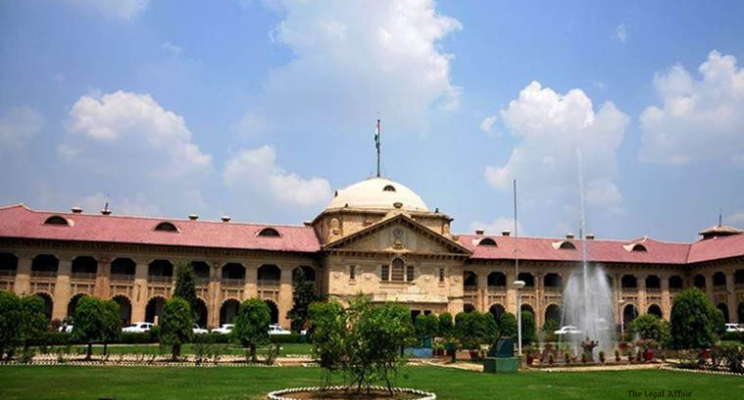
The Allahabad High Court recently refused to quash criminal proceedings against six Muslim men who allegedly carried the Tiranga, India’s National Flag, in a religious procession with Quranic verses inscribed on it. The petitioners, identified as Gulamuddin and five others, faced charges under the Prevention of Insults to National Honour Act, 1971, and the Flag Code of India, 2002. Justice Vinod Diwakar, presiding over the case, held that the petitioners’ actions could potentially incite communal discord and stressed the importance of upholding the sanctity of the Tiranga as a symbol of India’s unity and sovereignty.
Arguments by the Petitioners:
The petitioners, represented by their counsel Amarjeet Chakrawarti and Ganesh Shanker Srivastava, sought to quash the FIR filed against them under Section 2 of the Prevention of Insults to National Honour Act, 1971. They argued that the investigation did not conclusively prove that the flag in question was the Tiranga. The petitioners contended that the flag mentioned in the FIR could have been any flag with three colors, not necessarily India’s national flag. They asserted that the police had failed to provide substantial evidence indicating that the national flag was defiled or insulted as specified in Sections 2 and 3 of the 1971 Act.
The petitioners also claimed they were falsely implicated. They argued that the Tiranga was not present at the scene during the incident and that the police had planted the national flag as evidence after filing the FIR. They questioned the integrity of the investigation and asserted that they were being unfairly targeted based on their religious identity.
The defense maintained that their actions did not warrant the charges filed against them, arguing that they had no intention of disrespecting the national flag. They contended that the inscription of Quranic verses on the flag was a reflection of their religious beliefs rather than an act of insult. They urged the Court to consider the lack of concrete evidence and the possibility of communal bias influencing the investigation.
Arguments by the State:
The Additional Government Advocate (AGA), representing the state, opposed the petitioners’ request to quash the FIR. The AGA argued that the petitioners’ actions were in clear violation of the Flag Code of India, 2002, and the Prevention of Insults to National Honour Act, 1971. The state emphasized the sanctity of the Tiranga as a national symbol, stating that any act of disrespect towards it could have serious social and cultural implications in a diverse country like India.
The AGA provided evidence supporting the charges, including statements from police witnesses, such as Constable Khursheed Alam, Eshanullah, and Ramdas, indicating that the petitioners were indeed carrying the Tiranga with Arabic text inscribed on it during the religious procession. The state argued that the inscription of Quranic verses on the national flag was a clear violation of the Flag Code and an act of disrespect towards the Tiranga.
The AGA further argued that the petitioners’ actions could be exploited by individuals or groups seeking to create communal discord. The state stressed that such incidents could lead to misunderstandings and conflicts between different communities, undermining the nation’s unity and integrity. The AGA urged the Court to allow the criminal proceedings to continue, arguing that the petitioners’ actions posed a potential threat to communal harmony.
Court’s Judgment:
Justice Vinod Diwakar, after carefully considering the arguments presented by both sides, refused to quash the criminal proceedings against the petitioners. The Court held that the allegations were serious and warranted further investigation by the trial court. Justice Diwakar emphasized that the Tiranga is a symbol of India’s unity and diversity, transcending religious, ethnic, and cultural differences. The Court noted that any act of disrespect towards the national flag could have far-reaching social and cultural implications, particularly in a diverse society like India.
The Court rejected the petitioners’ argument that the flag mentioned in the FIR could have been any flag with three colors. Justice Diwakar pointed out that police witnesses had clearly identified the flag as the Tiranga, with Arabic text inscribed on it. The Court found that the inscription of Quranic verses on the national flag violated the Flag Code of India, 2002, and Section 2 of the Prevention of Insults to National Honour Act, 1971. The Court stated that the petitioners’ actions, as described in the FIR, constituted an act of disrespect towards the Tiranga and could not be dismissed lightly.
Justice Diwakar also addressed the petitioners’ claim that the police had planted the national flag as evidence after the FIR was filed. The Court found no substantial evidence to support this claim and dismissed it as unfounded. The Court held that the police investigation was consistent with the statements of the witnesses and the evidence presented. Justice Diwakar stated that the determination of the facts should be left to the trial court, where the evidence could be thoroughly examined.
In light of the serious nature of the allegations and the potential for communal discord, the Court ruled that the criminal proceedings against the petitioners should continue. Justice Diwakar stressed that while it is important to ensure that the actions of a few individuals do not stigmatize an entire community, it is equally important to uphold the law and protect the integrity of national symbols like the Tiranga. The Court found no reason to interfere with the summoning order issued by the trial court and dismissed the petitioners’ plea to quash the FIR.
Conclusion:
The Court’s decision underscored the significance of the Tiranga as a unifying emblem representing the collective identity and sovereignty of India. Justice Diwakar’s judgment reflected the Court’s commitment to upholding the sanctity of the national flag and maintaining communal harmony in the country.