


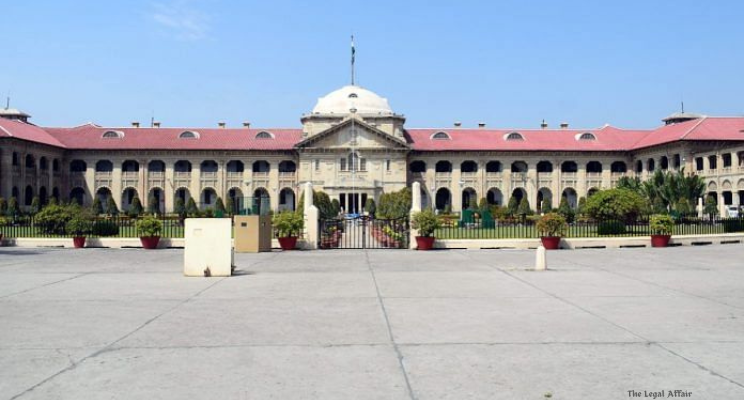
Introduction:
In a recent development before the Allahabad High Court, the Uttar Pradesh Government informed the Court that the investigation into an FIR arising from an alleged social media post related to the Pahalgam Terror Attack, involving Dr. Madri Kakoti (also known as Dr. Medusa), an assistant professor at Lucknow University, has concluded and a charge-sheet is set to be filed shortly. The matter, which had attracted widespread attention due to the nature of the social media posts in question, involves complex issues of freedom of expression, public order, and criminal accountability under the Bharatiya Nyay Sanhita (BNS). In the hearing, the State clarified that several sections initially included in the FIR, such as Section 152 BNS [Acts endangering sovereignty, unity, and integrity of India], were dropped and the charge-sheet now carries only Sections 352 [Intentional insult with intent to provoke breach of peace] and 302 [Uttering words, etc., with deliberate intent to wound religious feelings of any person] of BNS. The High Court, presided over by Justice Rajeev Singh, accordingly disposed of Dr. Kakoti’s anticipatory-bail petition in terms of the earlier interim anticipatory bail order granted in June 2025, noting the completion of investigation and imminent filing of the charge-sheet.
The petition before the Allahabad High Court involves Dr. Madri Kakoti, the petitioner, an academic serving as an assistant professor at Lucknow University, and the State of Uttar Pradesh along with relevant police authorities as respondents. The petitioner, through Advocates Syed Mohammad Haider Rizvi, Shakti Kumar Verma, and Yashab Husain Rizvi, sought anticipatory bail following registration of an FIR related to alleged social media posts on Twitter, which were claimed to attack the sovereignty and integrity of India and allegedly risked public order. The State, represented by Additional Government Advocates Rao Narendra Singh and Shiv Kumar Vishwakarma, informed the Court about the status of investigation, the dropping of several sections from the FIR, and the imminent filing of a charge-sheet before the competent trial court. The FIR initially listed offences under Sections 197(1), 353(2), 196(1)(a), 352, 302, 152 BNS and Section 69-A of the IT Act, but as investigation progressed, certain sections were found to be unsubstantiated. The matter attracted attention not only due to the alleged content of the posts but also because of discussions around the role of social media in public discourse and cross-border dissemination of information, with allegations that some posts were shared on Pakistani media channels, raising concerns about national security and communal harmony.
Arguments of the Petitioner:
The petitioner contended that her posts, though critical or provocative in nature, were made in the exercise of her right to freedom of speech and expression under Article 19(1)(a) of the Constitution of India, and did not constitute an offence warranting arrest or custodial interrogation. She submitted that the FIR had initially invoked serious provisions such as Section 152 BNS and Section 69-A of the IT Act, which were later dropped, indicating that a prima facie case for offences affecting national integrity or online offences did not exist. Her counsel argued that Dr. Kakoti’s actions did not amount to intentional incitement of violence or public disorder, and that the charges under Sections 352 and 302 BNS were exaggerated interpretations of social media activity. The petitioner also highlighted that she had no prior criminal record and was willing to cooperate with investigation authorities. In essence, the argument focused on the proportionality of legal action, emphasizing that anticipatory bail was justified given the nature of the case and the petitioner’s cooperative stance, especially as the investigation had largely cleared serious allegations of sedition or threats to national integrity.
Arguments of the State (Respondent):
The State countered that Dr. Kakoti’s social media posts, by using language such as “saffron-terrorist” and other objectionable terms, were a direct attack on the sovereignty, integrity, and peace of India, which had the potential to provoke communal unrest. It argued that the FIR was lodged not merely for criticism but for posts that could have far-reaching consequences for public order. While acknowledging that Sections 152 BNS and certain IT Act provisions were dropped after investigation, the State emphasized that the charges retained under Sections 352 and 302 BNS were sufficient to require judicial oversight, as they relate to intentional insult and deliberate wounding of religious feelings, which are cognizable offences. The State further submitted that the posts being circulated on foreign media, particularly on channels based in Pakistan, indicated a transnational dimension of the alleged offences, necessitating formal judicial process. The State also argued that anticipatory bail should be balanced against potential risk to public order, and the petitioner’s access to social media platforms could facilitate ongoing propagation of provocative content.
Court’s Analysis:
The Bench, after considering submissions from both sides, recorded that the investigation had been completed, and sections previously invoked were dropped in light of evidence collected by the police. The Court noted that Sections 352 and 302 BNS remained applicable, reflecting the seriousness of the alleged acts in terms of insulting intent and potential to wound religious feelings, rather than acts directly endangering national sovereignty. The Court observed that the interim anticipatory bail granted in June 2025 had ensured the petitioner’s liberty while maintaining the ability of law enforcement to proceed with the charge-sheet. The Bench further noted that a formal charge-sheet had been submitted to the Assistant Commissioner of Police, and it expected that the same would be forwarded to the competent trial court within 10 days, ensuring that legal proceedings are not unduly delayed. Justice Rajeev Singh emphasized that judicial oversight is necessary to balance individual rights with societal interests, and anticipatory bail does not absolve the petitioner from eventual trial or accountability. The Court reiterated that while freedom of speech is constitutionally protected, it is not absolute, especially when posts have the potential to incite public discord or offend communal sentiments.
Judgment:
In light of the State’s submissions regarding the completion of investigation and the imminent filing of the charge-sheet, the Allahabad High Court disposed of the anticipatory bail application of Dr. Madri Kakoti in terms of the earlier interim order. The Court recorded its expectation that the charge-sheet be forwarded to the competent court within 10 days, ensuring procedural compliance and timely adjudication of the matter. The decision underscores that while the seriousest allegations affecting sovereignty and cyber offences were dropped, ongoing charges under Sections 352 and 302 BNS remain to be addressed through normal judicial process, striking a balance between liberty of the accused and public interest. The Court’s direction ensures that both the petitioner and the authorities adhere to due process, with anticipatory bail providing protection against arrest but not impeding the investigation or trial proceedings.
The case highlights the delicate interplay between freedom of expression and public order, especially in the context of social media, where content can be rapidly disseminated across borders. It also illustrates the judicial approach of incremental assessment of charges, dropping sections where evidence is lacking, while retaining those reflecting actionable offences, thereby ensuring proportionate legal response. The ruling maintains the status quo of anticipatory bail, providing the petitioner with conditional liberty while the trial process unfolds in accordance with law.