


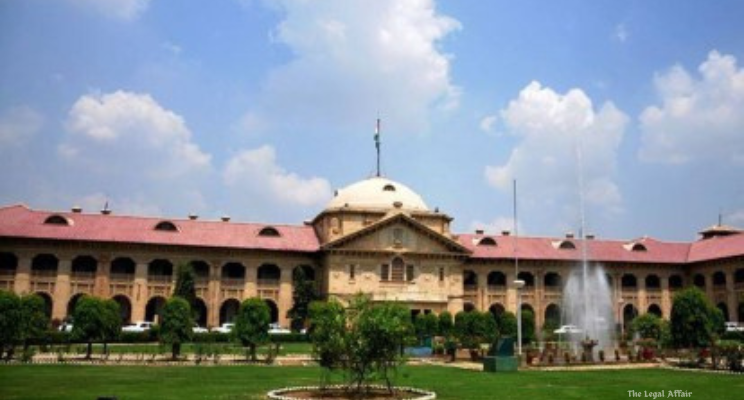
Introduction:
In Waqf No.19 Dargah Sharif Thru. C/M Of Dargah Sharif Bahraich By Chairman Baqaullah and 5 Others v. State Of U.P. Thru Addl. Chief Secy. Deptt. Home Lko. and Another [2025 LiveLaw (AB) 257], the Allahabad High Court delivered a crucial order concerning the preservation of long-standing religious customs. The case arose from the denial of permission by the District Magistrate (DM) of Bahraich for conducting the historic “Jeth Mela” at the Dargah Sharif. A division bench comprising Justice Attau Rahman Masoodi and Justice Subhash Vidyarthi, while disposing of three writ petitions, observed that ritualistic practices recognized since time immemorial cannot be obstructed by the State on trivial or technical grounds, particularly when they foster cultural harmony. The Court emphasized that such customs, though they may not always align with reason or science, are an essential part of spiritual and cultural heritage protected under Article 25 of the Constitution. While the specific prayer for permission became infructuous since the period of the Mela had already concluded, the Court used the occasion to make significant observations on the limits of state interference in matters of faith and rituals, reiterating that constitutional courts must tread cautiously unless the practices threaten public order or state security.
Arguments of the Petitioners:
The petitioners, including the Committee of Management of Dargah Sharif, challenged the DM’s decision denying permission to hold the Jeth Mela, a centuries-old ritual celebrated annually at the Bahraich Dargah. The petitioners argued that the refusal violated their fundamental rights under Article 25 and Article 26 of the Constitution, which guarantee the freedom to practice and manage religious affairs. It was submitted that the Jeth Mela is not merely a cultural event but a deep-rooted spiritual practice that has been observed peacefully for generations, attracting devotees from diverse communities and fostering cultural unity. The petitioners pointed out that the Mela has a unique historical significance and has always been conducted without incidents of law-and-order disruption.
The Committee contended that the State’s grounds for refusal were vague and unsupported by any concrete evidence of a security threat or public disorder. They argued that the State cannot arbitrarily restrict rituals that have become an intrinsic part of the community’s religious identity, especially when there is no valid reason to do so. The petitioners also highlighted that the Mela has a proven track record of peaceful conduct and that the interim orders passed by the Court during the pendency of the petitions had facilitated smooth observance of the rituals without any untoward incident. They asserted that the State’s refusal amounted to overreach and violated the principle of non-interference in religious customs unless mandated by compelling public interest. Additionally, the petitioners cited various judicial precedents affirming that pre-existing, long-standing customs must be protected as part of the cultural and spiritual ethos of the country.
The petitioners further argued that the affinity between different faith communities at the Dargah Sharif is a testament to India’s secular spirit and that obstructing such events could send a wrong message, potentially disturbing the delicate fabric of communal harmony. By denying permission, the DM had ignored both the constitutional mandate and the historical continuity of these rituals. The Committee also argued that the DM’s order was arbitrary, lacked reasoning, and failed to consider that the Mela was organized under regulated and supervised conditions ensuring public safety.
Arguments of the Respondents (State Authorities):
The State of Uttar Pradesh, represented through the Additional Chief Secretary and the DM, defended the decision by citing administrative and security concerns. It was argued that large gatherings during the Mela could pose potential risks to law and order, especially in light of recent instances of public unrest at other mass religious events. The State contended that its primary responsibility is to ensure the safety and security of all citizens and that precautionary measures, including the temporary denial of permission for large gatherings, are within its jurisdiction under the law.
The respondents further argued that while Article 25 guarantees the freedom of religion, it is not absolute and is subject to public order, morality, and health. They maintained that the decision was taken in the larger public interest to avoid any possible disturbances, and that the petitioners could still perform individual rituals without holding a large-scale Mela. The State emphasized that the refusal was temporary and situation-specific, not intended as a blanket prohibition on religious practices at the Dargah Sharif.
It was also submitted that administrative authorities are best positioned to assess the on-ground situation, including intelligence reports and crowd management capacities. Therefore, their decisions should not be lightly interfered with by the Court unless shown to be arbitrary or mala fide. The State argued that the interim arrangement allowed by the High Court, which permitted limited rituals, was itself evidence of a balanced approach between preserving religious customs and safeguarding public interest.
Court’s Judgment:
After hearing both sides, the division bench observed that while the fundamental rights under Article 25 are subject to certain restrictions, the State cannot obstruct long-standing ritualistic practices without substantial justification. The Court noted that the Jeth Mela at Dargah Sharif has been a time-honored custom that transcends religious boundaries and promotes cultural harmony. Justice Attau Rahman Masoodi, writing for the Bench, remarked:
“Rituals and usages know no boundaries and sometimes they reach the zenith of faith at a particular shrine or a religious place of worship…they are driven by the ritualistic practices and usages performed at the shrines or religious places which are perceived and experienced to be a spiritual source of conscience protected under Article 25 of the Constitution of India which promotes composite constitutional morality.”
The Court cautioned both the State and the judiciary against interfering in rituals merely because they might not appeal to logic or scientific reasoning. The Bench stressed that constitutional courts must refrain from commenting on the righteousness of such practices unless there is a demonstrable threat to public order or state security. “The Constitutional Courts must desist to comment on the righteousness of such rituals in contrast to reason or science except that the rituals and usages on practice ought not to threaten public order or security of the State,” the Court stated.
While acknowledging that the Mela period had already passed, rendering the specific prayers infructuous, the Court highlighted that its interim arrangement allowing routine rituals at the Dargah had ensured peace and had brought “optimum good to the devotees” while safeguarding the concerns of the State. The Bench noted that the DM’s refusal to grant permission, in the absence of any concrete threat, was disproportionate and undermined the cultural and religious rights of the devotees.
The judgment underscored that customs and rituals are not only integral to religious freedom but also form a part of India’s cultural fabric. By protecting them, the courts uphold the principles of secularism and pluralism enshrined in the Constitution. The Bench also emphasized that while the State has a duty to ensure public order, such duties cannot be discharged by imposing blanket prohibitions on rituals that have historically coexisted with peace and harmony.
In disposing of the petitions, the Court reiterated that future decisions regarding such events must be guided by objective considerations and not by arbitrary or trivial reasons. The Bench expressed hope that the authorities would approach similar matters with sensitivity, recognizing the deep spiritual significance of these practices.