


Introduction:
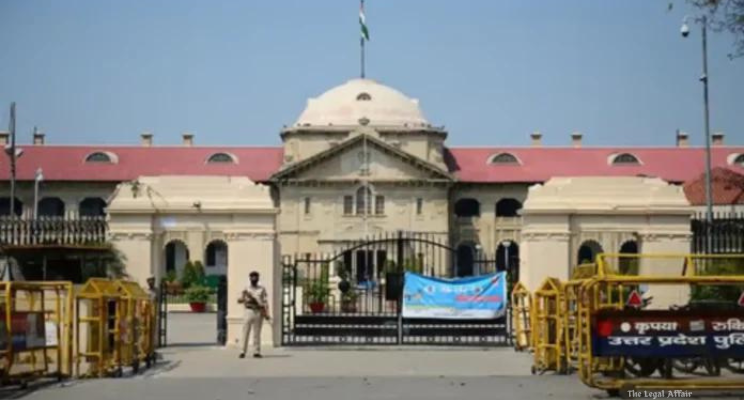
In a landmark ruling, the Allahabad High Court has clarified that an employee who has been fully exonerated of charges and subsequently reinstated is entitled to full pay for the period they were out of service, as per Rule 54 of the Financial Handbook Volume-II (Part II to IV). This decision emerged from the case of Dinesh Prasad v. State of UP and Others, where the petitioner, a follower with the Uttar Pradesh Police, contested the denial of his salary for the period between his dismissal and reinstatement.
Case Background:
Dinesh Prasad, employed with the Uttar Pradesh Police, faced disciplinary proceedings under Rule 14 of the Uttar Pradesh Police Officers of the Subordinate Ranks (Punishment and Appeal) Rules 1991. He was accused of unauthorized leave for two days and participating in a hunger strike, which allegedly tarnished the police force’s reputation. The inquiry found him guilty, resulting in his dismissal from service.
Prasad appealed against the termination, and the Appellate Authority exonerated him of all charges, leading to his reinstatement. Despite this, a show-cause notice was issued under Rule 73 of the Financial Handbook Volume-II (Part II to IV), questioning why his period of dismissal should not be regularized without salary, invoking the principle of ‘no work, no pay.’ The Superintendent of Police, Deoria, upheld this principle, refusing Prasad’s salary for the period from January 9, 2020, to September 29, 2020.
Arguments from Both Sides:
Petitioner’s Arguments:
Prasad’s counsel argued that since he was fully exonerated and reinstated, he was entitled to full pay for the period he was out of service under Rule 54 of the Financial Handbook. They contended that Rule 54 explicitly provides that a dismissed employee, once exonerated, should be considered in service and on duty for the dismissed period, thereby entitling them to full pay.
They argued that Rule 73, which pertains to overstaying leave, was inapplicable as Prasad was dismissed during the contested period, not on leave.
The petitioner’s counsel emphasized that no delay in the inquiry or appellate proceedings could be attributed to Prasad, nor was there any evidence of him being gainfully employed during the period he was out of service.
Respondents’ Arguments:
The respondents, represented by the Superintendent of Police, Deoria, argued that Prasad was grossly negligent in his duties, justifying the application of ‘no work, no pay.’
They maintained that his dismissal was due to serious misconduct, and reinstating him did not automatically entitle him to back pay for the dismissed period.
The respondents argued that the principle of ‘no work, no pay’ should be upheld, as paying him for the period he was not working would set a negative precedent.
Court’s Judgment:
The Allahabad High Court, presided over by Justice Salil Kumar Rai, meticulously examined the provisions of Rule 54 and Rule 73 of the Financial Handbook Volume-II (Part II to IV). The Court observed that Rule 54 clearly entitles a fully exonerated employee to full pay for the period of dismissal, treating it as a period of service on duty. The Court noted that Prasad was never placed under suspension and had been completely exonerated by the Appellate Authority without any remand for further inquiry.
Interpretation of Rule 54:
Justice Rai emphasized that the principle of ‘no work, no pay’ does not apply to employees who have been exonerated and reinstated. Rule 54(2) and Rule 54(4) collectively negate the applicability of this principle in such cases, ensuring that the reinstated employee receives full pay and allowances for the period they were out of service. The Court held that denying Prasad his salary for the said period was contrary to the provisions of Rule 54.
Misapplication of Rule 73:
The Court clarified that Rule 73 pertains to government servants who overstay their leave, treating such absence as misbehavior. Since Prasad was dismissed and not on leave during the contested period, Rule 73 was inapplicable. The Court found the respondents’ reliance on Rule 73 to deny Prasad’s salary as fundamentally flawed.
No Delay or Gainful Employment:
The Court also noted that the respondents failed to demonstrate any delay in the inquiry or appellate proceedings attributable to Prasad or any evidence of his gainful employment during the period of dismissal. Hence, the period Prasad was out of service must be treated as duty, entitling him to full pay and allowances.
Conclusion:
This ruling by the Allahabad High Court reaffirms the rights of employees who are exonerated and reinstated, ensuring they are compensated for the period they were unjustly out of service. It underscores the importance of adhering to the provisions of Rule 54, protecting the rights of employees against arbitrary denial of salary based on the principle of ‘no work, no pay.’