


Introduction:
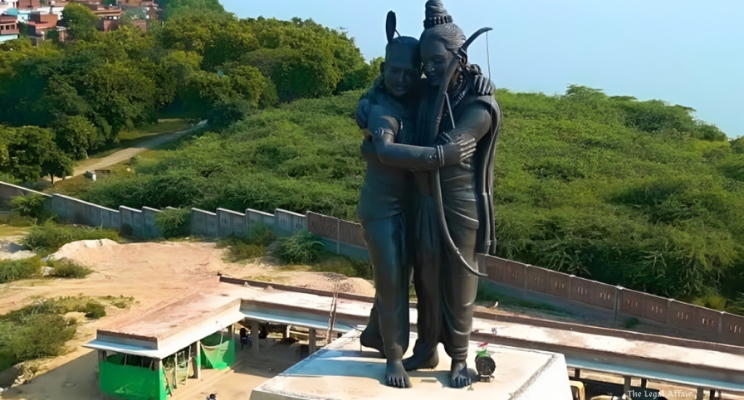
In the case titled Rajbhar Ekta Kalyan Samiti Thru. Its Chairman Shri Pawan Kumar Rajbhar v. State of U.P. Thru. Its Prin. Secy. Deptt. of Home Lko. And 3 Others, the Allahabad High Court was confronted with a Public Interest Litigation (PIL) seeking the removal of the word ‘Kshatriya’ from the name ‘Srawasti Naresh Sushail Dev Bhar’ engraved on the foundation stone at the Chittorajheel Paryatak Sthal statue/idol in Bahraich. The PIL petitioner, Rajbhar Ekta Kalyan Samiti, headed by Shri Pawan Kumar Rajbhar, requested that the word ‘Kshatriya’ be removed and replaced with ‘Bhar.’ This petition sought to have the name ‘Srawasti Naresh Suhail Dev Bhar’ used at all locations, particularly at Village and Pargana Maseehabad in Bahraich. The petition raised concerns about caste-based references in the name and called for a change. The Allahabad High Court, however, dismissed the PIL, stating that the matter did not raise an issue of legal substance but was merely an academic query.
Arguments of Both Sides:
The petitioner argued that the inclusion of Kshatriyaa’ in the name of the statue/idol was inappropriate and should be removed, claiming that it would better reflect the name ‘Bhar’ without the caste-specific reference. The petitioner contended that the focus should be ohonouringng the legacy of Sushail Dev Bhar without emphasising caste identity. The argument was framed within the context of creating a more inclusive representation of the individual commemorated by the statue.
On the other hand, the state government, represented by its Principal Secretary of the Department of Home, defended the status quo, asserting that the use of the name with ‘Kshtriya’ was in keeping with the historical and cultural context of the individual being commemorated. The government argued that the inclusion of caste in the name had historical relevance and that the petitioner’s request amounted to a trivial issue without sufficient legal or historical backing to warrant a change. The government’s stance was that the matter did not merit judicial intervention, as it did not raise any constitutional or legal violation.
Court’s Judgment:
The Allahabad High Court, consisting of Justice Attau Rahman Masoodi and Justice Subhash Vidyarthi, dismissed the PIL with a strong rationale. In its judgment, the Court acknowledged the sentiments of the petitioner but highlighted that the issue raised was academic and did not warrant judicial intervention. The bench noted that it could not entertain petitions that dealt with academic questions or matters that did not have legal sanctity. The Court emphasised that great individuals, regardless of their caste or religion, are remembered for their contributions, and such individuals are typically known by their names and achievements, not by their caste.
The bench also remarked that the petitioner, which was a caste-based organisation, failed to provide admissible evidence establishing the origin of Maharaja Suhail Deo Rajbhar as belonging to the Rajbhar community, which undermined the petitioner’s request for such a change. The Court stressed that in matters concerning public figures and their recognition, it was important to consider the broader historical and cultural context rather than focusing solely on caste-based concerns.
Furthermore, the Court referred to the established principle that the names of great men and their contributions should transcend caste distinctions, as their legacies are remembered for their achievements rather than their caste identity. It observed that throughout history, remarkable individuals have been revered for their spiritual, intellectual, or martial contributions, and they are recognised by their names, not by the caste labels attached to them.
Given that the PIL focused solely on an academic question without a legal foundation, the bench refused to intervene, reinforcing that judicial resources must not be expended on matters that do not present a substantive legal issue or violate any fundamental rights. The Court also acknowledged that the sentiments of the petitioner were respected but maintained that such matters were better suited for academic or political debate rather than judicial determination.