


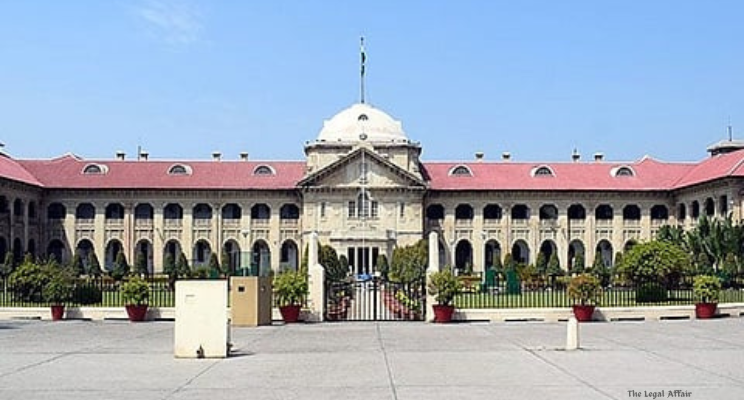
Introduction:
The writ petition before the Allahabad High Court at Lucknow was filed by Rubi Singh and others against the State of Uttar Pradesh and its police authorities, wherein the petitioners alleged illegal detention, custodial assault, extortion and serious violations of statutory safeguards by the Unnao police, and while examining these allegations, the Division Bench of Justice Abdul Moin and Justice Babita Rani also took up the larger issue of a circular issued by the Director General of Police in June 2025 which limited CCTV footage storage in police stations to only two to two and a half months, even though the Supreme Court in Paramvir Singh Saini versus Baljit Singh had clearly mandated that CCTV footage in police stations must be preserved for a minimum of six months and preferably up to eighteen months, and the case arose from an incident dated August 5, 2025 when the petitioners were allegedly picked up by the police on the basis of an FIR registered against their relatives under Section 306 of the Bharatiya Nyaya Sanhita, without preparation of arrest memos and without following mandatory procedures, after which petitioner number one who is a woman was allegedly confined in the police lockup on the night of August 7 and subjected to obscene remarks, and petitioners number two and three were allegedly released only after payment of ten thousand rupees to a Sub Inspector, leading the petitioners to seek registration of an FIR, investigation by CBI or SIT, compensation for custodial atrocities, disciplinary action against erring officials and preservation of CCTV footage from August 5 to August 8 to substantiate their claims, and when the Court earlier directed the Superintendent of Police, Unnao to preserve and produce the footage, the SP claimed that the footage was unavailable due to limited storage capacity as per the DGP circular, which triggered strong judicial scrutiny of systemic compliance with Supreme Court directions and statutory protections under the Bharatiya Nagarik Suraksha Sanhita 2023.
Arguments Of Both Sides:
The petitioners argued that their fundamental rights under Articles 21 and 22 of the Constitution were grossly violated as they were illegally detained without arrest memos, without written notices and without compliance with safeguards meant especially for women, and they emphasized that Section 179 of the BNSS clearly prohibits requiring a woman to attend any place other than her residence for police examination, yet petitioner number one was summoned and confined in the police station, and the petitioners further submitted that the demand of illegal gratification by police officials and their release only after payment clearly attracted criminal liability, warranting registration of an FIR and independent investigation, and they stressed that the destruction or non availability of CCTV footage directly frustrated their right to fair investigation and accountability, whereas the State through the affidavit of the Superintendent of Police relied on the DGP circular dated June 20, 2025 which stated that police stations had been provided five CCTV cameras with ten terabytes of storage allowing retention of footage only for about two to two and a half months, and therefore the footage for the relevant dates was not available, and the SP also admitted that petitioner number one was called to the police station for questioning but did not clarify whether any written notice was issued or whether reasonable expenses were paid as mandated by law, and in relation to allegations of bribery, the State submitted that a preliminary inquiry was initiated and two police personnel were sent to Reserve Police Lines, suggesting that departmental steps were taken, however the petitioners countered that such action was merely cosmetic and did not satisfy legal accountability, and the Bench questioned the logic of the DGP circular which on one hand referred to the Supreme Court judgment but on the other hand operationally reduced storage period in clear contradiction of binding directions, and the Court also questioned whether the State Government had framed rules under Section 179 subsection two of the BNSS regarding payment of reasonable expenses to persons called for questioning, despite the Act being in force since July 1, 2024, and the Bench expressed concern that systemic non compliance with procedural safeguards was being normalized, which eroded public trust and constitutional governance.
Court’s Judgment:
The High Court held that the DGP circular limiting CCTV footage storage to two to two and a half months was prima facie in contempt of the Supreme Court judgment in Paramvir Singh Saini which mandates preservation for at least six months and preferably up to eighteen months, and the Bench observed that it failed to understand how the DGP could expressly refer to the Supreme Court order and yet issue directions that were directly contrary to it, thereby undermining judicial authority and the very purpose of CCTV surveillance which is to ensure transparency and protection of both citizens and police personnel, and the Court further found serious procedural lapses under the BNSS as the affidavit admitted that petitioner number one, a woman, was called to the police station which was in gross violation of the proviso to Section 179 subsection one that categorically states that no woman shall be required to attend any place other than her residence for examination, and the Court also noted the absence of any disclosure about issuance of written notice or payment of reasonable expenses under Section 179 subsection two, and it questioned whether the State had framed the necessary rules for such payments, and on the issue of corruption allegations, the Court strongly criticized the casual approach of merely transferring officials to police lines and initiating a preliminary inquiry, stating that if there was semblance of truth in allegations of monetary demand, strict disciplinary proceedings under service rules ought to have been initiated instead of short cut measures, and in view of the gravity of systemic issues, the Court directed the Chief Secretary of Uttar Pradesh to file a personal affidavit within three weeks explaining the circumstances in which the DGP circular was issued, whether rules under Section 179 subsection two of the BNSS had been framed and if not when they would be framed, and why petitioner number one was summoned in violation of statutory mandate and what action was proposed against the responsible police personnel, and the Court clarified that the Chief Secretary was being called upon because once a circular prima facie contrary to Supreme Court directions had been issued, administrative accountability at the highest level was necessary, and the matter was listed for January 29, 2026 with a warning that if the affidavit was not filed, the Chief Secretary would have to appear personally with records, thereby signaling strict judicial monitoring of compliance and institutional reform.