


Introduction:
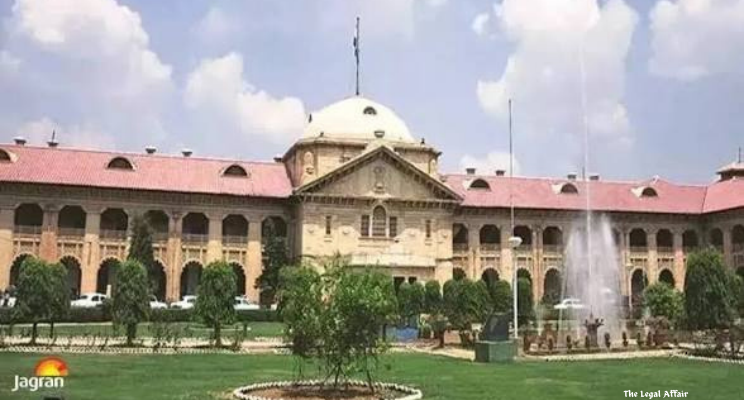
The Allahabad High Court has intensified its scrutiny of Uttar Pradesh’s efforts to expand its open prison system, directing the State Government to provide a definite timeline for establishing three new Open Correctional Institution (OCI) facilities and identifying eligible prisoners who would be accommodated there. The direction came after the State sanctioned ₹4.59 crore for setting up the proposed facilities, following repeated judicial concerns over administrative delays and the inadequate utilisation of existing open prison infrastructure.
A Division Bench comprising Justice Saumitra Dayal Singh and Justice Swarupama Chaturvedi was informed on November 4, 2026, that the Government of Uttar Pradesh had issued Government Order No. 912 on November 2, sanctioning the required funds. The information was placed before the Court by Rajendra Pensiya, Special Secretary, Jail Administration and Reform Department.
The sanctioned amount is intended to establish three additional open correctional facilities at different locations in the State. The first is proposed at Central Prison, Fatehgarh, with a capacity of 100 prisoners. The second will be established at Nari Bandi Niketan, Lucknow, for 50 women prisoners, while the third is proposed at District Jail, Gautam Buddh Nagar, with accommodation for 80 prisoners. Together, the proposed facilities are expected to provide capacity for 230 inmates.
The proceedings arise from a Public Interest Litigation registered earlier in 2026 following directions issued by the Supreme Court for the effective utilisation and expansion of Open Correctional Institutions across the country. The Supreme Court’s intervention highlighted the need to strengthen the open prison system as an important component of prison reform and rehabilitation. Related public interest petitions were subsequently tagged with the matter before the Allahabad High Court.
Open prisons differ from conventional correctional institutions because they provide eligible prisoners with a less restrictive environment, subject to prescribed conditions and supervision. Rather than focusing exclusively on confinement, the system seeks to facilitate rehabilitation, social reintegration and the gradual preparation of prisoners for life outside prison. Such institutions can also help reduce pressure on overcrowded conventional prisons by allowing suitable inmates to serve the relevant portion of their sentence in a more open environment.
The High Court’s concern, however, has extended beyond the mere creation of additional infrastructure. It has repeatedly questioned why the State had failed to take concrete steps despite earlier assurances and why the existing facilities were not being utilised to their full capacity. The Court has also examined the absence of transparent eligibility criteria for selecting prisoners and the apparent lack of adequate opportunities for women prisoners to benefit from the open prison system.
The latest order must therefore be understood against the background of continuing judicial scrutiny of prison administration in Uttar Pradesh. The Court has made it clear that issuing a government order and allocating funds cannot, by themselves, establish compliance. The State must demonstrate that the facilities will actually be constructed within a defined period and that eligible prisoners will be identified in advance so that the institutions can begin functioning meaningfully once they are ready.
Arguments of the Parties:
The proceedings before the High Court primarily concerned the State Government’s compliance with earlier judicial directions and its progress in expanding the open correctional institution system. The State’s position was placed before the Bench through a compliance affidavit filed by the Jail Administration and Reform Department.
The affidavit disclosed that the Government had sanctioned ₹4.59 crore through Government Order No. 912 dated November 2, 2026. It further stated that the necessary budgetary allocation had been made for establishing the three proposed facilities at Fatehgarh, Lucknow and Gautam Buddh Nagar.
The State’s revised financial assessment was also relevant to the proceedings. Initially, the Government had estimated that approximately ₹90 crore would be required to establish the three facilities. However, after conducting physical re-inspections of the proposed locations, the authorities found that substantial infrastructure was already available at the concerned prison establishments.
The State consequently proposed to utilise the existing buildings and carry out the necessary additions, alterations and repairs instead of undertaking entirely new construction. This reassessment substantially reduced the projected capital expenditure, bringing the requirement down to approximately ₹4.59 crore.
The Government’s revised proposal indicated that the expansion could be achieved through the use of available infrastructure, thereby reducing both the financial burden and the time potentially required for establishing the institutions. The sanction of the revised amount was presented as a concrete step towards implementing the proposal.
The Additional Advocate General, Anoop Trivedi, assured the Court that the three facilities would be established without further delay. However, when the Bench sought specific information regarding the time required for completing the work, he informed the Court that complete instructions had not yet been received and requested additional time.
The State’s submissions thus demonstrated that the financial sanction had been obtained, but the precise implementation schedule, including the selection of the executing agency and the construction requirements, had not been fully placed before the Court.
The Court was also concerned with the second stage of implementation: identifying prisoners who would be eligible for placement in the new institutions. The State was required to explain what steps had already been taken, or were proposed to be taken, to identify deserving convicts under the applicable State policy. This was important because the facilities would serve little practical purpose if eligible prisoners were not assessed and selected in time for their placement once the institutions became operational.
The material supplied does not indicate any separate detailed submissions by the petitioners on the specific questions of construction or prisoner selection during the November 4 hearing. The proceedings, as reflected in the order, principally involved the Court examining the State’s compliance affidavit, the assurance given by the Additional Advocate General and the absence of a definite implementation schedule.
The broader concerns underlying the public interest litigation, however, had already been raised through the Court’s earlier orders. These included the underutilisation of the existing open prison at Model Jail, Lucknow, the absence of disclosed objective criteria for selecting prisoners and the need to ensure that women prisoners were not excluded from the benefits of the open correctional system.
The Court’s repeated observations had also placed the State under an obligation to move beyond proposals and assurances and demonstrate measurable administrative progress. The central issue was therefore not merely whether the Government intended to expand the system, but whether it had taken concrete, time-bound steps to translate that intention into functioning correctional institutions.
Court’s Judgment:
The Allahabad High Court acknowledged the State Government’s decision to sanction ₹4.59 crore for establishing the three proposed open correctional facilities. However, it made clear that the financial sanction was only one part of the implementation process. The State authorities were required to commit themselves to a definite timeline covering both the establishment of the facilities and the identification of eligible convicts who would be placed there.
The Bench observed that an assurance that the institutions would be established without further delay was insufficient in the circumstances. Given the repeated delays that had already occurred, the Court considered it necessary to require a concrete schedule from the responsible authorities.
The Court observed:
“Though, learned Additional Advocate General would assure the Court that the new facilities, above described, would be set up without any further delays, in the nature of the issue that has arisen before us, it is imperative that the State Authorities commit themselves to a definite time frame within which not only such facilities would be set up, but identified/eligible convicts would be placed at such facilities arising on the application of the State policy in that regard.”
This observation reflects the Court’s understanding that prison reform cannot be measured solely by administrative decisions or financial allocations. The success of an open correctional institution depends on whether the facility becomes operational and whether eligible prisoners are actually given access to it in accordance with the governing policy.
The Bench therefore directed Rajendra Pensiya, Special Secretary, Jail Administration and Reform Department, to file a further affidavit providing a comprehensive account of the steps required to establish the three institutions. The affidavit must disclose whether an agency has been selected to execute the work, the nature of the construction or repair work required at each location, and the proposed timeline for completing the work and making the facilities operational.
The Court also directed the State to provide details of the efforts already undertaken, or proposed to be undertaken, for identifying eligible convicts. The authorities must explain how deserving prisoners would be assessed and selected so that they could be transferred to the new institutions immediately after the facilities are established.
This direction is particularly important because infrastructure development and prisoner selection are interconnected aspects of the open prison system. If the State begins identifying eligible prisoners only after completing construction, the benefits of the new facilities may be delayed further. By requiring the selection process to be addressed alongside construction, the Court sought to ensure that the institutions would not remain underutilised after becoming operational.
The Court’s latest intervention follows a series of earlier orders in which it had expressed dissatisfaction with the pace of the State’s efforts.
On October 27, the Bench had expressed serious concern that the proposal to establish at least three additional open correctional institutions had remained pending despite repeated assurances. The Court had observed that such a situation could not be allowed to continue indefinitely and questioned why the State had failed to take even the basic steps necessary to implement a proposal that had already been under consideration.
At that stage, the Court had also questioned the absence of a concrete financial allocation, particularly because the State had previously indicated that approximately ₹4.60 crore would be sufficient to establish the proposed facilities. The Bench had emphasised that the officers responsible for the delay could not indefinitely rely on administrative discretion without demonstrating actual progress.
Earlier, on October 5, the Court had expressed its dissatisfaction through the observation:
“Empty proposals and wishful thinking will take the cause no further.”
The remark underscored the distinction between announcing reform measures and implementing them. The Court’s concern was that repeated proposals, revised estimates and assurances had not translated into the practical expansion of open correctional facilities.
The financial history of the proposal also formed an important part of the proceedings. The State had initially estimated that approximately ₹90 crore would be required to establish the three institutions. Following physical re-inspections, however, the authorities found that substantial infrastructure was already available at Central Prison, Fatehgarh, Nari Bandi Niketan, Lucknow, and District Jail, Gautam Buddh Nagar.
The availability of existing buildings meant that the proposed institutions could largely be developed through additions, alterations and repairs. The revised estimate of ₹4.59 crore was therefore considerably lower than the original projection.
The High Court had questioned why the State had taken so long to provide even this comparatively modest amount after repeatedly assuring the Court that the facilities would be established. The eventual sanction of funds addressed one of the principal concerns raised in the earlier hearings, but the Court insisted that the remaining administrative steps must also be completed within a definite period.
The Bench’s earlier order dated July 28 had highlighted another major issue: the inadequate utilisation of the existing open correctional institution in Uttar Pradesh.
At that time, the State had only one open correctional institution, Model Jail, Lucknow. According to the affidavit filed by the Government, the facility had an approved capacity of 800 inmates, but only 316 prisoners were housed there. This meant that a substantial portion of the available accommodation remained unused.
The Court noted that only approximately 27 per cent of the available capacity was being utilised. It questioned what steps the authorities were taking to make use of the remaining capacity of 484 prisoners and why the State had not provided a satisfactory explanation for the underutilisation.
The Bench also examined the absence of disclosed objective criteria for selecting prisoners who could be transferred to Model Jail. It observed that the State had not clearly explained the eligibility conditions applied to prisoners across Uttar Pradesh or the standards used to determine which convicts could benefit from the open prison system.
The issue was significant because the availability of an open correctional institution does not automatically guarantee that eligible prisoners will be considered for placement there. A transparent selection mechanism is necessary to ensure that decisions are based on relevant criteria rather than unexplained administrative discretion.
The Court consequently emphasised the need for the State to revisit its policy in light of the practices followed in other States, including Maharashtra, Rajasthan and Kerala. Such an exercise would help the authorities identify suitable approaches for improving prisoner selection, increasing utilisation and strengthening the overall functioning of open correctional institutions.
The Bench also raised a concern regarding women prisoners. It observed that women appeared to have been deprived of the benefits of the open correctional system solely on account of gender-related considerations. The Court expected the State to incorporate suitable measures to ensure that women prisoners were not excluded from the benefits of open correctional institutions.
The proposed facility at Nari Bandi Niketan, Lucknow, with a capacity of 50 women prisoners, is therefore an important development in this context. It indicates that the expansion proposal is not confined to increasing accommodation for male prisoners but also contemplates a dedicated facility for women.
The Court’s approach is consistent with the broader purpose of prison reform, which requires correctional policies to focus not only on security and confinement but also on rehabilitation, dignity and the possibility of reintegration into society. Open correctional institutions can provide eligible convicts with opportunities to gradually adjust to life outside conventional prison settings, subject to the applicable rules and supervision.
The public interest litigation also forms part of a wider judicial effort to address prison conditions in Uttar Pradesh. In a related suo motu proceeding titled In Re: Overcrowding In Prisons, registered in 2018, the High Court has examined the problem of overcrowding across the State’s jails.
In that matter, a separate Division Bench comprising Justice Saumitra Dayal Singh and Justice Swarupama Chaturvedi was informed that the authorised prison capacity in Uttar Pradesh was 76,162, whereas 80,326 prisoners and convicts were confined in the State’s correctional facilities. The figures indicated that the prison population had exceeded the available capacity.
The Court accordingly directed the Director General of Uttar Pradesh Prison Administration and Reform Services to file a detailed affidavit, preferably in tabular form, setting out the accurate and current position regarding overcrowding and the measures being undertaken to address it.
Although the overcrowding proceedings and the present open prison litigation involve distinct directions, they highlight interconnected challenges in prison administration. Expanding open correctional institutions and ensuring their effective utilisation may contribute to reducing pressure on conventional prisons, provided that the system is implemented through transparent eligibility standards and effective administrative planning.
The High Court has now listed the open correctional institution matter for November 20, when the State is expected to place the additional affidavit on record. The affidavit will have to explain the construction arrangements, the selection of the executing agency, the completion schedule and the process for identifying eligible prisoners.
The latest order does not treat the sanction of ₹4.59 crore as the conclusion of the State’s obligation. Instead, it makes clear that the Government must demonstrate actual implementation within a definite timeframe. The Court’s insistence on advance identification of eligible convicts also seeks to prevent the new facilities from becoming another example of infrastructure that exists on paper but remains inadequately utilised.
Ultimately, the proceedings reflect an important principle of public law: when the State undertakes a reform measure and repeatedly assures the Court of its implementation, administrative commitments must be followed by concrete action. The Allahabad High Court’s directions seek to ensure that the expansion of open prisons in Uttar Pradesh moves beyond budgetary approvals and policy announcements towards a functioning system that advances rehabilitation, improves prison management and addresses the continuing problem of overcrowding.