


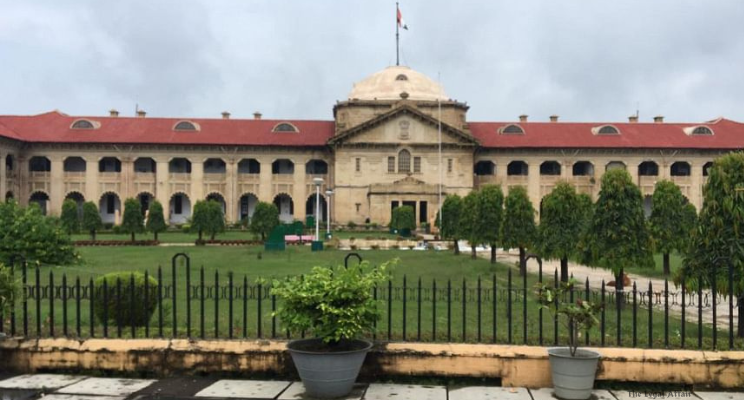
Introduction:
In the significant matter of Sachin Sirohi And Another vs. State of U.P., heard before the Allahabad High Court and reported as 2025 LiveLaw (AB) 208, the Court granted bail to two accused persons, including a prominent leader of the Akhil Bhartiya Hindu Suraksha Samiti, who were arrested in March 2025 for allegedly forcibly reciting the ‘Hanuman Chalisa’ near a mosque in Meerut, Uttar Pradesh. The accused, Sachin Sirohi and Sanjay Samarval, were charged under Sections 191(2) (Rioting), 196 (Promoting enmity between different groups and doing acts prejudicial to maintenance of harmony), and 197 (Imputations prejudicial to national integration) of the Indian Penal Code. This case arose from allegations that the accused, along with their associates, had assembled outside a mosque, raised anti-religious slogans, recited the Hanuman Chalisa in close proximity to the mosque, and threatened its demolition, thereby causing communal tension and unrest in the area, particularly affecting the movement of people towards the railway station. The Allahabad High Court’s decision to grant bail underscored the fundamental legal principle of presumption of innocence at the pre-conviction stage and emphasized that the objective of custodial detention is not punitive but to ensure presence for trial and sentencing.
Arguments of Both Sides:
The petitioners, represented by their counsel, vehemently denied the allegations against them, asserting that the accusations were baseless and politically motivated. They argued that the FIR and statements collected by the police did not contain credible evidence implicating the accused in any unlawful activity. Their legal team emphasized that the mere recitation of Hanuman Chalisa could not amount to an offense promoting enmity or rioting, especially absent concrete proof of incitement or violence. The defense argued that the accused had been unjustly targeted due to their association with the Akhil Bhartiya Hindu Suraksha Samiti, a socio-political organization, and urged the Court to consider these factors when deciding on bail. The applicants further stressed that no substantive material was placed before the court to justify continued custodial detention, and thus, bail was warranted as a matter of right at this stage of the proceedings.
Conversely, the Additional Government Advocate (AGA), appearing on behalf of the State of Uttar Pradesh, opposed the bail application. The AGA contended that the accused had deliberately chosen a sensitive religious location—a mosque—to recite a religious hymn associated with a different faith community, which was a clear act intended to incite communal disharmony. The AGA submitted that the recitation of the Hanuman Chalisa in the vicinity of the mosque was not a mere religious exercise but was provocative and designed to foment enmity between communities. It was further argued that the accused had issued threats to demolish the mosque, actions that exacerbated tensions and public disorder in the area. The AGA urged the Court to consider the nature of the allegations seriously and held that granting bail might embolden the accused or others to commit similar offenses, potentially disturbing the fragile peace in the locality.
Court’s Judgement:
Justice Raj Beer Singh, presiding over the bench, acknowledged the gravity of the allegations but took a nuanced view of the bail application. The Court emphasized the constitutional guarantee of the presumption of innocence, noting that the accused are entitled to this principle until proven guilty by a competent court after due process. The Court observed that while the seriousness of the charges and the existence of some material in support are relevant factors in bail considerations, they are not alone sufficient to justify custodial detention at the pre-conviction stage. The bench highlighted the legal position that detention should not be punitive or preventive but should only be used to ensure the accused’s availability for trial and to receive any sentence that may be passed following conviction.
After examining the submissions, the Court found no compelling reason to deny bail. It noted that the FIR and witness statements presented were insufficient to establish beyond doubt the accused’s culpability at this stage. The Court further reasoned that the maintenance of public order and harmony is essential but must be balanced against the rights of the accused. Justice Singh granted bail to Sachin Sirohi and Sanjay Samarval, subject to such conditions as the trial court might deem fit. The decision clearly reflected the Court’s commitment to protecting individual liberties while ensuring that the criminal justice process runs fairly and efficiently. The ruling serves as a reminder that bail decisions require a careful weighing of facts and the law, ensuring that the accused are not unfairly deprived of liberty based on allegations that have yet to be conclusively proven.