


Introduction:
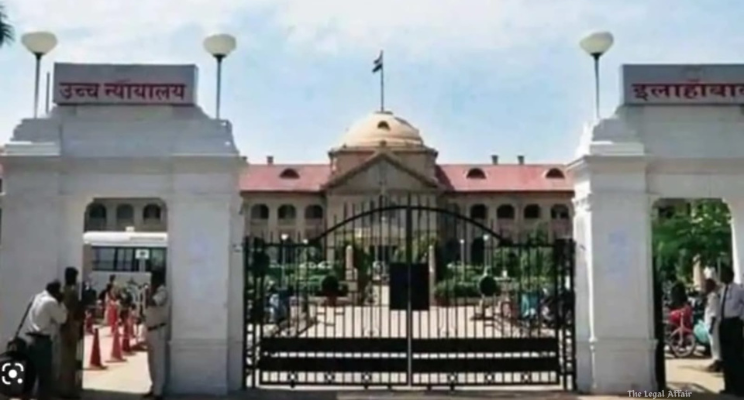
The Allahabad High Court has posed a crucial question to the Union Ministry of Education and Ministry of Minority Affairs, inquiring whether states can establish statutory education boards permitting religious education. This query arises in the context of a writ petition filed by Anshuman Singh Rathore, challenging the UP Board of Madarsa Education Act, 2004, and provisions of the Right of Children to Free and Compulsory Education (Amendment) Act, 2012. The court, led by Justice Vivek Chaudhary and Justice Subhash Vidyarthi, has been diligently examining the issues surrounding Madarsa Boards, management, and their alignment with principles of equal opportunity and secular governance.
Arguments of Both Sides:
Anshuman Singh Rathore’s petition questions the constitutionality of the Madarsa Education Act, 2004, and the amendment to the Right of Children to Free and Compulsory Education Act, 2012. The court has raised concerns about the placement of the Madarsa Board under the Minority Department rather than the Education Department of the state, emphasizing the need for transparency and potential arbitrariness. The larger bench referral in 2019 highlighted essential questions, including the eligibility criteria for board membership based on religion and the allocation of Madarsa education under the Minority Welfare Department.
Court’s Judgement:
The Allahabad High Court has initiated a comprehensive examination of the issues, focusing on the constitutional validity of the Madarsa Education Act and its alignment with secular principles. The court’s direction for counsels to present all available materials, views, and policies indicates a meticulous approach to understand the implications for students’ education, especially considering Article 21-A of the Constitution of India. The matter is scheduled for further hearing on February 1, 2024.