


Introduction:
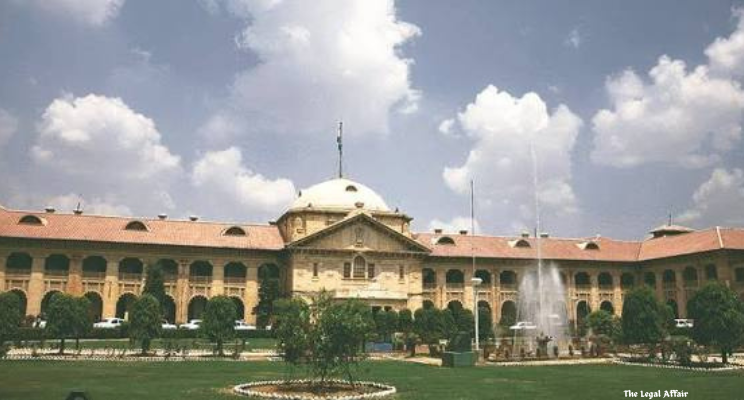
The Allahabad High Court has declined to set aside the elections to the executive body of the Civil Bar Association, Bulandshahr, despite the fact that no woman advocate was elected as an office bearer. In Bhavna Pandit v. State of U.P. and 16 others, a Division Bench comprising Chief Justice Arun Bhansali and Justice Kshitij Shailendra considered whether the election process complied with the Supreme Court’s directions requiring at least 30% representation of women in the governing or executive bodies of Bar Associations.
The dispute arose after the Association’s election programme was notified on April 4, 2026, and voting took place on April 16, 2026. The voter list included 79 women members, but none was elected to an office-bearing position. The petitioner, an advocate practising in the Bulandshahr District Court, approached the High Court through a public interest litigation (PIL), seeking to quash the election proceedings and their result. She also sought fresh elections with 30% reservation for women lawyers and requested that the post of Treasurer be earmarked for a woman.
The petition relied on the Supreme Court’s order dated March 13, 2026, in Deeksha N Amruthesh v. State of Karnataka and others. By that order, the Supreme Court directed High Courts to ensure that women advocates constituted at least 30% of the members of the Bar involved in the election of governing or executive bodies of Bar Associations. The directions had initially operated only in Karnataka. The Allahabad High Court was therefore required to consider how the Supreme Court’s mandate applied to the Bulandshahr Association’s election and whether the subsequent nomination of four women advocates cured the shortfall.
The respondents stated that the Supreme Court’s order had reached them through the District Legal Services Authority, Bulandshahr, only on April 8, 2026, after the election programme had already been notified. Following the poll, on April 20, the elected body nominated four women advocates: one as Joint Treasurer and three as executive members. The petitioner challenged the legality of these nominations, contending that the Association’s rules did not provide for a Joint Treasurer and that all executive member posts had already been secured by male advocates.
The High Court found that the Association should have ensured women’s representation within the twelve posts filled through election. It nevertheless declined to invalidate the poll, taking account of the Supreme Court’s subsequent modification of its directions on April 16, 2026, which provided for nomination where women advocates were absent or did not contest. The Court directed the Association to amend its bye-laws within one month to secure 30% representation for women in future elections and to forward the nomination details and complete election proceedings to the Administrative Judge of Bulandshahr.
Arguments of the Parties:
The petitioner’s central submission was that the election had not complied with the Supreme Court’s March 13, 2026 directions. Those directions, she argued, required meaningful representation of women advocates in the governing or executive body of a Bar Association. Since none of the women on the voter list had been elected, the Association could not treat the election as compliant merely because it later nominated four women.
The petitioner sought the quashing of the election proceedings and the result, followed by fresh elections in which 30% of the positions would be reserved for women lawyers. She also requested that the post of Treasurer be earmarked for a woman. Her case was that the Supreme Court’s direction was not simply about adding women to the body after the election; it required women’s representation to be ensured in the election process itself.
She further disputed the authority of the elected office bearers to nominate women after the poll. According to her, the nomination was without jurisdiction because the Association had no post of Joint Treasurer. She also emphasised that every executive member position had gone to a male advocate, meaning that women had not secured representation through the election. In her view, post-election nominations could not retrospectively validate a process that had failed to comply with the Supreme Court’s directions.
The respondents, on the other hand, relied on the timing of their receipt of the Supreme Court’s order. They submitted that the order dated March 13, 2026, was communicated to them through the District Legal Services Authority only on April 8, 2026. By then, the election programme had already been notified on April 4. Their position was that the election had been set in motion before they received the communication and that the subsequent nomination was an effort to ensure women’s representation.
The respondents pointed out that on April 20, four women advocates were nominated to the executive body. One was appointed Joint Treasurer and the remaining three were nominated as executive members. They maintained that the inclusion of these four women fulfilled the 30% representation requirement and addressed the absence of women among those elected on April 16.
The respondents’ position was therefore that the election should not be quashed merely because no woman had won an elected office. They relied on the nominations made shortly after the poll and the Supreme Court’s provision for nomination where women advocates were not available or did not contest. The dispute before the High Court consequently involved both the Association’s obligation to follow the Supreme Court’s directions and the legal effect of the nominations made after the election.
Court’s Judgment:
The Allahabad High Court began by examining the Supreme Court’s directions and the circumstances in which the Bulandshahr election had been conducted. It did not accept the respondents’ explanation that the Association could be treated as unaware of the March 13 order simply because the formal communication reached them on April 8.
The Bench observed that a Bar Association, being an association of lawyers, was expected to remain aware of Supreme Court orders, particularly where the subject of those orders directly concerned the conduct of Bar Association elections. The order was also in the public domain. In the Court’s view, the respondents could not avoid the effect of the directions by relying only on the date on which the communication was received through the District Legal Services Authority.
The Court then considered the composition of the body and the manner in which the 30% requirement ought to have been applied. Twelve posts were to be filled through election. The Bench held that the required representation should have been provided within and among those twelve elected positions. In other words, the Association was expected to account for women’s representation when conducting the election, rather than treating nomination after the poll as the ordinary substitute for women being elected.
The Court therefore found that the failure to provide the required representation among the twelve elected posts did not accord with the Supreme Court’s order dated March 13, 2026. The fact that four women were subsequently added to the body did not erase the initial failure to comply with the direction as it stood when the election was conducted.
However, the Court also considered an important development that occurred on the very day of the election. On April 16, 2026, the Supreme Court modified paragraph 6 of its earlier order. The modification provided that where women advocates were not present or did not contest, the shortfall in representation was to be ensured through nomination.
The High Court treated this modification as relevant to the legality of the nominations made after the Bulandshahr election. It noted that no woman advocate had come forward when nomination papers were being filled. In those circumstances, the clause providing for nomination was attracted. The Court consequently held that the nomination of women advocates was not illegal per se.
This did not mean, however, that the nominations had been made in the manner contemplated by the Supreme Court’s modified directions. The Bench noted that the nominations had been made by the elected office bearers alone. Under the modified order, the nomination process was to involve the Administrative Judge or Portfolio Judge, in consultation with the District and Sessions Judge, the elected office bearers and the senior-most women members. The Court therefore identified a procedural shortcoming in the manner in which the four women had been nominated.
The distinction drawn by the Court was significant. It did not treat the absence of women among the elected office bearers as a matter that could be ignored. Nor did it hold that any post-election nomination, regardless of who made it or how it was made, automatically satisfied the Supreme Court’s mandate. Rather, it found that the initial election had failed to provide the required representation within the twelve elected posts, while the Supreme Court’s modification made nomination a recognised means of addressing a shortfall in circumstances where women advocates were not available or did not contest.
The Court also examined the petitioner’s challenge to the nomination of one woman as Joint Treasurer. The petitioner had argued that no such post existed under the Association’s structure and that all executive member posts had already been allotted to male advocates. The Court’s treatment of the nominations turned on the broader directions governing women’s representation and the requirement that any nomination be made through the prescribed process. It did not accept that the nominations were unlawful merely because they followed the election, but it also recorded that the process adopted by the elected office bearers did not conform to the consultation mechanism specified by the Supreme Court.
Despite these deficiencies, the Bench declined to quash the election or direct a further fact-finding exercise. It observed that ordering an inquiry in the matter would consume scarce administrative resources of the justice delivery system without a corresponding advancement of the cause of justice. The Court therefore chose to address the shortcomings through directions aimed at future compliance and administrative oversight, rather than reopening the election process.
The Court’s approach preserved the election and the nominations, subject to the possibility of intervention by the Administrative Judge. It directed the Civil Bar Association, Bulandshahr, to amend its bye-laws within one month so that 30% representation for women lawyers would be provided in all future elections. The direction was intended to ensure that the representation requirement would be incorporated into the Association’s governing framework and would not depend solely on ad hoc steps taken after an election.
The Association was also directed, within the same one-month period, to send intimation of the nominations, along with the entire election proceedings, to the Administrative Judge of District Bulandshahr. The elections and nominations would remain intact unless the Administrative Judge directed otherwise. This gave the Administrative Judge an opportunity to examine the relevant record and determine whether further action was warranted.
The High Court declined to direct any exercise by the Registrar General at that stage. It nevertheless left the question open in the event of a future breach. The order thus combined immediate directions for compliance with a continuing possibility of institutional intervention if the Association failed to follow the prescribed requirements in subsequent elections.
In disposing of the PIL, the Court did not grant the petitioner’s principal request to quash the election and order fresh polls. It also did not direct that the Treasurer’s post be reserved for a woman. Instead, it required the Association to amend its bye-laws to secure 30% women’s representation in future elections and to submit the nomination and election records to the Administrative Judge within one month.
The decision underscores the difference between the obligation to ensure women’s representation and the procedure by which a shortfall may be addressed. The High Court held that the Association should have ensured the required representation among the twelve posts filled by election. At the same time, it recognised that the Supreme Court’s April 16 modification permitted nomination where women advocates were absent or did not contest. The nominations were therefore not illegal merely because they were made after the poll, although the process followed by the elected office bearers did not reflect the consultation mechanism required by the modified directions.
The ruling leaves the existing election and nominations undisturbed unless the Administrative Judge orders otherwise, while requiring the Association to put a compliant framework in place for future elections. It also makes clear that Bar Associations cannot rely solely on the date of formal communication to avoid awareness of Supreme Court directions that are publicly available and directly concern their election process.