


Introduction:
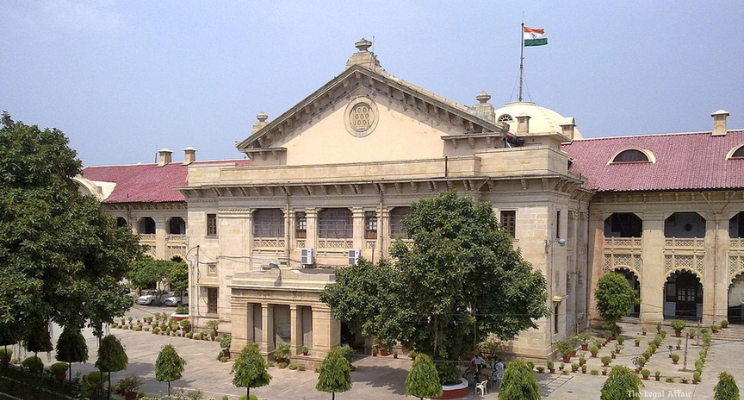
In a powerful and emotionally charged judgment that underscores the judiciary’s deep concern for the dignity and welfare of sexual assault survivors, the Allahabad High Court has come down heavily on state officials for their prolonged delay and apathetic conduct in granting statutory compensation to a minor rape survivor. The case, Victim X in FIR No. 385 of 2025, Police Station Kotwali Sadar, District Kheri through her father v. State of Uttar Pradesh through Principal Secretary, Women Welfare Department, Lucknow and Another, was heard by a Division Bench comprising Justice Shekhar B. Saraf and Justice Prashant Kumar. The Court expressed its anguish over what it described as “reprehensible inaction” and “laissez-faire attitude” of government authorities who had, through their bureaucratic indifference, forced a young rape survivor to approach the High Court merely to claim compensation that was lawfully due to her under the Uttar Pradesh Rani Lakshmi Bai Mahila Samman Kosh Rules, 2015. The incident that led to the case occurred on May 8, 2025, when the minor was sexually assaulted. An FIR was registered on the same day, and a charge sheet was filed promptly on June 25, 2025, thereby triggering the State’s statutory obligation to release the prescribed victim compensation. Under the 2015 Rules, a rape survivor is entitled to a total of ₹3 lakh as compensation — ₹1 lakh payable within 15 days of filing the charge sheet and the remaining ₹2 lakh within a month. However, despite the clear statutory mandate, the authorities failed to release any payment for over three months. The victim, having received no response from the officials, was ultimately compelled to approach the Allahabad High Court for justice.
Arguments:
During the hearing, the petitioner’s counsel submitted that the State’s failure to disburse compensation within the time prescribed under the 2015 Rules amounted not only to dereliction of statutory duty but also to a grave violation of the survivor’s right to dignity and speedy redress under Article 21 of the Constitution of India. The counsel emphasized that the Uttar Pradesh Rani Lakshmi Bai Mahila Samman Kosh was specifically established to provide immediate financial and psychological assistance to victims of sexual assault and to help them rebuild their lives with dignity. However, the authorities’ prolonged inaction completely defeated the very purpose of the welfare scheme. The counsel argued that the scheme’s design — providing financial aid in two quick installments — was intended to ensure that victims, particularly minors, receive urgent medical care, rehabilitation support, and basic relief without being trapped in bureaucratic red tape. Instead, the officials’ delay of over three months had forced the victim’s family into financial hardship and mental distress, compelling them to incur additional costs to file a writ petition just to secure the compensation that was already due.
The petitioner’s side also highlighted the Court’s past observations in similar matters, wherein it had repeatedly reminded the State of its constitutional responsibility to act promptly in cases involving sexual violence survivors. Counsel argued that the inaction of government officials was not merely administrative negligence but amounted to contempt of the State’s statutory obligations. The delay, the petitioner argued, violated the spirit of restorative justice envisioned by the legislature through the 2015 Rules. The counsel urged the Court to hold the responsible officers accountable and to direct exemplary compensation to the victim to reaffirm that the system will not tolerate such indifference toward survivors of heinous crimes.
On the other hand, the State’s counsel attempted to explain the delay by stating that on September 14, 2025 — five days after the writ petition was filed — officials had sought the victim’s bank details, which were subsequently provided by her father on October 16, 2025. The State argued that procedural formalities caused the delay and that there was no deliberate intent to deprive the victim of her lawful entitlement. It was contended that as soon as the bank details were received, the department initiated steps to process the payment under the Rani Lakshmi Bai Mahila Samman Kosh. The counsel sought leniency from the Court, assuring that the authorities were now taking corrective measures to ensure timely payments in similar cases going forward. However, despite these submissions, it became evident during the hearing that as of October 27, 2025, the date of the court proceedings, not a single rupee had been transferred to the victim’s account — more than four months after the filing of the charge sheet. This fact further aggravated the Bench, which found the State’s explanation deeply unsatisfactory and symptomatic of a wider administrative malaise.
The State counsel also tried to emphasize that government departments often face procedural delays due to verification processes, multi-level approvals, and inter-departmental coordination. However, the Bench noted that such excuses cannot justify the denial of relief to a rape survivor, particularly a minor. The petitioner’s counsel, rebutting the State’s defense, contended that the requirement of providing bank details cannot be used as an excuse since it was the duty of the authorities to proactively contact the victim or her family immediately after filing of the charge sheet. The petitioner further argued that the Rules impose a positive obligation on the State to disburse compensation within fixed timelines without requiring victims to pursue the matter personally. The officials’ conduct, therefore, amounted to gross negligence and failure of governance, deserving strong judicial censure and exemplary costs.
Judgment:
Delivering a strongly worded order, the Division Bench of Justice Shekhar B. Saraf and Justice Prashant Kumar condemned the conduct of the responsible officials as “reprehensible” and “astounding.” The Court observed that the entire purpose of the Rani Lakshmi Bai Mahila Samman Kosh — to offer immediate financial relief and emotional support to rape victims — had been completely frustrated by the bureaucratic apathy displayed in this case. The Bench remarked that such delay in releasing compensation not only negates the intention behind the welfare scheme but also compounds the trauma of the survivor, who has already endured severe physical, emotional, and psychological suffering.
The Court noted that under the 2015 Rules, the entire payment of ₹3 lakh was required to be made within one month from the filing of the charge sheet. However, despite the charge sheet being filed on June 25, 2025, no payment had been made even by late October. This inordinate delay, the Bench said, could not be justified under any circumstance. The judges emphasized that compensation to rape victims is not a matter of charity but a legal and moral obligation of the State. Such compensation is an acknowledgment of the State’s failure to protect the victim from a grave violation of her bodily integrity and dignity. The Court observed, “The entire purpose of providing compensation to victims of such a gruesome crime is that the pain of the victim can be soothed urgently and the financial exigency relating to medical treatment may be addressed immediately.”
The Bench further noted that the victim had been forced to incur additional legal expenses to approach the Court for enforcement of her statutory right, which in itself reflected a shocking level of administrative negligence. The Court held that the delay in payment “adds to the agony and exacerbates the pain and suffering” of the survivor, who should have been spared further trauma by a responsive and sensitive State machinery. Observing that the case revealed a deeper systemic problem, the Court stressed that accountability must be enforced upon erring officials who failed in their duty to provide timely relief.
Accordingly, the Bench directed the respondent authorities to immediately release the full amount of ₹3 lakh compensation, if not already paid, within three days from the date of the order. Additionally, taking an extraordinary step to penalize the delay and acknowledge the prolonged suffering of the survivor, the Court ordered the State to pay an additional ₹2 lakh to the minor victim within 15 days as compensatory damages for the officials’ inaction. The Bench further held that this additional compensation amount could be recovered by the government from the negligent officials responsible for the delay after due departmental inquiry. The Court also directed the initiation of departmental proceedings against those officials to ensure accountability and prevent recurrence of such lapses in future cases.
In a scathing observation, the Bench described the officials’ approach as reflective of a “laissez-faire attitude” unbecoming of public servants entrusted with the implementation of victim welfare schemes. The Court reminded the State that the constitutional ethos of Article 21 extends beyond mere protection of life and liberty—it encompasses the right to live with dignity, especially for victims of sexual violence who suffer both social stigma and psychological trauma. The failure of the State to timely compensate such victims, the Court held, constitutes a direct violation of this fundamental right.
This judgment stands as a crucial reaffirmation of the judiciary’s role as the guardian of victims’ rights and a stern warning to administrative authorities against indifference in implementing social welfare schemes. It also signals a shift toward accountability-based governance, where bureaucratic negligence is no longer treated as a harmless delay but as a violation of human rights deserving of financial and disciplinary consequences.