


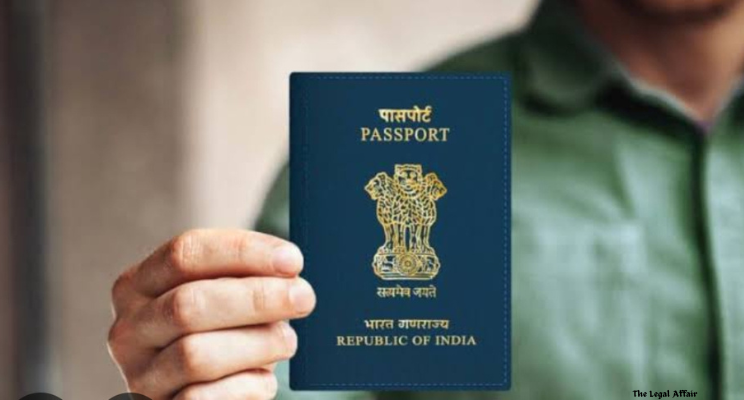
Introduction:
In a significant ruling, the Allahabad High Court clarified that under the Indian Passport Act of 1967, individuals seeking the issuance of a passport do not need prior permission from a competent court, even if they are facing criminal charges. This ruling came from a Bench comprising Justice Alok Mathur and Justice Arun Kumar Singh Deshwal, who elucidated that the passport authority is responsible for considering and deciding on the application for a passport as per Section 5(2) of the Act. This article delves into the arguments presented by both sides, the court’s judgment, and the broader implications of this decision.
Case Background:
The petitioner, Umapati, had his passport application rejected by the passport authority due to the pendency of two criminal cases against him. Umapati approached the Allahabad High Court, challenging the decision and seeking clarity on whether prior permission from a competent court was required for passport issuance in light of pending criminal charges.
Arguments from Both Sides:
Petitioner’s Arguments:
The petitioner argued that the Indian Passport Act, 1967, does not stipulate the necessity of obtaining prior permission from a court for the issuance of a passport, even if criminal cases are pending.
Umapati’s legal counsel pointed out that Sections 5 and 6 of the Act govern the issuance and refusal of passports. According to these sections, the passport authority is mandated to consider the application and can reject it only on specific grounds mentioned in Section 6.
The petitioner contended that the refusal of his passport application solely based on the pendency of criminal cases was arbitrary and not in line with the provisions of the 1967 Act. He emphasized that the Act entrusts the passport authority with the responsibility to make an independent decision regarding the issuance of passports and does not impose an additional requirement of obtaining court permission.
Respondent’s Arguments:
The Deputy Solicitor General of India, S.B. Pandey, representing the passport authority, argued that in cases where criminal proceedings are ongoing, the applicant should seek permission from the court where the cases are pending.
He asserted that the passport authority should not make a decision in such cases without the court’s consent, as it could potentially interfere with judicial proceedings.
Pandey further argued that allowing the issuance of passports to individuals with pending criminal cases without court oversight could lead to situations where accused persons might abscond, thereby hindering the judicial process. He maintained that the passport authority’s decision to reject Umapati’s application was justified and in the interest of justice.
Court’s Judgment:
The Allahabad High Court, after careful consideration of the arguments, ruled in favor of the petitioner, Umapati. The Bench elucidated that the Indian Passport Act of 1967 does not contain any provision requiring prior permission from a competent court for the issuance of a passport, even if the applicant is facing criminal charges. The Court highlighted that the passport authority is mandated to make a decision on passport applications as per Section 5(2) of the Act.
Analysis of Sections 5 and 6 of the Indian Passport Act, 1967:
Justice Alok Mathur and Justice Arun Kumar Singh Deshwal explained that Section 5 of the 1967 Act outlines the procedure for applying for a passport, while Section 6 specifies the grounds on which a passport application can be refused. These grounds include scenarios where the issuance of a passport would be detrimental to the sovereignty and integrity of India, security of India, friendly relations with any foreign country, or in the interests of the general public.
The Court emphasized that the Act does not prescribe obtaining court permission as one of the conditions for the issuance of a passport. Therefore, the passport authority must independently assess the application based on the criteria mentioned in Sections 5 and 6. The Court further stated that the authority’s decision should be based on the merits of the application and the conditions laid down in the Act, without requiring prior court intervention.
Addressing Concerns about Absconding:
The Bench addressed the concerns raised by the Deputy Solicitor General regarding the potential for accused persons to abscond if passports are issued without court permission.
The Court clarified that while the issuance of a passport does not require prior court permission, individuals facing criminal charges must seek court approval if they intend to travel abroad. This ensures that the judicial process is not compromised and that accused persons remain within the jurisdiction of the court handling their cases.
Broader Implications:
This ruling by the Allahabad High Court underscores the independent authority of the passport office in deciding on passport applications without the need for prior court intervention. It also provides clarity on the procedural requirements under the Indian Passport Act, 1967, ensuring that applicants are not subjected to arbitrary refusals. The decision highlights the importance of balancing individual rights with the necessity of upholding judicial processes.