


Introduction:
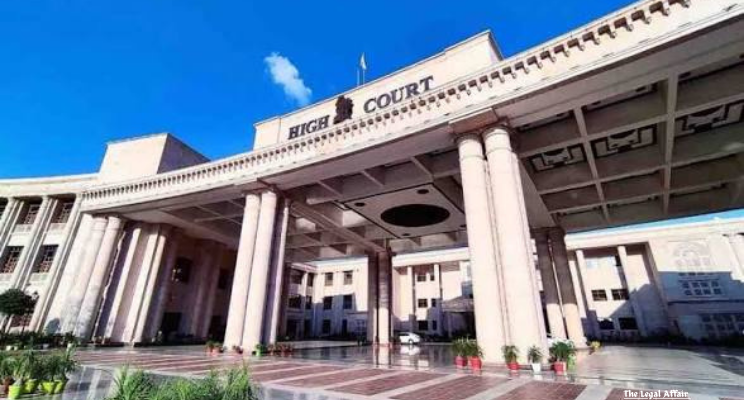
The Allahabad High Court, while hearing a Public Interest Litigation (PIL) filed by Advocate Shivendu Pandey in Shivendu Pandey v. State of U.P. Through Additional Chief Secretary/Principal Secretary, Home Department, Lucknow and 11 Others, delivered significant observations on the recurring failure of authorities to enforce fire safety laws and building regulations. The matter arose from the tragic fire that engulfed a three-storey building housing an Animation Centre in the Aliganj area of Lucknow, resulting in the deaths of at least fifteen persons and causing widespread public concern. Taking serious note of the tragedy, a Division Bench comprising Justice Rajan Roy and Justice Manjive Shukla emphasized that such incidents are not merely accidental but often the direct consequence of prolonged administrative negligence, lax enforcement of statutory provisions, and repeated violations of building and safety norms.
The Court observed that although government agencies and local authorities typically become active immediately after such catastrophic incidents, their enthusiasm quickly fades, allowing similar tragedies to recur. This pattern, according to the Bench, reflects a systemic governance failure rather than isolated administrative shortcomings. The Court remarked that every major fire disaster is followed by promises of reform and accountability, yet very little changes on the ground. Consequently, fresh incidents continue to claim innocent lives, exposing the ineffectiveness of the existing regulatory framework.
The PIL sought judicial intervention to ensure greater accountability of public authorities entrusted with enforcing fire safety regulations, urban planning laws, and building bye-laws. During the proceedings, the Court examined various statutory provisions governing fire safety, urban development, electricity connections, and building permissions. It also scrutinized the actions of multiple government departments, including the Housing and Urban Planning Department, the Uttar Pradesh Fire and Emergency Services, the Lucknow Development Authority, the Uttar Pradesh Power Corporation Limited (UPPCL), and Madhyanchal Vidyut Vitran Nigam Limited (MVVNL).
One of the most significant issues that emerged during the hearing concerned Section 26 of the Uttar Pradesh Fire and Emergency Services Act, 2022. The State informed the Court that buildings having a height of less than fifteen metres are exempted from obtaining a fire safety certificate under the Act. The Court expressed serious reservations regarding this exemption, observing that the very building where the fatal fire occurred fell within this exempted category. According to the Bench, the tragedy itself demonstrated that such an exemption could not be justified merely on the basis of building height when public safety remained equally vulnerable in smaller multi-storey structures.
The Court also uncovered disturbing facts relating to unauthorized construction. It was revealed that the building had originally been sanctioned exclusively for residential use. However, contrary to the sanctioned plan, commercial construction was carried out and commercial activities were being conducted from the premises. More alarmingly, although an order directing demolition of the illegally constructed basement had been passed in May 2016, the same was withdrawn within two months. Even after the withdrawal of the demolition order, the subsequent construction allegedly continued to violate the sanctioned building plan without attracting any meaningful action from the authorities.
The Court further examined how the building obtained a commercial electricity connection despite being approved only for residential purposes. The State authorities informed the Court that while a residential electricity connection of two kilowatts had initially been granted, the load was subsequently converted into a commercial connection and enhanced to twenty kilowatts on the basis of a No Objection Certificate issued by the Director of Electrical Safety. The Court questioned how multiple government authorities failed to detect or prevent these apparent violations despite having ample opportunities to intervene.
Another issue considered by the Court concerned compensation paid to the families of the deceased. Although each victim’s family had received approximately twelve lakh rupees from different government departments, the Bench questioned the absence of any consistent policy governing compensation in disaster-related fatalities. It observed that in several previous incidents the State had awarded compensation ranging from twenty-five lakh to fifty lakh rupees, whereas in the present case substantially lower amounts had been granted without any disclosed criteria.
Against this background, the Court considered whether comprehensive institutional reforms were necessary to prevent similar tragedies in the future. Rather than treating the incident as an isolated occurrence, the Bench sought to address systemic deficiencies affecting fire safety enforcement, building regulation, urban planning, and administrative accountability throughout the State.
Arguments of the Parties:
The petitioner, Advocate Shivendu Pandey, approached the Allahabad High Court through a Public Interest Litigation highlighting the alarming frequency of fatal fire incidents across Uttar Pradesh and the persistent failure of public authorities to enforce statutory safety requirements. It was contended that the Lucknow fire was not merely an unfortunate accident but the inevitable consequence of years of administrative neglect, illegal construction, weak regulatory oversight, and failure to ensure compliance with existing building laws.
The petitioner argued that the State had failed in its constitutional obligation to protect the lives of citizens by permitting unauthorized commercial activities to operate from a building sanctioned solely for residential purposes. According to the petitioner, if municipal authorities, planning authorities, fire services, and electricity departments had discharged their statutory responsibilities diligently, the loss of fifteen human lives could have been prevented.
The petitioner also questioned the effectiveness of the statutory framework itself. Particular emphasis was placed upon the exemption granted under Section 26 of the Uttar Pradesh Fire and Emergency Services Act, 2022, whereby buildings below fifteen metres in height are exempt from obtaining fire safety certificates. It was argued that such an exemption creates an artificial distinction unrelated to actual fire risk and leaves a substantial number of commercial establishments beyond meaningful regulatory supervision.
Further, the petitioner sought institutional reforms rather than isolated disciplinary action. The Court was requested to direct the State Government to formulate a comprehensive Standard Operating Procedure governing inspections, enforcement of building bye-laws, periodic fire safety audits, accountability of defaulting officers, and coordinated action among different government departments responsible for urban safety.
The State Government, represented by its Standing Counsel and the Additional Advocate General, placed various factual details before the Court regarding the building and the applicable statutory provisions. The State informed the Bench that under the existing provisions of the Uttar Pradesh Fire and Emergency Services Act, 2022, buildings having a height below fifteen metres were exempted from obtaining mandatory fire safety certification.
The State also disclosed that the building had originally received approval only for residential purposes. However, commercial construction had subsequently been undertaken and commercial activities were being carried out within the premises. During the hearing, it was revealed that an order directing demolition of unauthorized basement construction had indeed been passed in May 2016 because the construction violated the sanctioned building plan. However, the order was later withdrawn in July 2016. Significantly, it was also acknowledged that despite withdrawal of the demolition proceedings, the subsequent construction still did not conform to the approved map.
When questioned by the Court as to why construction had been permitted to continue despite apparent violations of planning laws, the State candidly admitted that no effective action had been taken by the concerned authorities during the period of illegal construction.
The Uttar Pradesh Power Corporation Limited and Madhyanchal Vidyut Vitran Nigam Limited also assisted the Court. They informed the Bench that although a residential electricity connection had initially been sanctioned in 2016, a commercial connection with enhanced electrical load had subsequently been granted based upon a No Objection Certificate issued by the Director of Electrical Safety.
The State further informed the Court that compensation amounting to approximately twelve lakh rupees had been paid to the legal heirs of each deceased victim through different departments. However, when questioned regarding the policy governing determination of compensation, no clear statutory or administrative framework explaining variations in compensation awarded in different incidents was placed before the Court.
Court’s Judgment:
The Allahabad High Court expressed profound concern over what it described as recurring institutional failures that continue to result in avoidable loss of human lives. The Bench observed that almost every major fire tragedy follows a familiar pattern. Authorities become active immediately after the incident, investigations are initiated, assurances of strict action are given, and courts are approached through public interest litigation. However, once public attention fades, the initial urgency gradually disappears and systemic deficiencies remain unaddressed until another disaster occurs.
The Court observed that this recurring cycle demonstrates the urgent necessity of long-term structural reforms rather than temporary administrative responses. It emphasized that governance cannot be confined to post-disaster relief measures; instead, preventive regulation and timely enforcement of statutory obligations constitute the true responsibility of the State.
One of the Court’s most significant observations concerned Section 26 of the Uttar Pradesh Fire and Emergency Services Act, 2022. After being informed that buildings below fifteen metres are exempt from obtaining fire safety certificates, the Bench observed that such a statutory exemption appeared, at least prima facie, to be unreasonable. The Court noted that the present tragedy itself occurred in a building falling within the exempted category. Consequently, the assumption that shorter buildings inherently pose lesser fire risks stood seriously undermined by the facts of the case.
The Court therefore observed that all statutory provisions relating to fire safety exemptions require reconsideration by the State Government. It emphasized that legislative policy must evolve in response to practical realities and that public safety cannot be compromised merely because a building falls below a prescribed height threshold.
The Bench also examined the extensive violations relating to construction and land use. It found it deeply disturbing that a building sanctioned exclusively for residential purposes had been converted into commercial use without effective intervention by the planning authorities. Even more concerning was the revelation that although demolition proceedings had once been initiated, they were subsequently withdrawn, enabling illegal construction to continue.
The Court questioned why authorities had failed to invoke powers available under the Uttar Pradesh Urban Planning and Development Act, 1973, while unauthorized construction was in progress. It observed that had timely enforcement action been taken, the building would either have been demolished or brought into conformity with the sanctioned plan, thereby potentially preventing the tragic loss of lives.
The Bench further scrutinized the role of electricity authorities. It questioned how commercial electricity connections with significantly enhanced electrical loads were sanctioned for premises that legally continued to remain residential properties. According to the Court, if proper verification had been undertaken at the stage of granting or enhancing the electricity connection, the unauthorized commercial use of the building could have been detected and corrective measures initiated well before the occurrence of the fire.
The Court also expressed dissatisfaction regarding the absence of a uniform compensation policy. It observed that compensation awarded by the State in similar tragedies varies substantially, sometimes reaching fifty lakh rupees and in other cases remaining considerably lower. The Bench questioned the criteria adopted by the Government in determining compensation and sought disclosure of any statutory or executive policy governing such decisions.
Recognizing that effective governance requires institutional accountability, the Court directed the State Government to formulate a comprehensive Standard Operating Procedure ensuring strict compliance with building regulations, fire safety requirements, inspection mechanisms, and enforcement protocols. The proposed SOP is also expected to incorporate provisions imposing strict penal liability upon officers whose negligence or inaction contributes to violations of safety laws.
To facilitate a comprehensive adjudication of the issues involved, the Court directed the petitioner to implead several senior government officials, including the Principal Secretary of the Housing and Urban Planning Department, the Housing Commissioner of the Uttar Pradesh Avas Evam Vikas Parishad, and the Principal Secretary of Energy. Separate counter-affidavits addressing each of the Court’s observations were directed to be filed before the next hearing.
Considering the complexity and public importance of the issues involved, the Court appointed Shri Rakesh Kumar, Advocate and member of the Oudh Bar Association, as Amicus Curiae to assist the Court in examining legal and policy issues arising from the matter.
The proceedings remain pending, with the next hearing scheduled for August 4, 2026. Nevertheless, the observations already made by the Allahabad High Court carry considerable significance. They underscore that protection of life under Article 21 of the Constitution extends beyond post-disaster compensation and requires the State to establish effective preventive mechanisms through strict enforcement of planning laws, meaningful fire safety regulation, inter-departmental coordination, and administrative accountability. The Court’s directions indicate a shift from reactive governance towards a preventive legal framework aimed at ensuring that regulatory failures no longer translate into avoidable human tragedies.