


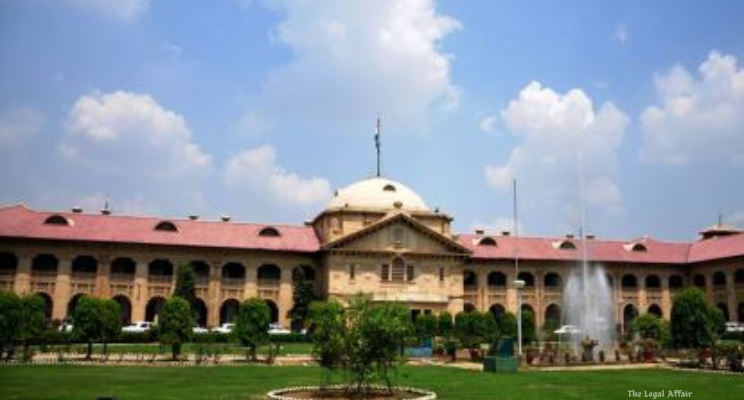
Introduction:
In Banaras Hindu University, Varanasi through its Registrar v. M/s Umang Cure Pvt. Ltd. & Others [Appeal under Section 37 of the Arbitration and Conciliation Act, 1996 No. 289 of 2025], the Allahabad High Court delivered an important ruling clarifying the legal position on the survival of arbitration clauses when contracts are extended by conduct of the parties despite having expired formally. A Division Bench comprising Chief Justice Arun Bhansali and Justice Kshitij Shailendra held that where parties continue to act upon an agreement even after its formal expiry, the arbitration clause contained therein also stands impliedly extended. The judgment gains significance in the context of commercial arrangements where formal renewals may lapse, but business relations continue uninterrupted. Relying on the authoritative pronouncement of the Supreme Court in Bharat Petroleum Corporation Ltd. v. Great Eastern Shipping Co. Ltd., the High Court reaffirmed that arbitration agreements are separable and autonomous and do not automatically perish merely because the principal contract has expired by efflux of time. The case arose from a dispute between Banaras Hindu University (BHU) and a private entity licensed to run a 24-hour pharmacy in Sir Sunderlal Hospital, where the license period had technically expired but the parties continued their relationship through conduct, leading to a contentious legal battle over eviction and arbitral jurisdiction.
Arguments on Behalf of the Appellant (Banaras Hindu University):
The appellant-University challenged the orders passed by the Commercial Court granting interim protection to the respondent under Section 9 of the Arbitration and Conciliation Act, 1996. The principal contention of the appellant was that the arbitration clause could not be invoked because the license agreement itself had expired, and with its expiry, all contractual obligations including the arbitration clause stood extinguished. It was argued that after 31.03.2023, there was no subsisting agreement between the parties, as a fresh licence had been offered on revised terms which the respondent failed to accept.
The appellant asserted that the respondent was merely an unauthorised occupant after expiry of the licence period and that its continued possession of the premises could not be legitimised by invoking arbitration. The University emphasised that acceptance of old licence fees by itself could not amount to extension of the agreement, particularly when revised terms had been proposed and eviction notices had been issued. According to the appellant, once the contractual relationship had come to an end, disputes relating to possession became matters of public law and property management, falling outside the scope of arbitration.
Strong reliance was placed on the judgment in Anoop Maheshwari v. Thomas T. Kurian, wherein it was held that once a contract comes to an end, the arbitration clause also ceases to exist unless specifically preserved. On this basis, it was argued that the Commercial Court had erred in assuming the existence of an arbitration agreement and granting protection to the respondent. The appellant further contended that the interim order virtually granted final relief by restraining eviction, thereby prejudicing the rights of the University as a public institution.
Additionally, the appellant submitted that the Commercial Court failed to apply settled principles governing grant of interim injunction, namely the existence of a prima facie case, balance of convenience, and irreparable injury. It was argued that without recording findings on these essential parameters, the order granting protection from eviction was legally unsustainable and liable to be set aside under Section 37 of the Act.
Arguments on Behalf of the Respondent (Licensee / Pharmacy Operator):
The respondent defended the interim protection granted by the Commercial Court by asserting that the arbitration clause continued to operate despite the formal expiry of the licence agreement. It was argued that the conduct of the parties clearly demonstrated a conscious extension of the contractual relationship. The respondent highlighted that even after expiry of the five-year licence period in 2021, the University itself passed an order treating the period between 23.09.2021 and 03.01.2023 as a “deemed extended period,” thereby acknowledging continuity of the licence.
The respondent further submitted that even after 31.03.2023, the University continued to accept licence fees paid at the old rates through cheques and drafts, which were consciously deposited in the University’s bank accounts. This, according to the respondent, amounted to acceptance of performance under the existing agreement and constituted an implied extension of all its terms and conditions, including the arbitration clause.
Placing reliance on the Supreme Court judgment in Bharat Petroleum Corporation Ltd. v. Great Eastern Shipping Co. Ltd., the respondent argued that when an agreement is extended by implication or conduct, all its clauses, including the arbitration clause, stand extended. The respondent contended that the principle of separability of arbitration agreements ensured that the arbitration clause survived even if the main contract was disputed or alleged to have expired.
The respondent also argued that the University’s actions, such as issuing eviction notices and disconnecting electricity, were coercive in nature and threatened to disrupt an essential service operating within a hospital campus. In such circumstances, interim protection under Section 9 was necessary to preserve the subject matter of arbitration and prevent irreparable harm.
With regard to the plea that the arbitration clause had ceased to exist, the respondent pointed out that this objection was raised for the first time before the High Court and had not been urged before the Commercial Court. It was therefore contended that the appellant could not be permitted to raise such a plea at the appellate stage, particularly when the factual matrix overwhelmingly supported the existence of an arbitral relationship.
Court’s Judgment and Reasoning:
The Allahabad High Court undertook a detailed examination of the legal position concerning survival of arbitration clauses after expiry of contracts and the factual matrix governing the relationship between the parties. At the outset, the Court rejected the appellant’s contention that the arbitration clause had perished with the expiry of the licence agreement. Relying squarely on the judgment of the Supreme Court in Bharat Petroleum Corporation Ltd. v. Great Eastern Shipping Co. Ltd., the Bench reiterated that even where an agreement has technically expired by efflux of time, the arbitration clause may continue to operate if the agreement is extended by the conduct of the parties.
The Court observed that the Supreme Court had clearly held that when parties continue to act under an agreement after its formal expiry, all its terms and conditions, including the arbitration clause, are deemed to have been extended by implication. Applying this principle to the present case, the Bench noted that despite the expiry of the licence period in 2021, the University itself treated the licence as extended up to 03.01.2023 through a formal order. Even thereafter, the University continued to receive licence fees from the respondent, which were not unilaterally deposited but consciously accepted through banking channels.
The Court found that this conduct unequivocally demonstrated that the contractual relationship had not come to an abrupt end and that the parties continued to be governed by the terms of the original agreement. Consequently, the arbitration clause embedded in the licence agreement also survived and could be invoked for resolution of disputes. The Bench categorically held that the reliance placed on Anoop Maheshwari v. Thomas T. Kurian was misplaced, as the said judgment did not consider the binding precedent laid down by the Supreme Court in Bharat Petroleum Corporation Ltd., and therefore could not be treated as good law.
The Court also took note of the fact that the plea regarding non-existence of the arbitration clause had been raised for the first time before the High Court. In the absence of any foundational challenge before the Commercial Court, and given the admitted conduct of the parties, the Court held that the objection lacked substance.
However, while upholding the existence of the arbitration clause, the High Court found merit in the appellant’s grievance regarding the manner in which interim protection had been granted. The Bench observed that the Commercial Court had failed to record findings on the essential ingredients for grant of interim injunction, namely prima facie case, balance of convenience, and irreparable injury. Granting protection from eviction without such analysis, the Court held, amounted to an unsustainable exercise of discretion.
Accordingly, while rejecting the appellant’s challenge to the existence of the arbitration clause, the High Court set aside the interim order passed by the Commercial Court and remanded the matter for fresh consideration in accordance with law. The Commercial Court was directed to reassess the application under Section 9 by specifically addressing the settled parameters governing interim relief.