


Introduction:
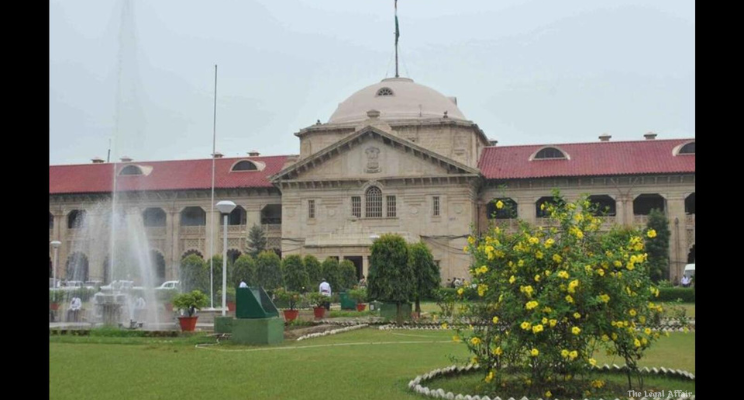
In a significant ruling, the Allahabad High Court reaffirmed the statutory obligation of a Hindu man to maintain his unmarried daughter who is unable to support herself. The judgment was delivered by a single-judge bench of Justice Manish Kumar Nigam, who dismissed a petition challenging the maintenance order passed by the Principal Judge, Family Court, Hathras. The petition was filed by Awadhesh Singh, who was directed by the Family Court to pay ₹25,000 per month as maintenance to his wife, Urmila, and ₹20,000 per month to his daughter, Km. Gauri Nandini. This ruling underscores the principles enshrined in the Hindu Adoptions and Maintenance Act, 1956, particularly Section 20, which mandates the maintenance of an unmarried daughter until she is married.
Arguments of the Petitioner (Husband):
Awadhesh Singh, the petitioner, contested the Family Court’s order on several grounds. His primary argument was that his daughter, Gauri Nandini, born on June 25, 2005, had reached the age of majority on June 25, 2023, prior to the court’s order dated September 26, 2023. Singh contended that under Section 125 of the Code of Criminal Procedure (CrPC), a daughter who has attained majority and is not suffering from any physical or mental abnormality is not entitled to maintenance. He relied on the Supreme Court’s ruling in Abhilasha v. Parkash (2020), where it was held that an unmarried daughter who has attained majority and does not have any mental or physical disability cannot claim maintenance under Section 125 CrPC.
Singh further argued that the Family Court erred in law by awarding maintenance to his daughter, who was no longer a minor at the time of the order. He maintained that the maintenance obligation should not extend beyond the age of majority, especially when the daughter is physically and mentally capable of earning her livelihood. According to Singh, the Family Court’s decision to grant maintenance to an adult daughter was inconsistent with the provisions of Section 125 CrPC and the prevailing legal precedents.
Additionally, Singh challenged the maintenance order for his wife, arguing that the amount of ₹25,000 per month was excessive and not commensurate with his financial capacity. He claimed that his wife had exaggerated her financial needs and that the court had not adequately considered his income and liabilities before determining the maintenance amount. Singh sought a reduction in the maintenance amount on the grounds of financial hardship and the changing circumstances since the separation.
Arguments of the Respondents (Wife and Daughter):
The wife and daughter, represented by their counsel, defended the Family Court’s order, arguing that the maintenance awarded was just and necessary for their sustenance. They asserted that the daughter, although having reached the age of majority, was still entitled to maintenance under Section 20 of the Hindu Adoptions and Maintenance Act, 1956. They pointed out that Section 20(3) of the Act imposes a statutory obligation on a Hindu father to maintain his unmarried daughter who is unable to maintain herself, regardless of her age.
The respondents further contended that the Hindu Adoptions and Maintenance Act provides broader protection to unmarried daughters than Section 125 CrPC. They argued that the maintenance obligation under the 1956 Act continues until the daughter is married, and this obligation is not extinguished upon her attaining majority. The respondents cited the Rajasthan High Court’s ruling in Jagdish Jugtawat v. Manju Lata (2002), where the court held that a daughter’s right to maintenance extends beyond the age of majority under Section 20(3) of the Hindu Adoptions and Maintenance Act.
The respondents also argued that it would be unnecessary and burdensome to require the daughter to file a separate application under the 1956 Act when the Family Court had already granted the necessary relief under Section 125 CrPC. They contended that the Family Court, which has jurisdiction under both Section 125 CrPC and Section 20 of the 1956 Act, was well within its rights to award maintenance to the daughter until her marriage.
Regarding the maintenance awarded to the wife, the respondents argued that the amount determined by the Family Court was fair and reasonable, considering the cost of living, inflation, and the husband’s financial capacity. They highlighted that the wife had no independent means of income and was entirely dependent on the maintenance provided by her husband. Therefore, they urged the court to uphold the Family Court’s order without any reduction in the maintenance amount.
Court’s Observations and Judgment:
After carefully examining the arguments presented by both parties, the Allahabad High Court upheld the Family Court’s decision, emphasizing the statutory obligation imposed by Section 20 of the Hindu Adoptions and Maintenance Act, 1956. Justice Manish Kumar Nigam observed that the obligation to maintain an unmarried daughter is deeply rooted in Hindu Law, and Section 20(3) of the 1956 Act codifies this principle, making it a legal requirement for a Hindu father to support his unmarried daughter who is unable to maintain herself.
The court rejected the petitioner’s argument that the daughter’s maintenance should cease upon her attaining majority. The judge referred to the Supreme Court’s affirmation of the Rajasthan High Court’s decision in Jagdish Jugtawat v. Manju Lata (2002), where it was held that a minor daughter’s right to maintenance continues beyond the age of majority under Section 20(3) of the 1956 Act until she is married. The court clarified that the maintenance obligation under Section 20(3) of the Act is not limited by the age of majority, and the father’s responsibility to maintain his unmarried daughter persists as long as she remains unmarried and unable to support herself.
The court further noted that the Family Court had jurisdiction under both the Family Courts Act, 1984, and Section 125 CrPC, as well as under the Hindu Adoptions and Maintenance Act, 1956, to entertain and decide maintenance applications. Therefore, it was within the Family Court’s authority to grant maintenance to the daughter under Section 125 CrPC, considering the broader protections afforded by Section 20 of the 1956 Act. The court emphasized that requiring the daughter to file a separate application under the 1956 Act for the same relief would be redundant and unnecessary.
The High Court also dismissed the husband’s plea for a reduction in the maintenance amount awarded to the wife. The court found that the Family Court had acted within its discretion in determining the maintenance amount based on the financial circumstances of both parties. The judge observed that the amount awarded was reasonable and necessary for the wife’s and daughter’s sustenance, given the cost of living and inflationary pressures.
In conclusion, the Allahabad High Court upheld the Family Court’s order, dismissing both the husband’s revision petition and the wife and daughter’s plea for enhancement. The court ruled that the maintenance amount awarded was just and appropriate, and no interference was required. However, the court clarified that the dismissal of the revision petition does not preclude the wife and daughter from seeking a modification of the maintenance order under Section 127 CrPC or moving an appropriate application for an increase in the maintenance amount if there are changes in their circumstances.
Conclusion:
The Allahabad High Court’s judgment reaffirms the statutory obligation of a Hindu father to maintain his unmarried daughter under Section 20 of the Hindu Adoptions and Maintenance Act, 1956. By upholding the Family Court’s decision to award maintenance to an unmarried daughter beyond the age of majority, the court has reinforced the principle that a daughter’s right to maintenance continues until her marriage. This ruling underscores the broader protections afforded to women under Hindu law and serves as a reminder of the legal and moral obligations of parents to support their children. The judgment also emphasizes the need for courts to consider the financial circumstances of all parties when determining maintenance awards, ensuring that they are fair and just in the context of modern living standards.