


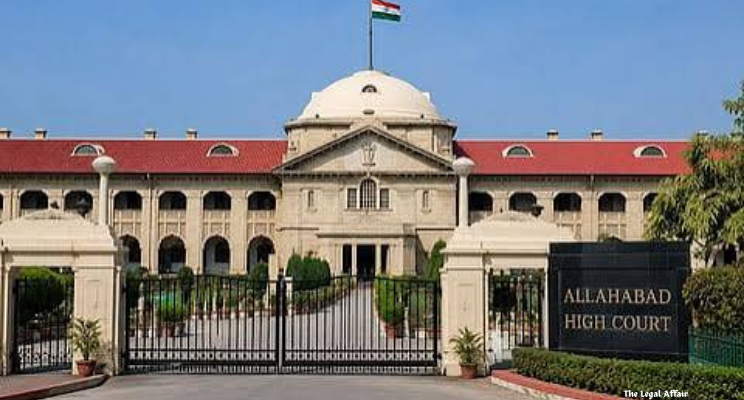
Introduction:
The Allahabad High Court has reaffirmed that a State authority cannot indefinitely withhold contractual payments that it has expressly admitted to be due to a contractor. The Court held that where the government authority acknowledges its liability and there is no dispute regarding the execution of the work, the failure to release the admitted amount constitutes arbitrary action that can be challenged through a writ petition under Article 226 of the Constitution of India.
A Division Bench comprising Justice J.J. Munir and Justice Indrajeet Shukla observed that non-payment of even admitted contractual dues for an uncertain period is arbitrary and cannot be legally justified. The Court clarified that although money claims arising out of contracts are ordinarily adjudicated through civil proceedings when substantial factual disputes exist, the rule does not create an absolute prohibition against granting relief under writ jurisdiction. Where liability is clearly admitted by a public authority, constitutional courts may intervene to prevent arbitrary withholding of legitimate payments.
The dispute arose from a claim brought by a civil contractor who had executed construction work for the Nagar Panchayat, Chandauli. The contractor alleged that bills amounting to ₹28,43,443 remained unpaid despite submitting an application and issuing reminders to the concerned authorities. The continued withholding of payment prompted the contractor to approach the High Court under Article 226, seeking enforcement of its contractual entitlement.
During the proceedings, the High Court directed the Executive Officer of the Nagar Panchayat to disclose, through a personal affidavit, whether the contractor’s claims were admitted. In response, the Executive Officer acknowledged that ₹7,92,580 remained payable under the first work order. Regarding the second work order, the authority stated that ₹6,31,890 remained outstanding but could not be released until certain billing formalities were completed and the necessary engineering certification was obtained. Importantly, the completion of the work itself was not disputed.
The distinction between the two claims became central to the Court’s decision. While the first amount was categorically admitted, the second was linked to the completion of specified procedural requirements. The Court therefore examined whether the State could rely on the ordinary rule governing contractual disputes to resist a writ petition even when its liability was admitted, and whether procedural deficiencies could justify indefinitely withholding payment for completed work.
In resolving these questions, the High Court relied on Supreme Court decisions concerning the maintainability of writ petitions for monetary claims against public authorities, including M/s Utkal Highways Engineer and Contractors v. Chief General Manager and State of U.P. v. Bridge & Roof Co. (India) Ltd. It also considered the principle recognised in Dr. Poornima Advani and another v. Government of NCT of Delhi concerning compensation by way of interest for money wrongfully withheld.
The judgment is significant for government contractors and other persons dealing with public authorities because it distinguishes between genuinely disputed contractual liabilities and admitted dues that remain unpaid without adequate justification. It reinforces the principle that the State’s contractual obligations do not cease to be subject to constitutional standards merely because the underlying transaction arises from a contract.
Arguments of the Parties:
The petitioner’s principal grievance was that despite completing the construction work entrusted to it by the Nagar Panchayat, Chandauli, substantial amounts remained unpaid. The contractor claimed that a total sum of ₹28,43,443 was outstanding against the work orders and that the authorities had failed to release the payment despite an application and repeated reminders. The continued delay, according to the substance of the grievance, deprived the contractor of money legitimately earned through the execution of public works.
The contractor approached the Allahabad High Court under Article 226 of the Constitution, seeking judicial intervention against the failure of the public authority to discharge its contractual payment obligations. The claim raised an important question regarding the availability of constitutional remedies in disputes involving monetary liability under a contract. Although contractual disputes are generally resolved through civil proceedings or other agreed dispute-resolution mechanisms, the petitioner sought to establish that the present matter was different because the work had been performed and the outstanding dues had been acknowledged by the authority itself.
The petitioner’s case was strengthened during the proceedings when the High Court required the Executive Officer, Nagar Panchayat, Chandauli, to state on a personal affidavit whether the amounts claimed were admitted. In response, the Executive Officer acknowledged that ₹7,92,580 remained unpaid under the first work order. This admission was material because it substantially reduced the scope for disputing the existence of the liability. The authority did not deny that the amount was payable; instead, it expressed willingness to consider its payment.
Regarding the second work order, the petitioner faced a different procedural objection. The Executive Officer stated that ₹6,31,890 could not be released because the contractor had submitted an incomplete Form No. 26 rather than a bill in the prescribed format. The affidavit also referred to pending certification by the engineers. Nevertheless, the completion of the construction work was not disputed, and the authority indicated its willingness to release the balance after the necessary formalities were fulfilled.
From the petitioner’s perspective, the distinction between the two work orders did not alter the fundamental grievance that payment for completed work had remained outstanding. The contractor had undertaken the work for a public authority and was entitled to expect that the agreed payment process would be completed within a reasonable period. Where the authority acknowledged the liability and did not dispute the performance of the work, continued non-payment raised concerns about arbitrary administrative conduct and the unfair withholding of contractual consideration.
The legal basis of the petitioner’s claim also involved the scope of Article 226. The provision empowers High Courts to issue appropriate writs, directions and orders for the enforcement of fundamental rights and for other purposes. The petitioner sought to invoke this constitutional jurisdiction to secure payment of admitted dues rather than being compelled to pursue an ordinary civil action despite the authority’s own acknowledgment of its liability.
The respondents’ position, as reflected in the Executive Officer’s affidavit, was more qualified than a complete denial of the contractor’s claim. With respect to the first work order, the authority admitted that ₹7,92,580 remained outstanding and expressed readiness to consider payment. Regarding the second work order, the respondents relied on deficiencies in the documentation submitted by the contractor and the absence of the required engineering certification. Their position was that the balance could not be released until the prescribed billing requirements had been fulfilled.
The respondents’ explanation therefore raised a question about the distinction between refusing payment altogether and requiring compliance with legitimate administrative procedures before releasing public funds. A public authority may reasonably insist on the documentation and certification necessary to verify a bill and process payment in accordance with applicable rules. However, such requirements must be considered in light of the admitted completion of the work and the authority’s acknowledged obligation to pay the contractor.
A further legal consideration concerned the maintainability of a writ petition for recovery of money arising out of a contract. The ordinary rule is that where contractual liability is seriously disputed or requires extensive examination of evidence, the parties should ordinarily pursue a civil suit or another appropriate remedy. The respondents’ reliance on the principles governing contractual disputes therefore had to be assessed against the specific circumstances of the case, particularly the clear admission concerning the first work order and the absence of a dispute regarding completion of the construction work.
The available case summary does not reproduce the complete pleadings or oral submissions of the respondents. Accordingly, it would be inappropriate to attribute to the State a categorical argument that the entire petition was not maintainable, or to suggest that the respondents disputed facts they had expressly admitted. The legal issue before the Court was whether the ordinary restrictions governing monetary claims in writ jurisdiction could prevent relief where contractual dues were admitted and remained unpaid.
The dispute thus required the High Court to balance two considerations: the need to respect the ordinary procedures governing contractual claims and the constitutional obligation of public authorities to act fairly and not withhold admitted liabilities arbitrarily. The Court ultimately concluded that the rule against deciding monetary claims in writ proceedings was not absolute and that the circumstances justified judicial intervention.
Court’s Judgment:
The Allahabad High Court allowed the writ petition, holding that admitted contractual dues cannot be withheld indefinitely by a public authority and that Article 226 may be invoked to secure their payment. The Division Bench of Justice J.J. Munir and Justice Indrajeet Shukla distinguished between contractual disputes requiring detailed adjudication and claims in which the authority’s liability is clearly established by its own admission.
The Court’s reasoning rested on the nature of the respondents’ obligation, the absence of a dispute concerning the completion of the work and the statements made in the Executive Officer’s personal affidavit. The affidavit provided a clear basis for determining the status of the outstanding amounts and demonstrated that the authority did not deny its obligation to settle the contractor’s dues.
The Bench emphasised that non-payment of admitted contractual dues for an uncertain period amounts to arbitrary inaction. A public authority cannot rely on the contractual nature of a transaction as a justification for indefinitely retaining money that it acknowledges is payable. The Court considered such conduct inconsistent with the standards of fairness expected of public authorities.
Maintainability of Writ Petitions for Recovery of Admitted Dues
An important aspect of the judgment is its clarification of the scope of Article 226 in disputes involving monetary claims. High Courts generally exercise caution when asked to resolve contractual disputes through writ proceedings. Such caution arises because contractual claims may involve disputed questions of fact, interpretation of contractual terms, assessment of evidence or determination of competing liabilities. These issues are ordinarily better suited to civil courts or other appropriate adjudicatory forums.
However, the Court made clear that this general approach does not amount to an absolute bar against monetary relief in writ jurisdiction. The maintainability of a petition depends on the nature of the dispute, the conduct of the public authority and the circumstances in which the claim arises.
Where the amount payable is expressly admitted, the authority does not dispute its obligation to pay and no substantial factual controversy requires a trial, the justification for directing the claimant to institute a separate civil suit becomes considerably weaker. In such circumstances, a writ court may intervene to prevent an admitted liability from being withheld arbitrarily.
The distinction is important because the existence of a contract does not automatically exclude constitutional scrutiny. Although private contractual rights are ordinarily enforced through the remedies available under contract law, a public authority remains subject to the requirements of lawful and non-arbitrary conduct. Its actions concerning contractual obligations may therefore attract judicial review where the relevant circumstances justify constitutional intervention.
In the present case, the Court found that the respondents’ own affidavit established the existence of outstanding dues. The first amount was categorically admitted, while the second amount was acknowledged as payable subject to completion of the stated billing requirements. The absence of a dispute regarding the execution of the work was also relevant to the Court’s assessment.
The judgment does not mean that every monetary claim against the State must be entertained under Article 226. Rather, it confirms that courts must examine the substance of the dispute instead of rejecting a petition merely because it seeks payment of money arising from a contract. Where the liability is admitted and the withholding of payment is arbitrary, constitutional relief may be appropriate.
Reliance on Supreme Court Precedents
In reaching its conclusion, the High Court relied on the Supreme Court’s decision in M/s Utkal Highways Engineer and Contractors v. Chief General Manager. As described in the case summary, that decision recognises that there is no absolute prohibition against adjudicating monetary claims in writ proceedings where a public authority’s failure to pay admitted dues is arbitrary.
The principle emerging from this line of authority is that the maintainability of a writ petition must be determined in light of the circumstances of the particular case. If the dispute requires detailed examination of contested contractual obligations, the ordinary civil remedy may be appropriate. However, where the authority’s liability is admitted and the claim does not require the resolution of substantial factual disputes, the High Court may exercise its jurisdiction to ensure that the public authority fulfils its obligation.
The Bench also considered the Supreme Court’s decision in State of U.P. v. Bridge & Roof Co. (India) Ltd. This authority reflects the established distinction between ordinary contractual disputes and matters in which the conduct of a public authority warrants judicial review. Contractual claims involving serious factual controversies are generally to be pursued through a civil suit or the appropriate contractual mechanism rather than converted into writ proceedings.
The significance of the two authorities lies in their complementary application. The principle governing disputed contractual claims cannot be read as an inflexible rule that prevents constitutional courts from intervening whenever money is involved. Equally, the availability of Article 226 does not permit every disagreement concerning a contract to be transferred to writ jurisdiction.
The Allahabad High Court applied this distinction to the facts before it. The contractor’s entitlement was supported by the Executive Officer’s affidavit, and the respondents did not dispute that the work had been completed. In these circumstances, the Court considered that the ordinary objection to monetary relief in writ jurisdiction could not justify continued withholding of the admitted dues.
The judgment therefore reinforces a contextual approach to maintainability. Courts must consider whether the claim is genuinely disputed, whether the public authority has admitted its liability and whether constitutional intervention is necessary to prevent arbitrary conduct. The mere fact that the claim arises from a contract is not, by itself, sufficient to defeat a writ petition.
Withholding Admitted Dues Amounts to Arbitrary Inaction
The Court placed considerable emphasis on the respondents’ obligation to pay for work that had been completed. Once a public authority engages a contractor, receives the benefit of the contractual performance and acknowledges the amount payable, it cannot indefinitely postpone payment without a legally sustainable justification.
The Bench observed that the contractual dues in the present case were supported by a clear and categorical admission in the personal affidavit of respondent No. 4. There was no dispute concerning the execution of the work or the respondents’ obligation to clear the outstanding amounts. The Court consequently found that refusing to intervene would result in the respondents obtaining an undue financial benefit at the expense of the contractor’s legitimate entitlement.
The observation concerning undue enrichment is particularly significant. A public authority cannot reasonably retain the benefit of completed construction work while indefinitely withholding the consideration due to the person who performed it. Such a situation would unfairly shift the financial burden of administrative delay onto the contractor.
The judgment also demonstrates that a public authority’s obligations must be assessed in light of the actual position disclosed in the proceedings. An admission made through an affidavit can have substantial legal consequences, especially where it removes uncertainty about the existence of a liability. A public authority cannot disregard its own clear acknowledgment of outstanding dues without adequate legal grounds.
The Court’s approach does not eliminate the possibility of legitimate verification or procedural requirements. Instead, it requires those requirements to be distinguished from unjustified delay. Where a bill remains incomplete or a necessary certification is pending, the authority may require compliance with the applicable procedure. But such requirements cannot become a pretext for retaining payment indefinitely, particularly when the work itself has been completed and the underlying obligation is acknowledged.
Separate Treatment of the Two Work Orders
The Court carefully distinguished between the amounts arising from the two work orders. In relation to the first work order, the Executive Officer admitted that ₹7,92,580 remained unpaid. This admission was treated as absolute and categorical. Since the authority acknowledged the outstanding amount and the completion of the work was not disputed, the Court directed that the amount be paid.
The position concerning the second work order required a slightly different approach. The outstanding amount of ₹6,31,890 was not denied, but the respondents stated that the contractor had submitted an incomplete Form No. 26 instead of a bill in the prescribed format. The affidavit further indicated that engineering certification remained pending.
Rather than treating the procedural requirements as grounds to deny the claim, the Court directed the petitioner to raise a fresh bill for the second work order within a fortnight. This direction provided the contractor with a clear timeframe for completing the necessary formalities and enabled the respondents to process the outstanding payment in accordance with the requirements stated in their affidavit.
The distinction between the two work orders demonstrates the Court’s effort to balance fairness with procedural compliance. The first amount required no further clarification because the liability was unequivocally admitted. The second amount was subject to the completion of specified formalities, but the Court ensured that those requirements would not leave the contractor without a defined path towards payment.
The direction also prevents procedural objections from remaining unresolved indefinitely By requiring the contractor to submit the fresh b