


Introduction:
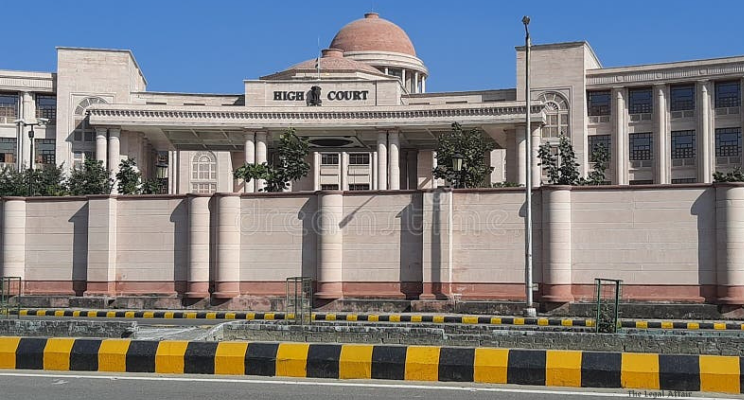
In a significant judgment, the Allahabad High Court recently acquitted Hafeez Khan, a man convicted of murder by the Sessions Court in March 2019, who had spent over 7.5 years in prison. The Sessions Court had sentenced Khan to life imprisonment and imposed a fine of Rs. 50,000 after finding him guilty of murdering his wife, Sayra Bano, and concealing her body. However, in its detailed analysis, a Division Bench of the High Court comprising Justice Attau Rahman Masoodi and Justice Subhash Vidyarthi found that there was “absolutely no evidence” to support the conviction. The High Court not only set aside the trial court’s judgment but also awarded Rs. 1,00,000 as compensation to Hafeez Khan for the injustice he had endured, observing that his prolonged detention without any concrete proof of his guilt demanded some form of reparation.
Arguments from the Prosecution:
The prosecution contended that Hafeez Khan had murdered his wife, Sayra Bano, and buried her body in the grave of a man named Kennoo Khan. They presented evidence that included an inquest and post-mortem report, pointing out the presence of items such as clothes, a thread, and a tabeez (amulet) found on the deceased’s body, allegedly that of Bano. Additionally, the prosecution highlighted the recovery of a knife from the accused’s house based on his own indication and claimed it was the weapon used in the crime. Blood found on the knife, though its group remained unidentified, was another element they pushed as circumstantial evidence.
The prosecution also emphasized that despite key witnesses turning hostile, the Supreme Court has upheld convictions based on such cases in previous judgments, implying that the evidence available, though indirect, was enough to convict Khan. They urged the court to uphold the life sentence passed by the trial court.
Defense Arguments:
On the other hand, the defense argued that there was a complete absence of evidence linking Hafeez Khan to the crime. They questioned the very identification of the body, stating that the prosecution had failed to establish through scientific or concrete evidence that the body found was that of Sayra Bano. The defense pointed out that the prosecution made no effort to match the clothes, thread, or tabeez found on the body to any belonging to Bano or question any witness regarding these articles.
The defense further argued that the so-called “recovery” of the weapon from Hafeez Khan’s house was unreliable. While the prosecution claimed that a knife had been recovered from the accused’s house based on his information, the defense noted that there were glaring inconsistencies in the testimony. The only police officer, the S.H.O. (PW8), testified about the recovery of the knife, while other witnesses either turned hostile or failed to corroborate this part of the prosecution’s story. Additionally, while blood was indeed found on the knife, the defense highlighted that the forensic report had not established the blood group, making it impossible to definitively link the blood to the deceased.
The defense also criticized the trial court’s reliance on Supreme Court judgments regarding hostile witnesses, arguing that the facts of those cases were markedly different from the present one, where the prosecution’s failure to substantiate its claims through material evidence was evident.
Court’s Judgment:
After carefully examining the case, the Allahabad High Court held that the prosecution had failed to establish the identity of the body as that of Sayra Bano. The court found it troubling that no scientific evidence, such as DNA testing, was conducted to verify the identity of the body. Furthermore, the prosecution had not asked any of its witnesses about the clothes or articles found on the body, nor made any attempt to link those items to the deceased, leaving a significant gap in the evidence.
The High Court also found serious flaws in the prosecution’s claim that the knife recovered from Khan’s house was the murder weapon. The court noted that the only police officer who testified about the recovery was the S.H.O., and no independent witnesses corroborated the recovery of the knife, casting doubt on the entire process. The fact that the blood on the knife could not be matched to the deceased further weakened the prosecution’s case.
The division bench criticized the trial court’s reliance on Supreme Court judgments to convict Khan despite witnesses turning hostile. The High Court underscored that those precedents were based on cases where there was still substantial evidence, unlike in Khan’s case, where the evidence was found lacking. Consequently, the bench observed that the trial court’s conclusion that Khan had killed his wife and hidden her body was “perverse” and unsupported by any concrete proof.
Given the complete absence of evidence, the Allahabad High Court set aside the conviction and acquitted Hafeez Khan of all charges. Recognizing the grave injustice done to Khan, who had been imprisoned since January 2017, the court also ordered the State to pay him Rs. 1,00,000 as compensation for the seven-and-a-half years he had spent in jail without any evidence to support his guilt. The court acknowledged that no amount of compensation could truly compensate for the loss of time and liberty, but it nevertheless awarded the sum as a token of redress for the injustice suffered.