


Introduction:
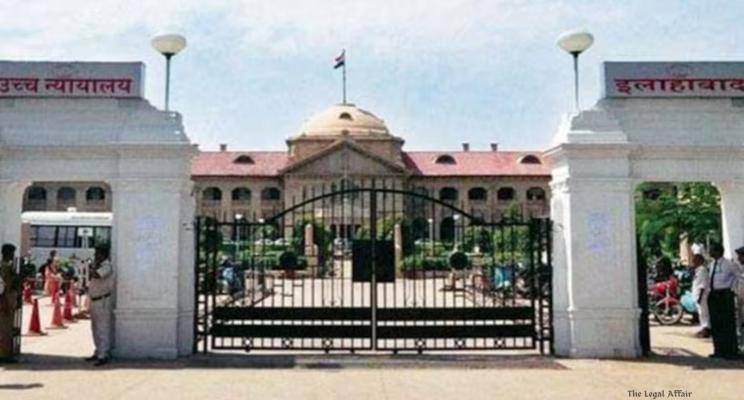
In a significant legal confrontation, the Allahabad High Court, through a bench of Justice Rohit Ranjan Agarwal, strongly reprimanded the Uttar Pradesh Government’s attempt to promulgate an ordinance aimed at creating a statutory trust to manage the historic Shri Bankey Bihari Temple in Vrindavan, Mathura. The matter arises from Pranav Goswami & Another v. Civil Judge Junior Division, Mathura, challenging the constitutionality and legitimacy of the Uttar Pradesh Shri Bankey Bihari Ji Temple Trust Ordinance, 2025. The state proposed forming a trust board with 11 nominated trustees and up to seven ex‑officio state officials, including the District Magistrate, SSP, and others, aiming to administer temple affairs. The temple is traditionally managed privately by descendants and followers of Swami Haridas Ji, who have challenged this move as unconstitutional interference in religious autonomy.
Arguments by the Petitioners / Amicus Curiae:
Amicus Curiae Advocate Sanjay Goswami and petitioners argue that the Bankey Bihari Temple is a privately managed religious institution whose operations are rooted in tradition and lineage, not state control. They contend the ordinance violates Articles 25 and 26 of the Constitution by allowing the state to enter religious domains through ex‑officio trustee roles. The amicus described the ordinance as a ‘back‑door entry’ seeking administrative control over temple functions. They fear this will set a dangerous precedent inviting state takeover of other religious institutions.
State Government’s Defence:
In response, Additional Solicitor General K.M. Nataraj argued before the Supreme Court and High Court that the ordinance aims only at improving infrastructure and administration—not interfering in religious or devotional practices. The state clarified that the ordinance will soon be ratified in the legislative assembly and is meant to support secular activities: crowd management, pilgrim facilities, and financial oversight—not religious governance.
Allahabad High Court’s Scathing Observations:
On August 6, 2025, Justice Agarwal made pointed oral remarks, sharply criticizing the state’s attempt to regulate temple affairs. He described the move as a ‘sin,’ urging the government to “leave the temple alone”. He warned that if similar interventions occurred in other religions, public outrage would be swift: “Kisi aur religion mein (deity) ka paisa le lijiye, hangama ho jaega”. He further accused bureaucrats—particularly IAS officers and retired officials—of plotting to seize control and funds: “IAS officers ko paisa khana hai…3‑4 bureaucrats hain jo ye sab karna chaah rahe hain”. Drawing a parallel to Tamil Nadu, he observed that thousands of temples there are under state receivers where officials siphon off temple income. He emphasized that temple trusts should involve ‘acharyas’ and ‘Shankaracharyas’, not state functionaries.
Justice Agarwal also warned that the state’s actions could set a precedent for future takeover of religious institutions: “karma will come back and haunt…mandiron mein ordinance la rahe hain…education, hospitals sudhariye…mandir pe dhyan hai”. He underscored the constitutional principle that “the government has no religion,” sarcastically stating: “Ya to constitutional amendment kar dijiye ki state ka religion hai”. Consequently, the case was adjourned to August 26, 2025.
Connection with Supreme Court Proceedings:
This High Court rebuke echoed the Supreme Court’s earlier criticism, where it questioned the UP Government’s “tearing hurry” to promulgate the ordinance and its “clandestine manner” of securing approval via the May 15, 2025 order permitting temple fund usage for corridor development. On May 27, 2025, the Supreme Court termed the state’s involvement as an inappropriate “hijacking” of a private dispute. The Supreme Court has since proposed forming an interim committee headed by a retired High Court judge with the district collector and Goswamis until the High Court’s decision.
Court’s Judgment and Directions:
Though no final judgment has yet been issued, the Allahabad High Court’s stern observations strongly indicate judicial discomfort with state intervention in religious affairs. The court has raised constitutional doubts over the ordinance’s validity under Article 25 and urged amendment of provisions appointing bureaucratic trustees. The irate tone and explicit accusations against misuse of power place pressure on the state to reconsider or substantially revise the ordinance.