


Introduction:
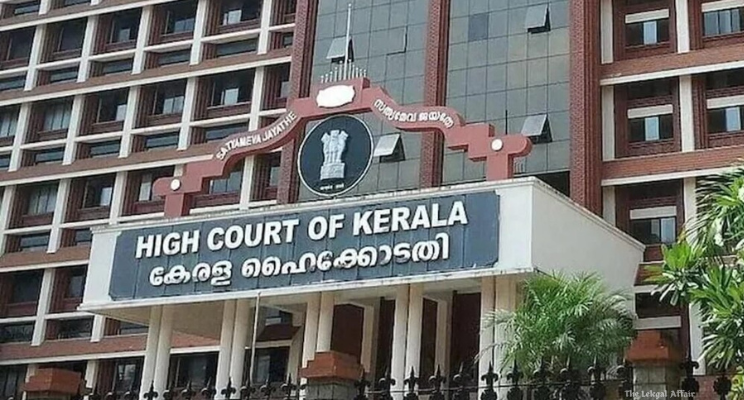
The case of XXX and Another v. YYY and Others came before the Kerala High Court, raising a critical issue concerning the professional boundaries of advocates and their rights vis-à-vis unpaid legal fees. The petitioners, two practicing advocates, approached the High Court seeking to keep in abeyance the execution proceedings initiated by their former clients in a land acquisition reference case. Their primary grievance stemmed from alleged non-payment of legal fees and the subsequent termination of their engagement by the clients.
The dispute arose after the petitioners had successfully represented the claimants in a land acquisition reference before a Sub-Court, resulting in an award in favour of the claimants. However, during the execution stage—when the State had deposited the first instalment of compensation—disputes arose regarding the payment of fees. This led the claimants to terminate the vakalath of the petitioners and engage new counsel without obtaining a No Objection Certificate.
Aggrieved by this development, the petitioners initiated multiple complaints before various forums, including the Chief Justice, Bar Council, and District Court, alleging misconduct by the newly engaged advocates. They also sought to stall the execution proceedings until their grievances were resolved.
The High Court was thus called upon to determine whether an advocate, upon termination of engagement, can exercise any control over ongoing proceedings or claim a right to halt them due to unpaid fees.
Petitioners’ Arguments:
The petitioners advanced several arguments to justify their plea for intervention by the High Court.
Firstly, they contended that they had diligently represented the claimants and were instrumental in securing a favourable award in the land acquisition reference proceedings. Despite their efforts, the claimants had failed to pay the agreed legal fees, which, according to the petitioners, were substantial.
Secondly, the petitioners argued that the claimants had acted improperly by terminating their vakalath and engaging new advocates without obtaining a No Objection Certificate. They alleged that the newly appointed advocates had colluded with the claimants and committed fraud by filing vakalath without proper authorization.
Thirdly, the petitioners submitted that they had already initiated complaints before various authorities, including the Bar Council and judicial forums, and that the execution proceedings should be stayed until these complaints were adjudicated. They argued that allowing the execution proceedings to continue would cause irreparable harm to their interests.
Additionally, the petitioners sought a declaration that the decision permitting the claimants to appoint new counsel was invalid. They also requested the Court to direct the claimants to return the money allegedly encashed through cheque applications filed by the new advocates.
The petitioners further contended that they had a legitimate expectation to be paid for their services and that their rights as legal professionals should be protected by the Court.
Respondents’ Arguments:
The respondents, comprising the claimants and the newly engaged advocates, strongly opposed the petition.
Firstly, the claimants asserted that they had already paid more than ₹25 lakhs to the petitioners towards legal fees. They alleged that the petitioners had demanded additional exorbitant fees, including a sum of ₹1 crore, and had threatened not to proceed with the case unless their demands were met.
Secondly, the claimants contended that they had lost confidence in the petitioners due to their conduct and were therefore justified in terminating their engagement. They emphasized that a client has an absolute right to choose and change legal representation at any stage of the proceedings.
The newly engaged advocates denied allegations of fraud or coercion, stating that they were approached by the claimants voluntarily. They pointed out that the Court had accepted their vakalath based on affidavits filed by the claimants, thereby legitimizing their representation.
Further, the respondents argued that the petitioners were attempting to misuse the judicial process to exert pressure on the claimants for payment of fees. They submitted that disputes regarding legal fees are civil in nature and must be resolved through appropriate legal proceedings, rather than through writ petitions.
The respondents also highlighted that the petitioners’ attempt to stall the execution proceedings was unjustified and detrimental to the interests of the claimants, who were entitled to the fruits of the decree.
Court’s Judgment:
The Kerala High Court delivered a strong and principled judgment, rejecting the petitioners’ claims and reaffirming the ethical and professional boundaries governing the legal profession.
At the outset, the Court held that disputes relating to non-payment of legal fees cannot be adjudicated in a writ petition under Article 226 of the Constitution. It emphasized that such disputes must be resolved through appropriate civil proceedings before a competent court.
The Court categorically rejected the notion that an advocate has any right to halt legal proceedings due to unpaid fees. It observed that an advocate is merely a representative of the client and does not step into the shoes of the client. Once the engagement is terminated, the advocate has no authority to control or influence the proceedings.
The Court further clarified that an advocate cannot demand to be permanently engaged in a case until its conclusion. The relationship between a client and an advocate is based on trust and confidence, and the client retains the right to terminate the engagement at any time.
Addressing the issue of lien, the Court held that an advocate has no lien over case bundles or proceedings. The Court emphasized that allowing such a lien would be contrary to the principles of justice and would unduly restrict the rights of litigants.
The Court also examined the professional conduct of the petitioners in light of the Bar Council of India Rules. It observed that the legal profession is a noble one, and its dignity depends on the conduct of its members. Any attempt by an advocate to coerce or pressure a client for payment of fees, especially by stalling proceedings, is unacceptable and undermines the integrity of the profession.
Importantly, the Court remarked that even after termination of engagement, an advocate owes a duty to not act against the interests of the former client. The fiduciary nature of the relationship imposes an obligation of loyalty and fairness, which continues even after the professional relationship ends.
The Court also noted that the legal framework provides mechanisms for clients to engage new counsel even if the previous advocate refuses to issue a No Objection Certificate. This ensures that litigants are not held hostage by their former advocates.
In conclusion, the Court found no merit in the petition and dismissed it with costs of ₹50,000, payable to the Kerala State Legal Services Authority. The judgment serves as a strong reminder of the ethical obligations of advocates and the primacy of the client’s rights in legal proceedings.