


Introduction:
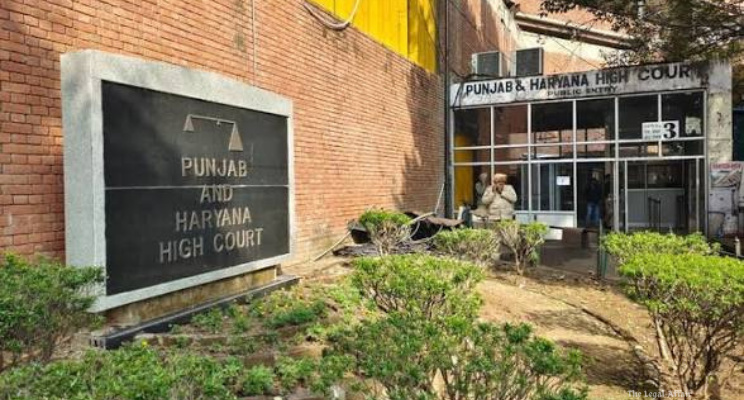
The case of Abhikshek Shah v. State of Haryana and another came before the Punjab & Haryana High Court, presenting a significant question on the scope and interpretation of sexual harassment under Indian criminal law. The matter was adjudicated by Justice Kirti Singh, who was tasked with determining whether a single instance of abusive language used during a workplace dispute could amount to an offence under Section 354A of the Indian Penal Code.
The petitioner, a Director of a private company, sought quashing of an FIR registered in 2019 at the Women Police Station, Gurugram. The FIR was lodged by a former employee who had worked as a Business Manager in the company. The dispute arose from a professional disagreement relating to medical leave taken by the complainant shortly before a scheduled company event.
During a series of email exchanges between the parties, the petitioner used abusive language, including the expression “f*** off.” The complainant resigned on the same day, and her resignation was accepted. Subsequently, disputes arose between the parties regarding salary, notice period, and alleged breach of contractual obligations. Legal notices were exchanged, and nearly four months after her resignation, the complainant lodged an FIR alleging harassment and derogatory conduct.
The case thus raised a crucial legal issue—whether every instance of offensive or abusive language in the workplace can be brought within the ambit of sexual harassment, or whether the law requires a specific element of sexual intent or overtone to attract criminal liability under Section 354A IPC.
The High Court was also required to consider whether the continuation of criminal proceedings in such circumstances would amount to an abuse of process, particularly in light of the inherent powers vested in the Court under Section 482 of the Code of Criminal Procedure.
Arguments on Behalf of the Petitioner:
The petitioner strongly contended that the allegations made in the FIR, even if accepted in their entirety, did not disclose the commission of any offence under Section 354A of the Indian Penal Code. It was argued that the essential ingredients required to constitute sexual harassment were completely absent in the present case.
Counsel for the petitioner emphasized that the alleged remark—though admittedly inappropriate—was made in the course of a professional disagreement concerning the complainant’s absence from work. The communication, it was submitted, was purely work-related and lacked any element of sexual intent or connotation.
It was further argued that Section 354A IPC specifically contemplates acts such as unwelcome physical contact, sexual advances, demand for sexual favours, showing pornography, or making sexually coloured remarks. The petitioner submitted that none of these elements were present in the case at hand. The use of an abusive expression, without any sexual overtone, could not be equated with sexual harassment.
The petitioner also highlighted the absence of any prior or subsequent conduct suggesting a pattern of harassment. It was argued that the case involved a solitary instance of a remark made in a moment of frustration during a workplace exchange. In the absence of repeated behaviour or any indication of sexual targeting, the allegation could not meet the threshold of criminal culpability.
Another significant argument advanced was that the FIR was a counterblast to the legal notices issued by the petitioner in relation to breach of contract and financial disputes. The delay of over four months in lodging the FIR was cited as indicative of mala fide intent. It was submitted that the complainant had chosen to initiate criminal proceedings only after disputes regarding salary and notice period had escalated.
Reliance was placed on the landmark judgment in State of Haryana v. Bhajan Lal, which lays down the principles governing the quashing of criminal proceedings. The petitioner argued that the present case fell squarely within the category where allegations, even if uncontroverted, do not disclose the commission of any offence, and therefore, the proceedings deserved to be quashed.
Invoking the inherent powers of the High Court under Section 482 of the Code of Criminal Procedure, the petitioner urged the Court to prevent abuse of process and secure the ends of justice by quashing the FIR and all consequential proceedings.
Arguments on Behalf of the Respondent:
The State and the complainant opposed the petition, contending that the use of abusive and derogatory language in a workplace environment, particularly by a superior towards a subordinate, cannot be trivialized. It was argued that such conduct creates a hostile work environment and undermines the dignity of the employee.
The respondent emphasized that the expression used by the petitioner was not only offensive but also humiliating, and must be viewed in the broader context of workplace dynamics and power imbalance. It was submitted that even a single instance of such behaviour can have a serious psychological impact on the victim.
While acknowledging that the alleged remark did not involve physical contact or explicit sexual advances, the respondent argued that the scope of Section 354A of the Indian Penal Code is not limited to physical acts alone. It was contended that verbal conduct, if derogatory and directed at a woman, could also fall within the ambit of the provision.
The respondent further argued that the question of whether the remark carried a sexual connotation should be determined at trial, and not at the stage of quashing. It was submitted that the Court should not undertake a detailed examination of evidence while exercising jurisdiction under Section 482 CrPC.
Regarding the delay in lodging the FIR, it was contended that such delay is not uncommon in cases involving workplace harassment, as victims often hesitate to come forward due to fear, stigma, or professional consequences. Therefore, the delay should not be viewed as fatal to the prosecution’s case.
The respondent also sought to distinguish the present case from the principles laid down in State of Haryana v. Bhajan Lal, arguing that the allegations in the FIR did disclose a cognizable offence and warranted investigation and trial.
Judgment:
The Punjab & Haryana High Court, through Justice Kirti Singh, delivered a nuanced and well-reasoned judgment that carefully balanced the need to maintain workplace decorum with the requirement of establishing the essential ingredients of a criminal offence.
At the outset, the Court examined the scope of Section 354A of the Indian Penal Code, which criminalizes specific acts constituting sexual harassment. These include unwelcome physical contact, demand for sexual favours, showing pornography, and making sexually coloured remarks. The Court emphasized that the provision is intended to address gender-based harassment involving a sexual element.
Applying this framework to the facts of the case, the Court observed that the expression “f*** off,” though undeniably inappropriate and lacking in decorum, did not carry any sexual connotation. It was a general abusive remark and was not directed at the complainant’s modesty or sexuality.
The Court underscored the importance of context in assessing such allegations. It noted that the remark was made during a work-related exchange concerning the complainant’s absence and did not arise in a setting suggestive of sexual intent. The absence of any accompanying conduct—such as physical advances or sexually suggestive behaviour—further weakened the allegation.
Importantly, the Court held that a solitary instance of an abusive remark, in the absence of any element of sexual intent or pattern of conduct, does not meet the threshold required to constitute an offence under Section 354A IPC. It observed that criminal law cannot be invoked for every instance of workplace incivility or discourtesy.
The Court also took note of the delay of over four months in lodging the FIR, as well as the existence of prior disputes between the parties relating to contractual and financial issues. While not treating these factors as determinative, the Court considered them relevant in assessing the overall circumstances of the case.
Relying on the principles laid down in State of Haryana v. Bhajan Lal, the Court reiterated that where the allegations in the FIR, even if accepted at face value, do not disclose the basic ingredients of an offence, the continuation of criminal proceedings would amount to an abuse of process.
The Court concluded that the present case fell within this category. It held that allowing the proceedings to continue would serve no useful purpose and would unjustly subject the petitioner to the rigours of criminal trial.
Accordingly, the Court exercised its inherent powers under Section 482 of the Code of Criminal Procedure to quash the FIR and all consequential proceedings, including the challan under Section 354A IPC.
However, the Court also sought to balance its decision by imposing a condition on the petitioner to deposit a sum of ₹20,000 in the Poor Patient Welfare Fund at PGIMER, Chandigarh. This condition reflects the Court’s recognition that while the conduct may not constitute a criminal offence, it was nevertheless inappropriate.
The judgment thus draws a clear distinction between offensive workplace behaviour and criminal sexual harassment, emphasizing that the latter requires a specific element of sexual intent or overtone. It serves as an important precedent in preventing the misuse of penal provisions while preserving their intended purpose.