


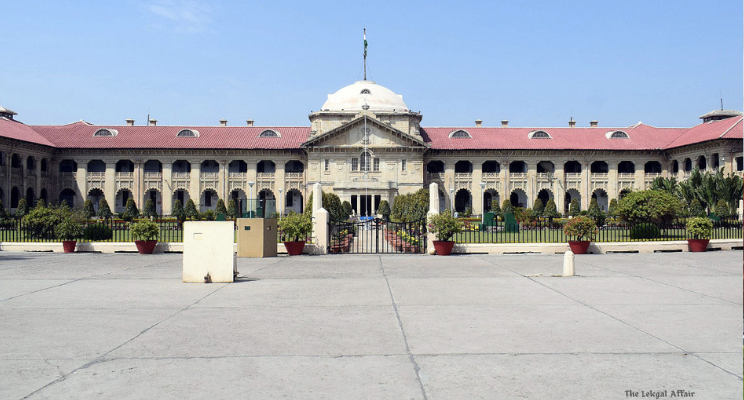
Introduction:
The case of B.N. Tripathi and Others v. State of U.P. and Another came before the Allahabad High Court, presenting a deeply troubling instance of administrative apathy and prolonged denial of rights. The matter revolved around a 90-year-old plaintiff who, along with his co-lessee, had been allotted a plot measuring 2222 square yards by the Kanpur Development Authority (KDA) in 1984 through a 999-year lease. Despite fulfilling all requirements and being the highest bidder, the plaintiffs were never granted possession of the land for over four decades.
The case exposed a prolonged failure on the part of a statutory authority to discharge its obligations, raising serious concerns about governance, accountability, and the rule of law. The plaintiffs had continuously pursued their claim, writing multiple letters and even initiating legal proceedings, yet their efforts were met with silence and inaction.
The High Court, while adjudicating the appeal against the Trial Court’s dismissal of the suit, not only granted relief to the plaintiffs but also took a stern view of the conduct of the authorities. It went to the extent of calling upon Yogi Adityanath to initiate an inquiry into the negligence of officials and to ensure accountability for the arbitrary and illegal actions that had caused immense hardship to the plaintiffs.
Plaintiffs’ Arguments:
The plaintiffs presented a compelling case highlighting the gross injustice suffered due to the inaction of the Kanpur Development Authority.
Firstly, it was submitted that the plaintiffs were lawful allottees of the plot, having secured the same through a valid bidding process in 1984 and having executed a lease deed for a period of 999 years. Despite this, the KDA failed to hand over possession of the land without any valid reason.
Secondly, the plaintiffs emphasized their persistent efforts to obtain possession. They produced documentary evidence, including letters written to the KDA from as early as 1985, demonstrating their continuous attempts to assert their rights. Despite these efforts, the KDA neither responded nor provided any explanation for its failure.
Thirdly, the plaintiffs highlighted the financial losses suffered due to the delay. The plot had been acquired for a specific business purpose, and the plaintiffs had even obtained registration for the same. However, due to the non-delivery of possession, they were unable to commence their business operations, resulting in losses exceeding ₹41 lakhs.
The plaintiffs also challenged the findings of the Trial Court, arguing that it had failed to properly appreciate the evidence on record. They contended that the burden of handing over possession lay on the KDA, and not on the plaintiffs to prove when and how possession was to be delivered.
Additionally, the plaintiffs pointed out that one of the co-lessees had passed away during the pendency of the litigation, and the surviving plaintiff was now nearly 90 years old. They urged the Court to take a compassionate view and ensure that justice was not further delayed.
Defendants’ Arguments:
The defendants, representing the State and the Kanpur Development Authority, sought to defend the actions of the authority, albeit without substantial supporting evidence.
Firstly, it was contended that the plaintiffs had failed to establish the terms and conditions under which possession was to be handed over. The defendants argued that in the absence of specific stipulations in the lease deed regarding the timeline for delivery of possession, the plaintiffs could not claim relief.
Secondly, the defendants made a general assertion that possession had been transferred to the plaintiffs. However, they failed to produce any documentary evidence, such as a possession memo signed by witnesses, to substantiate this claim.
The defendants also relied on the findings of the Trial Court, which had dismissed the suit on the ground that the plaintiffs had not provided sufficient details regarding their efforts to obtain possession or the reasons for the delay.
However, the defendants were unable to provide any satisfactory explanation for the prolonged delay or for their failure to respond to the plaintiffs’ repeated communications.
Court’s Judgment:
The Allahabad High Court delivered a strongly worded judgment, criticizing the conduct of the Kanpur Development Authority and emphasizing the importance of accountability in governance.
At the outset, the Court rejected the findings of the Trial Court, holding that they were perverse and based on a failure to properly consider the evidence on record. The Court noted that the plaintiffs had consistently pursued their claim and had provided ample documentary proof of their efforts.
The Court observed that even though the lease deed did not explicitly mention the timeline for handing over possession, it was the responsibility of the KDA, as the lessor, to deliver possession to the plaintiffs. The failure to do so for over 41 years, without any justification, was held to be arbitrary and illegal.
The Court also took note of the defendants’ inability to produce any evidence of having handed over possession. It observed that a possession memo, typically signed by witnesses, is a standard document in such transactions, and the absence of such a document raised serious doubts about the defendants’ claims.
A significant aspect of the judgment was the Court’s emphasis on the principle of vicarious liability. It held that since the KDA is a statutory body, the State of Uttar Pradesh is also responsible for its actions. The Court underscored that the State cannot evade responsibility for the arbitrary and unlawful acts of its instrumentalities.
The Court expressed deep concern over the prolonged delay and its impact on the plaintiffs. It noted that one of the plaintiffs had passed away during the litigation, while the other was now in advanced age. In such circumstances, the Court held that remanding the matter to the Trial Court for determination of damages would only prolong the suffering of the plaintiffs.
Accordingly, the Court undertook the task of determining the quantum of damages itself. It awarded damages at the rate of ₹13,700 per month from 1st July 1987 until possession of the plot is handed over. Additionally, it granted pendentelite and future interest at the rate of 6% per annum.
The Court also awarded ₹5 lakhs towards the cost of establishing the factory, along with interest at 5% per annum, and ₹2 lakhs as compensation for harassment and mental suffering.
In a rare and significant move, the Court called upon the Chief Minister of Uttar Pradesh to initiate an inquiry into the conduct of the KDA officials. It directed that responsibility be fixed and damages be recovered from the negligent officers in accordance with law. The Court also emphasized the need for disciplinary action against those responsible for tarnishing the image of the State.
The judgment concluded with a strong reaffirmation of the rule of law, stating that the State has a solemn duty to protect the rights of its citizens and to act in a fair and lawful manner.