


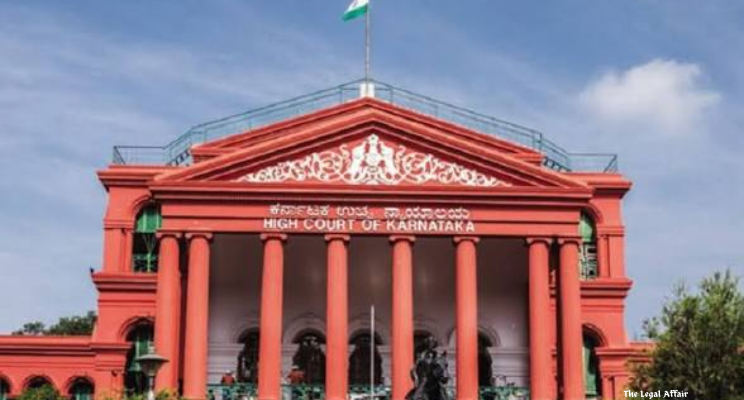
Introduction:
The Karnataka High Court has quashed criminal proceedings against a man accused of circulating a photograph of a calf without a tail, observing that the very photograph forming the basis of the prosecution’s allegations was missing from the chargesheet. The Court held that an accused cannot be compelled to undergo a criminal trial when the investigating agency has failed to produce the primary material allegedly connecting him with the offence.
Justice Anant Ramanath Hegde, while allowing a petition filed by Anil Maiya, made a pointed observation about the defective nature of the police chargesheet, remarking that although the prosecution sought to proceed against the petitioner for allegedly circulating a photograph of a calf without a tail, the chargesheet itself had turned out to be “without head and tail”.
The proceedings originated from a case registered by the Kota Police, which accused Maiya of circulating a photograph of a calf that allegedly did not have a tail. Following the investigation, the police filed a chargesheet alleging the commission of offences under Sections 353(2) and 241 of the Bharatiya Nyaya Sanhita, 2023 (BNS).
Section 353(2) of the BNS deals with making, publishing or circulating statements containing false information, rumours or reports with the intention or likelihood of causing fear or alarm to the public, inciting offences against public tranquillity, or promoting enmity, hatred or ill will between different groups, subject to the statutory requirements.
Section 241 of the BNS deals with the destruction, concealment or alteration of a document or electronic record with the intention of preventing its production or use as evidence before a public servant or court.
Challenging the criminal proceedings, Maiya approached the High Court seeking quashing of the chargesheet and all consequential proceedings. His principal contention was that the prosecution’s entire allegation revolved around the circulation of a particular photograph, yet the investigating agency had failed to include that photograph in the chargesheet. It was further argued that there was no allegation that the petitioner himself had cut off the calf’s tail.
During the hearing, the State defended the chargesheet and maintained that the allegations required examination during trial. However, the Additional State Public Prosecutor could not identify the photograph allegedly circulated by the petitioner from the documents forming part of the chargesheet.
Upon examining the records, the High Court found that the photograph was indeed missing and that no other material had been placed before it to establish that the petitioner had published or circulated the alleged image.
Finding no justification for subjecting the petitioner to a criminal trial in the absence of the primary material supporting the accusation, the Court allowed the petition and quashed the chargesheet along with all consequential proceedings.
The decision highlights an important principle of criminal jurisprudence: an investigation must be supported by relevant material capable of connecting the accused with the alleged offence. The mere filing of a chargesheet does not automatically justify a criminal trial when the essential evidence underlying the accusation is absent from the prosecution record.
Arguments of the Parties:
The petitioner, Anil Maiya, approached the Karnataka High Court challenging the criminal proceedings initiated against him by the Kota Police. His challenge was primarily based on the absence of the photograph that allegedly formed the foundation of the prosecution’s case.
Appearing for the petitioner, Advocate K. Prasanna Shetty argued that the police could not legitimately file a chargesheet accusing Maiya of circulating a particular photograph without producing the photograph itself as part of the investigation records.
According to the petitioner’s counsel, the photograph was not an incidental piece of evidence but the central material upon which the allegation of circulation was founded. The prosecution specifically alleged that Maiya had circulated a photograph depicting a calf without a tail. Therefore, the existence, contents and circulation of that particular image were essential matters requiring evidentiary support.
The petitioner’s counsel submitted that the absence of the photograph from the chargesheet created a fundamental deficiency in the prosecution’s case. Without the alleged image, there was no primary material available to establish what had actually been circulated or whether the photograph in question was the one referred to in the allegations.
The petitioner also highlighted the absence of any allegation that he had personally cut off the calf’s tail. This distinction was relevant because the accusation concerned the circulation of a photograph, rather than any direct act of causing physical injury or mutilation to the animal.
The petitioner therefore contended that the prosecution could not proceed merely on the basis of an allegation that he had circulated an image when the investigating agency had failed to produce that image or establish the relevant act through other supporting material.
The challenge was consequently directed against the very foundation of the criminal proceedings. The petitioner maintained that continuing the prosecution in such circumstances would subject him to an unnecessary criminal trial despite the absence of the material allegedly supporting the offences.
On the other hand, the State, represented by Additional State Public Prosecutor M. V. Anoop Kumar, strongly defended the chargesheet.
During the hearing, the State opposed the petitioner’s request for quashing and submitted that the allegations should be examined through a full-fledged trial. The prosecution maintained that the matter required judicial scrutiny and that the proceedings should not be terminated at the preliminary stage.
However, when the Court specifically sought to examine the photograph allegedly circulated by the petitioner, the State prosecutor was unable to identify or point out the image in the chargesheet.
The prosecution was therefore confronted with the difficulty that the central material forming the basis of its allegation was not available in the records placed before the Court.
The dispute before the High Court consequently narrowed down to whether criminal proceedings could be permitted to continue when the very photograph allegedly circulated by the accused was missing from the chargesheet and no other material had been produced to establish its publication by him.
The Court was required to determine whether the prosecution had placed sufficient material on record to justify subjecting the petitioner to a criminal trial for the offences alleged under the BNS.
Court’s Judgment:
The Karnataka High Court allowed the petition filed by Anil Maiya and quashed the chargesheet along with all consequential criminal proceedings. Justice Anant Ramanath Hegde found that the prosecution’s case suffered from a fundamental evidentiary deficiency because the photograph allegedly circulated by the petitioner was not included in the chargesheet.
The Court observed that the prosecution had specifically sought to proceed against the petitioner for circulating a photograph of a calf without a tail. However, when the Court examined the chargesheet, the photograph forming the basis of the allegation was nowhere to be found.
In a pointed observation, the Bench remarked:
“Though respondent sought to prosecute the petitioner for allegedly circulating the ‘photograph of the calf without a tail’, the charge sheet turned out to be one ‘without head and tail’.”
The observation highlighted the inconsistency between the allegation made by the investigating agency and the material actually produced before the Court.
Absence of the primary photograph undermined the prosecution’s case
The central consideration in the judgment was the failure of the investigating agency to include the photograph that allegedly formed the basis of the offence.
The prosecution had accused Maiya of circulating a particular image. Therefore, the photograph was directly connected with the alleged act and was necessary for examining the nature and contents of the material allegedly published.
The Court found that the photograph was not part of the chargesheet. More importantly, there was no other material available in the prosecution records to establish that the petitioner had published or circulated the alleged photograph.
This was not a situation where the prosecution had produced other supporting evidence capable of independently establishing the alleged circulation. Rather, the primary material forming the foundation of the accusation itself was absent.
The Court therefore questioned the justification for continuing the criminal proceedings when the investigating agency had failed to place before it the very material that was allegedly circulated by the accused.
The significance of the photograph was not limited to identifying the content of the alleged publication. Its absence also affected the prosecution’s ability to establish the factual basis of the accusation and demonstrate how the alleged conduct attracted the offences invoked.
The High Court consequently found that the petitioner should not be subjected to a criminal trial merely on the basis of an allegation unsupported by the relevant material.
Examination of the offence under Section 353(2) of the BNS
The police had invoked Section 353(2) of the Bharatiya Nyaya Sanhita, 2023, against the petitioner.
The provision deals with the making, publishing or circulating of false information, rumours or reports with the intention or likelihood of causing specified harmful consequences, including fear or alarm to the public, incitement to offences against public tranquillity, or promotion of enmity, hatred or ill will between different groups.
The provision does not criminalise every publication or circulation of information merely because it is disputed or considered objectionable. The prosecution must establish the statutory ingredients, including the nature of the information and the relevant intention or likelihood of the consequences specified under the provision.
In the present case, the allegation concerned the circulation of a photograph depicting a calf without a tail.
However, the photograph itself was missing from the chargesheet. Consequently, the Court was not provided with the primary material necessary to examine the content of the alleged publication.
The absence of the image was particularly significant because the prosecution’s case was specifically based on its alleged circulation. Without the photograph or other supporting material establishing the alleged publication, the accusation lacked the necessary evidentiary foundation.
The Court’s decision therefore reinforces that the invocation of a penal provision must be supported by material indicating the existence of the essential ingredients of the alleged offence.
A criminal prosecution cannot be sustained merely because the police have mentioned a particular statutory provision in the chargesheet. The allegations must be supported by material capable of establishing the conduct sought to be prosecuted.
Section 241 BNS and the absence of supporting material
The investigating agency had also invoked Section 241 of the BNS against the petitioner.
This provision deals with the destruction, concealment or alteration of a document or electronic record with the intention of preventing its production or use as evidence before a public servant or court.
For an offence under this provision to be established, the prosecution must place material demonstrating the relevant act involving a document or electronic record and the intention to prevent its production or use as evidence.
The mere existence of an allegation concerning the circulation of a photograph does not automatically establish the commission of an offence under Section 241.
The reported case summary does not indicate that the High Court separately undertook an elaborate ingredient-by-ingredient examination of Section 241. Its central finding was that the photograph allegedly circulated by the petitioner was missing from the chargesheet and there was no other material establishing its publication by him.
The Court’s overall conclusion was that the prosecution had failed to demonstrate a sufficient basis for continuing the proceedings against the petitioner.
The decision therefore underscores the importance of ensuring that the offences included in a chargesheet are supported by relevant evidence rather than being invoked without an adequate factual foundation.
A chargesheet must contain material connecting the accused with the alleged offence
An important principle emerging from the judgment is that the filing of a chargesheet cannot, by itself, justify subjecting an individual to criminal prosecution.
A chargesheet is the final report submitted by the investigating agency after completing its investigation. It is expected to contain the relevant particulars of the alleged offence, the material collected during investigation and the evidence relied upon against the accused.
The purpose of submitting such a report is to place before the competent court the results of the investigation so that the court can determine the appropriate course of action in accordance with law.
Although the court is not required to conduct a full trial while considering a challenge to criminal proceedings, it must examine whether the allegations and accompanying material provide a legally sustainable basis for prosecution.
Where the central material relied upon by the investigating agency is missing and there is no other supporting evidence establishing the alleged conduct, the court may intervene to prevent an unjustified prosecution.
In the present case, the photograph was not merely an additional document that could be considered during the trial. It was the very subject of the allegation that the petitioner had circulated an image of a calf without a tail.
The prosecution’s inability to identify the photograph during the hearing further highlighted the deficiency in the chargesheet.
The High Court therefore found that there was no justification for compelling the petitioner to undergo the criminal trial.
Quashing of criminal proceedings to prevent unnecessary prosecution
The High Court exercised its jurisdiction to quash the criminal proceedings after examining the chargesheet and the material placed on record.
The power to quash criminal proceedings is an important safeguard against prosecutions that lack a legally sustainable foundation. It enables constitutional courts to intervene where continuing a criminal case would result in an abuse of the process of law or where the allegations and accompanying material do not justify further proceedings.
The principle underlying such intervention is that criminal trials should not be permitted to continue mechanically merely because an investigating agency has filed a chargesheet.
At the same time, quashing jurisdiction is exercised with caution. Courts ordinarily avoid conducting a detailed evaluation of disputed evidence at the preliminary stage, as such an exercise falls within the domain of the trial court.
However, the present case involved a deficiency that was apparent from the prosecution’s own records. The photograph allegedly circulated by the petitioner was absent from the chargesheet, and no alternative material was available to establish that he had published it.
The Court was therefore satisfied that requiring the petitioner to undergo trial would serve no justified purpose.
Justice Anant Ramanath Hegde observed:
“This Court does not find any justification in subjecting the petitioner to undergo the trial.”
The observation reflects the Court’s concern that criminal proceedings must have a demonstrable evidentiary basis. The process of criminal prosecution itself can impose substantial hardship on an accused, and courts must ensure that individuals are not compelled to face trial when the essential material supporting the accusation is absent.
Final decision
After examining the chargesheet and considering the submissions made by both sides, the Karnataka High Court allowed Anil Maiya’s petition.
The Court quashed the chargesheet filed by the Kota Police for the alleged offences under Sections 353(2) and 241 of the Bharatiya Nyaya Sanhita, 2023, along with all consequential proceedings.
The decision brings attention to the responsibility of investigating agencies to collect, preserve and produce the material evidence upon which their allegations are founded. Where the prosecution’s case revolves around a specific photograph, document or electronic record, its absence may seriously undermine the basis for initiating or continuing criminal proceedings, particularly when no other material establishes the alleged conduct.
The judgment also reiterates that a person cannot be subjected to a criminal trial merely because an allegation has been recorded in a police report. The accusation must be supported by relevant material that provides a reasonable legal basis for prosecution.
Ultimately, the ruling is a reminder that criminal law must be applied through evidence and proper investigation, rather than assumptions or unsupported allegations. By quashing the proceedings in the absence of the photograph allegedly circulated by the petitioner and any other material establishing its publication, the Karnataka High Court reinforced the importance of evidentiary accountability in criminal investigations.
The Court’s memorable observation that the chargesheet was “without head and tail” captures the central deficiency in the prosecution’s case: the investigating agency sought to prosecute a person for circulating an image that it had itself failed to produce before the Court.