


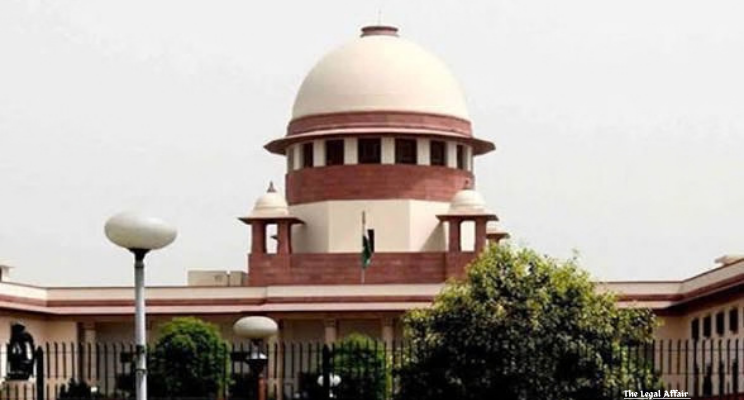
Introduction:
The Supreme Court has held that a completed trial in a cheque dishonour prosecution under Section 138 of the Negotiable Instruments Act, 1881 cannot ordinarily be sent back for a fresh trial merely because a procedural requirement concerning the manner in which defence evidence was recorded was not followed. The Court emphasised that where an accused seeks to reopen a concluded trial on the ground of a procedural irregularity, the question of actual prejudice caused to the accused assumes central importance. In the absence of such prejudice, a fresh trial cannot be ordered merely by invoking a procedural principle governing the recording of evidence.
A Bench comprising Justice J.B. Pardiwala and Justice K. Vinod Chandran delivered the judgment in Sanu Varghese v. Shoukkathali, 2026 INSC 1053, also reported as 2026 LiveLaw (SC) 989. The Supreme Court set aside an order of the Kerala High Court which had remanded a Section 138 prosecution for a fresh trial from the stage of defence evidence. The High Court had relied upon the Supreme Court’s earlier decision in M/s Mandvi Cooperative Bank Ltd. v. Nimesh B. Thakore, (2010) 3 SCC 83, while directing the fresh trial. The Supreme Court found that Mandvi Cooperative Bank did not automatically require a remand in the circumstances of the present case, particularly when the accused had never alleged that the procedure adopted during the original trial had caused him any prejudice. (Indian Kanoon)
The dispute arose from proceedings instituted by the appellant, Sanu Varghese, under Section 138 of the NI Act against the respondent, Shoukkathali. Section 138 criminalises the dishonour of a cheque issued towards discharge, wholly or partly, of a legally enforceable debt or liability, subject to the statutory requirements prescribed by the provision. The provision forms an important part of the legal framework governing cheque transactions and is intended to ensure credibility in commercial dealings involving negotiable instruments.
During the trial, the accused entered the witness box as DW-1 and advanced a specific defence concerning the circumstances in which the cheque had allegedly been issued. According to the defence, a signed blank cheque had been handed over as security in connection with a loan transaction involving ₹10 lakh. The cheque was subsequently presented for an amount of ₹30 lakh. The accused therefore sought to dispute the complainant’s version regarding the amount allegedly advanced and the circumstances in which the cheque came to be issued. (Indian Kanoon)
The accused also disputed the complainant’s presence at the relevant place and time. His case was that on the date when the alleged additional payment of ₹20 lakh was said to have been made, and also on the date on which the cheque was allegedly issued, the complainant was not at the relevant location but was in Bengaluru. The defence relied upon this circumstance to challenge the complainant’s version of the transaction.
However, the Magistrate found that the accused had not produced substantive material to establish that the complainant was actually absent from the place in question. The Magistrate specifically observed that the accused could have obtained the complainant’s Call Data Records to substantiate the claim regarding his location. No such evidence was produced. (Indian Kanoon)
The proceedings eventually travelled through the appellate stage. Importantly, neither before the Trial Court nor before the First Appellate Court did the accused contend that he had suffered prejudice because of the manner in which his defence evidence had been recorded. It was only at the stage of revision before the High Court that the procedural objection concerning defence evidence assumed significance.
The Kerala High Court accepted the objection and ordered that the case be remanded for a fresh trial from the stage of defence evidence. The High Court relied upon the Supreme Court’s decision in M/s Mandvi Cooperative Bank Ltd. v. Nimesh B. Thakore, which had considered the scope and operation of Section 145 of the NI Act and had drawn a distinction between the manner in which the complainant’s evidence and the accused’s evidence could be placed before the Court.
Aggrieved by the remand, the complainant approached the Supreme Court. The principal issue before the Bench was whether the High Court was justified in directing a fresh trial on the basis of the principle laid down in Mandvi Cooperative Bank, when the accused had neither raised a plea of prejudice before the Trial Court or the First Appellate Court nor demonstrated how the alleged procedural irregularity had impaired his defence.
The Supreme Court answered the question in favour of the complainant. While recognising the legal principle emerging from Mandvi Cooperative Bank, the Court stressed that its application in a completed criminal trial cannot be divorced from the question of actual prejudice. The existence of a procedural irregularity, by itself, does not invariably require the entire proceedings to be reopened.
The Court therefore set aside the High Court’s remand order and restored Criminal Revision Petition No. 715 of 2023 to the High Court for consideration on its own merits. At the same time, the Supreme Court clarified that if, after the High Court’s remand order, the accused had subsequently been examined in person by the Trial Court, that subsequent evidence would have to be excluded, and only the evidence originally led during the trial could be considered, subject to the directions contained in the judgment. (Indian Kanoon)
Arguments of the Parties:
The appellant, Sanu Varghese, was the complainant in the proceedings under Section 138 of the NI Act. His challenge before the Supreme Court was directed against the High Court’s decision to reopen the completed trial and order a fresh trial from the stage of defence evidence. The central contention was that the High Court had granted relief on the basis of a procedural objection which had not been raised by the accused before the Trial Court or the First Appellate Court.
The appellant’s case, in substance, was that the High Court had treated the decision in M/s Mandvi Cooperative Bank Ltd. v. Nimesh B. Thakore as requiring an automatic remand, without first determining whether the accused had actually suffered any prejudice during the trial. The Supreme Court’s earlier ruling in Mandvi Cooperative Bank concerned the interpretation of Section 145 of the NI Act, particularly the distinction between the complainant’s evidence by affidavit and the evidence that could be given by an accused in defence.
The appellant’s position was that the legal principle regarding the manner of recording defence evidence could not be mechanically applied after a trial had already been completed. The relevant question, according to the appellant, was whether the accused’s ability to defend himself had actually been compromised. If the accused had participated in the trial, had led evidence and had not complained of any disadvantage, reopening the entire matter would cause unnecessary delay in the adjudication of the cheque dishonour proceedings.
The factual record also supported the appellant’s argument concerning the absence of demonstrated prejudice. The accused had been examined as DW-1 and had placed his defence before the Magistrate. His case regarding the alleged security cheque, the ₹10 lakh loan and the cheque subsequently being presented for ₹30 lakh was available before the Trial Court. He had also raised the factual contention that the complainant was not present at the relevant location when the alleged transaction took place. Thus, the accused had not been deprived of an opportunity to put forward his substantive defence. (Indian Kanoon)
The appellant could further rely upon the fact that the accused had admitted his signature on the cheque. Once the signature was admitted, the statutory presumption under the NI Act operated in favour of the holder of the cheque, subject to rebuttal by the accused. The Supreme Court noted that the presumption had not been rebutted in the circumstances considered by the Magistrate. (Indian Kanoon)
The respondent, Shoukkathali, defended the High Court’s intervention. Appearing through Senior Advocate Raghenth Basant, the respondent maintained that the procedural issue concerning defence evidence had significance and that the High Court had acted on the basis of the principle laid down by the Supreme Court in Mandvi Cooperative Bank. The respondent’s position was that the accused’s evidence had to conform to the requirements of the law governing the manner in which evidence could be adduced in a prosecution under the NI Act.
The respondent also pointed out before the Supreme Court that, following the High Court’s remand order, the trial had in fact been resumed from the stage of defence evidence and had subsequently been completed. This circumstance was brought to the Court’s attention to indicate that the remand had already resulted in further proceedings and that the case had moved forward on the basis of the High Court’s order. (Indian Kanoon)
The respondent therefore sought to preserve the legal effect of the proceedings undertaken pursuant to the High Court’s order. However, the Supreme Court held that the fact that the trial had subsequently been resumed and completed could not prevent it from examining the correctness of the High Court’s remand order. Once the Supreme Court concluded that the remand itself was legally unwarranted, subsequent proceedings founded upon that order could not alter the position.
The respondent’s case also brought into focus an important aspect of criminal procedure: procedural safeguards governing the defence must be respected, but the consequences of an irregularity have to be considered in the context of the accused’s actual ability to defend the prosecution. The Supreme Court did not dilute the principle that an accused is entitled to a legally compliant trial. Instead, it considered whether the procedural objection raised in revision demonstrated a miscarriage of justice or actual disadvantage to the accused.
The dispute before the Supreme Court was consequently not about whether Mandvi Cooperative Bank remained good law. The Bench did not overrule or dilute that decision. Instead, it explained the circumstances in which the principle from that judgment should operate when a completed trial is sought to be reopened. The Court’s focus was on the distinction between a procedural rule and the remedy of remand, particularly where the accused had not shown that the alleged departure from the prescribed procedure had actually prejudiced his defence.
Court’s Judgment:
The Supreme Court commenced its consideration by narrowing down the issue. The Bench stated that the question was whether the remand order could be sustained when the ground on which it was made had been raised only at the revisional stage and there was no plea of prejudice by the accused before the Trial Court or the First Appellate Court. (Indian Kanoon)
The Court then examined the decision in M/s Mandvi Cooperative Bank Ltd. v. Nimesh B. Thakore, (2010) 3 SCC 83. That case concerned Section 145 of the Negotiable Instruments Act. Section 145(1) permits the evidence of the complainant to be given by way of affidavit, and such affidavit may be read in evidence in an inquiry, trial or other proceeding under the Code of Criminal Procedure, subject to just exceptions.
Section 145(2), as explained in Mandvi Cooperative Bank, permits the Court to summon a person who has given evidence on affidavit for examination concerning the facts contained in that affidavit. Where either the prosecution or the accused applies for such examination, the person giving evidence is required to be called and examined in accordance with the provision. (Indian Kanoon)
The Supreme Court in the present case acknowledged that Mandvi Cooperative Bank had also drawn a distinction between the nature of the complainant’s evidence and the evidence that may be required from the accused in a cheque dishonour prosecution.
The distinction was based upon the nature of the defence available to an accused in a Section 138 prosecution. An accused seeking to rebut the statutory presumption concerning the cheque may have to rely upon different forms of evidence and cannot simply be placed on the same footing as a complainant whose examination-in-chief may be given by affidavit under Section 145(1). The Supreme Court reiterated that Mandvi Cooperative Bank had consequently held that an accused could not be permitted to give evidence on affidavit in the same manner as the complainant. (Indian Kanoon)
However, the crucial point in the present judgment was that the existence of this principle did not automatically mean that every procedural departure required a completed trial to be reopened.
The Bench observed that the dictum in Mandvi Cooperative Bank had to be applied in a criminal case specifically with reference to the prejudice caused to the accused in a completed trial. This meant that the Court had to examine the actual circumstances of the case and determine whether the accused’s defence had suffered because of the alleged procedural irregularity. (Indian Kanoon)
Applying that approach, the Supreme Court examined the defence actually put forward by the accused before the Magistrate. The accused had been examined as DW-1 and had advanced a positive defence. He claimed that the signed blank cheque had been given as security for a loan of ₹10 lakh which the complainant had transferred to his account. According to him, the cheque was later presented for ₹30 lakh. Thus, the accused had not been deprived of the opportunity to present his explanation concerning the cheque and the underlying transaction.
The accused had further contended that the complainant was not present at the relevant location when the alleged payment of ₹20 lakh was made and when the cheque was issued. The complainant’s evidence had been corroborated by PW-2, but the accused sought to challenge that version by relying upon the alleged absence of the complainant from the place of transaction.
The Magistrate, however, found that no substantive evidence had been produced to establish the complainant’s alleged absence. The Magistrate specifically observed that the accused could have obtained the complainant’s Call Data Records to establish his location at the relevant time. The failure to produce such evidence was therefore relevant to the factual defence advanced by the accused. (Indian Kanoon)
The Supreme Court then attached considerable significance to the procedural history. The accused had never complained before the Trial Court that the manner in which his evidence had been recorded had prejudiced his defence. He also did not raise such a grievance before the First Appellate Court. The complaint concerning prejudice surfaced only before the High Court in revision.
For the Supreme Court, this absence was significant. The Court did not find a situation in which the accused had been prevented from leading evidence, denied an opportunity to cross-examine a witness, or otherwise deprived of a meaningful opportunity to put forward his defence. On the contrary, the accused had entered the witness box and had advanced his defence.
The Bench also noted that the accused had admitted his signature on the cheque. This admission brought into operation the statutory presumption under the NI Act. The Court observed that the presumption applied squarely and had not been rebutted. (Indian Kanoon)
The statutory scheme under the NI Act is important in this context. Once the foundational requirements are satisfied and the accused admits the signature on the cheque, the law raises the statutory presumption contemplated under the NI Act in favour of the holder. The accused may rebut that presumption by placing material before the Court which makes the non-existence of the legally enforceable debt or liability reasonably probable. The burden on the accused is one of rebuttal and can be discharged through appropriate evidence and circumstances. In the present case, however, the Supreme Court noted that the presumption had remained unrebutted.
Against this background, the Bench concluded that there was no demonstrated prejudice which could justify the extraordinary consequence of sending the completed proceedings back for a fresh trial.
The Court was particularly critical of the fact that the procedural contention had emerged only at the High Court stage. It observed that before the High Court, the accused had raised the contention through the ingenuity of counsel, and that the Single Judge had erroneously accepted it. The Court’s observation was not that procedural safeguards were unimportant, but that they could not be used as a basis for ordering a fresh trial in the absence of a demonstrated disadvantage to the accused.
The Supreme Court’s reasoning therefore rests on a distinction between irregularity and prejudice. A procedural departure may constitute an error, but the remedy of remand is not automatic. Where the trial has already been completed, the Court must consider whether the accused was actually prejudiced and whether the irregularity affected the fairness or substance of the defence.
This approach also reflects the broader principle that criminal proceedings should not be unnecessarily reopened where doing so would serve no meaningful purpose. A fresh trial entails additional judicial time, expense and delay for all parties. In cheque dishonour litigation, where proceedings are already subject to a statutory framework intended to facilitate expeditious adjudication, a remand without a demonstrated miscarriage of justice can significantly prolong the dispute.
At the same time, the judgment should not be understood as laying down that every procedural violation can be ignored merely because the trial has been completed. The Supreme Court’s reasoning was expressly tied to the absence of prejudice in the particular circumstances before it. Where a procedural violation genuinely prevents an accused from presenting a defence or otherwise causes substantial prejudice, the question of appropriate corrective relief would have to be considered on its own facts.
The Court also addressed the respondent’s submission that the trial had already been resumed from the stage of defence evidence following the High Court’s order and had thereafter been completed. The Bench held that this circumstance did not affect its decision to set aside the High Court’s remand order. Once the High Court’s order was found unsustainable, the subsequent proceedings could not preserve the legal foundation of the remand. (Indian Kanoon)
Consequently, the Supreme Court set aside the High Court’s order and restored Criminal Revision Petition No. 715 of 2023 to the High Court’s file. The High Court was directed to consider the revision on its own merits. The Supreme Court made it clear that other contentions available to the respondent could still be considered by the High Court. (Indian Kanoon)
The Bench further issued a specific direction concerning the evidence recorded after the High Court’s remand. It held that the evidence initially led during the trial would alone be considered. If the Trial Court had subsequently examined the accused in person pursuant to the remand, that subsequent examination was to be eschewed. This direction ensured that the procedural consequence of the High Court’s erroneous remand would not alter the evidentiary position that existed before the impugned order. (Indian Kanoon)
The appeal was accordingly allowed.
The judgment in Sanu Varghese v. Shoukkathali is significant because it places the principle of prejudice at the centre of