


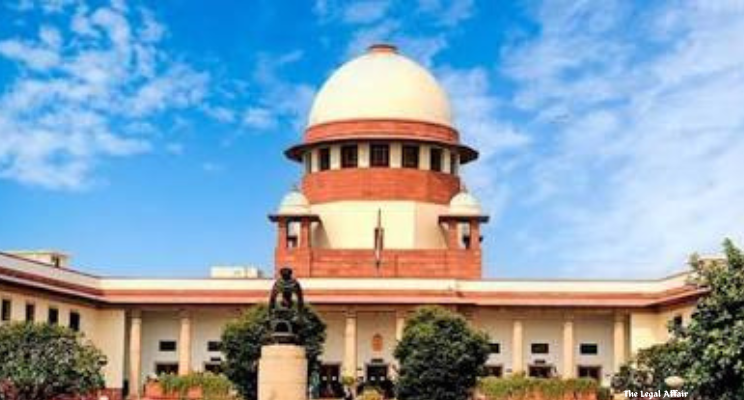
Introduction:
The Supreme Court of India, in State of Karnataka & Anr. v. Prathik Parasrampuria, Citation 2026 LiveLaw (SC) 816, has issued significant directions aimed at curbing the circulation of black money and strengthening accountability for electoral offences. A Bench comprising Justice Sanjay Karol and Justice Nongmeikapam Kotiswar Singh considered extensive data furnished by the Election Commission of India concerning FIRs, seizures, investigations, convictions, acquittals and pending trials arising from the 2019 and 2024 Lok Sabha elections and State Assembly elections conducted between 2019 and 2025.
The proceedings arose from an appeal against a 2015 judgment of the Karnataka High Court, which had quashed an FIR registered against Prathik Parasrampuria. Parasrampuria had been a candidate in the 2014 Lok Sabha bye-election from Bellary and was alleged to have accumulated a substantial amount of cash with the intention of influencing voters through bribery. The State of Karnataka challenged the High Court’s decision before the Supreme Court.
Although the immediate controversy originated from an individual criminal proceeding, the Supreme Court’s consideration expanded into the broader problem of electoral malpractice, particularly the use and circulation of unaccounted cash during elections. The Court sought information from the Election Commission concerning the scale of FIRs and seizures connected with elections across several States and election cycles.
The data placed before the Court demonstrated the enormous scale of election-related enforcement activity. During the 2019 Lok Sabha elections, the Election Commission recorded 1,44,030 FIRs across the country. Gujarat recorded the highest number at 35,144, followed by Uttar Pradesh with 19,209, Maharashtra with 18,928 and West Bengal with 17,493. Rajasthan, Telangana, Andhra Pradesh, Tamil Nadu, Punjab and Karnataka also recorded substantial numbers of FIRs.
The figures for the 2024 Lok Sabha elections were considerably higher. The Commission reported 3,87,430 FIRs. Gujarat again recorded the highest number at 52,820, followed by Maharashtra with 29,545, West Bengal with 27,461, Uttar Pradesh with 23,645 and Telangana with 23,087. Karnataka recorded 7,588 FIRs, while Tamil Nadu and Andhra Pradesh recorded 5,948 and 5,043 respectively.
The data concerning State Assembly elections conducted between 2019 and 2025 was similarly substantial. Telangana’s 2023 Assembly election recorded 33,496 FIRs, the highest among the elections covered. Gujarat’s 2022 election recorded 30,253, Maharashtra’s 2024 election 26,302, West Bengal’s 2021 election 25,061 and Uttar Pradesh’s 2022 election 20,994. Karnataka’s 2023 Assembly election resulted in 8,440 FIRs.
The Court did not merely examine the number of cases registered. It also examined what ultimately happened to those cases. The Election Commission’s supplementary affidavit dated November 15, 2025 provided details regarding investigation, closure reports, convictions, acquittals and pending trials.
For the 2019 Lok Sabha elections, out of 1,44,030 FIRs, 1,348 remained under investigation at the time of the affidavit. Closure reports had been filed in 26,990 cases, while convictions had been recorded in 37,215 cases. Accused persons had been acquitted in 36,312 cases, while 44,387 cases remained pending trial.
The figures for 2024 were significantly larger. Out of 3,87,430 FIRs, 7,930 were still under investigation, 76,987 had resulted in closure reports and 1,66,044 cases had resulted in convictions. The Election Commission described the conviction figure, amounting to approximately 42.9 per cent of the total FIRs, as a significant improvement. Nevertheless, 24,950 cases had resulted in acquittals and 1,06,841 remained pending trial.
For State Assembly elections between 2019 and 2025, 2,01,894 FIRs were registered. Of these, 4,665 remained under investigation, 53,126 resulted in closure reports, 40,155 resulted in convictions and 25,980 resulted in acquittals. A substantial 79,148 cases remained pending trial.
The data prompted the Court to examine another issue having significant implications for electoral integrity: the withdrawal of prosecutions following a change in the political government. The Election Commission expressed concern that election-related criminal cases were sometimes sought to be withdrawn after a change in the ruling dispensation.
The Commission had communicated to Chief Secretaries that such withdrawals could create the impression that individuals engaging in electoral malpractice could act with impunity because prosecutions might subsequently be withdrawn. The Court considered this concern in the broader context of maintaining confidence in the electoral process.
The proceedings therefore evolved beyond the individual FIR involving Parasrampuria. The Court considered how the criminal justice system should respond to electoral offences and whether political changes should be capable of bringing such prosecutions to an end without adequate judicial scrutiny.
The Court also considered comparative material placed before it by the amicus curiae, Dr. Swapnil Tripathi. The note on global practices examined the handling of election-related prosecutions in sixteen jurisdictions, including Australia, Bangladesh, Canada and Indonesia. The comparative material indicated that in many jurisdictions decisions concerning prosecution or withdrawal of election offences are primarily entrusted to public prosecutors, without giving the election management body a direct role in the decision.
Against this background, the Supreme Court accepted the Election Commission’s suggestion that withdrawal of prosecution against election candidates should require approval of the High Court. The Court also directed concerned courts to make every effort to bring pending election-related criminal cases to their logical conclusion as expeditiously as possible.
The decision reflects the Court’s recognition that elections are not merely periodic political exercises but foundational processes of constitutional democracy. Electoral offences involving bribery, black money and other forms of malpractice can undermine the fairness of the electoral process itself. The Court therefore sought to strengthen institutional safeguards against both electoral wrongdoing and selective withdrawal of prosecutions.
Arguments of the Parties:
The State of Karnataka, as the appellant, challenged the Karnataka High Court’s 2015 decision quashing the FIR registered against Prathik Parasrampuria. The State’s case arose from allegations that Parasrampuria, who had contested the 2014 Bellary Lok Sabha bye-election, had accumulated a substantial amount of cash for the purpose of bribing voters.
The State’s challenge necessarily raised questions concerning the proper treatment of alleged electoral offences and the need to ensure that criminal proceedings arising from elections are not prematurely terminated. The appellant’s position was that the allegations concerning the possession and intended use of cash for influencing voters warranted proper investigation and adjudication rather than being brought to an end at the threshold.
The proceedings before the Supreme Court subsequently assumed a wider dimension because the Court sought information from the Election Commission regarding election-related FIRs and enforcement measures across India. The data placed before the Court demonstrated that the problem was not confined to the individual case but formed part of a much broader pattern of criminal and regulatory proceedings during elections.
The Election Commission of India provided statistics covering both Lok Sabha and State Assembly elections. The Commission’s material highlighted the scale of enforcement during the 2019 and 2024 Lok Sabha elections and State Assembly elections held between 2019 and 2025.
The Commission’s submissions also raised concern over the subsequent withdrawal of election-related criminal prosecutions by governments after a change in political leadership. According to the Commission, allowing such cases to be withdrawn without adequate judicial scrutiny could undermine the deterrent effect of electoral law.
The Commission communicated its concern to Chief Secretaries and warned that unilateral withdrawal could send a message that persons committing electoral offences might not face consequences because their cases could later be withdrawn by a government of a different political complexion.
The Commission therefore suggested that greater safeguards were required before election-related prosecutions could be withdrawn. Its position was that judicial scrutiny should operate as an institutional safeguard against politically motivated or arbitrary withdrawal.
The amicus curiae, Dr. Swapnil Tripathi, assisted the Court by placing before it a comparative study of international practices concerning election-related offences. The study examined sixteen jurisdictions, including Australia, Bangladesh, Canada and Indonesia.
The comparative material indicated that, in many jurisdictions, decisions concerning prosecution and withdrawal of election offences are vested primarily in public prosecutors. Election management bodies generally do not possess the same role in deciding whether criminal prosecutions should be continued or withdrawn.
This comparative perspective enabled the Court to examine the Indian position against broader democratic practices. The submissions highlighted the importance of institutional independence and the avoidance of political interference in decisions concerning criminal prosecutions arising from elections.
The respondent’s position in the original criminal proceedings was that the FIR had been appropriately challenged before the Karnataka High Court and that the High Court had exercised its jurisdiction to quash the proceedings. The continuation of the appeal before the Supreme Court therefore required consideration of whether the High Court had correctly exercised its jurisdiction in interfering with the criminal case.
The broader proceedings also required the Court to consider the implications of the extensive election-related data furnished by the Election Commission. The sheer volume of FIRs demonstrated the scale of enforcement, but the data concerning convictions, acquittals, closures and pending trials also raised questions concerning the effectiveness and speed of the electoral criminal justice process.
The Election Commission’s statistics showed that a substantial number of cases remained pending trial years after the elections in which they had arisen. For example, 1,06,841 cases relating to the 2024 Lok Sabha election were still pending trial at the time reflected in the Commission’s affidavit.
The Commission’s figures also showed a significant number of closure reports and acquittals. While the existence of a closure report or acquittal does not itself establish investigative failure, the Court was concerned with ensuring that cases involving electoral offences are dealt with through a fair and effective process rather than remaining unresolved for prolonged periods.
The Court was therefore presented with a broader institutional question: how can the criminal justice system preserve the credibility of electoral processes when cases involving electoral offences remain pending for years, and how can the possibility of political interference in prosecution be minimized?
The Election Commission’s proposed requirement of High Court approval before withdrawal of prosecution sought to answer part of this concern. Such judicial oversight would prevent a change in government, by itself, from becoming sufficient reason for abandoning a prosecution against a candidate.
The amicus’s comparative submissions further supported the importance of insulating election-related criminal prosecutions from political considerations. The submissions emphasized that electoral integrity requires credible and independent enforcement mechanisms.
The parties’ submissions thus provided the Court with both the immediate factual dispute arising from the Parasrampuria case and a wider institutional framework for examining the problem of election-related criminality.
Court’s Judgment:
The Supreme Court, comprising Justice Sanjay Karol and Justice Nongmeikapam Kotiswar Singh, issued directions intended to strengthen the enforcement of electoral laws and prevent the circulation of black money during elections. The Court’s intervention was informed by the extensive material submitted by the Election Commission and the recommendations placed before it by the amicus curiae.
One of the most important directions concerns withdrawal of prosecution against election candidates. The Court accepted the Election Commission’s suggestion that a prosecution arising from an election offence should not be withdrawn merely through an executive decision. Instead, approval of the jurisdictional High Court would be mandatory before such prosecution can be withdrawn.
The Court relied upon the principles recognized in State of Kerala v. K. Ajith and Ashwini Kumar Upadhyay v. Union of India. These decisions underline the importance of judicial scrutiny where withdrawal of criminal prosecution has implications for public interest and the rule of law.
The Supreme Court considered the requirement of High Court approval to be a significant safeguard against arbitrary or politically influenced withdrawal of prosecutions. Judicial scrutiny provides an institutional layer of independence between a political executive seeking withdrawal and the continuation of a criminal proceeding.
The Court described the Election Commission’s suggestion as “a great leap in favour of impartiality.” The reasoning is particularly significant in the context of electoral candidates because candidates seeking public office occupy a position of special democratic responsibility.
The Court observed that requiring High Court approval would place election candidates on the same pedestal as elected Members of Parliament and Legislative Assemblies in relation to criminal prosecutions against them. This reflects a broader constitutional principle that the standards of accountability applicable to elected representatives should also influence the conduct expected of persons seeking election.
The Court emphasized that electoral malpractice cannot be treated as a trivial matter. Once a prosecution has been initiated against a candidate, a mere change in the political dispensation should not automatically release that person from the consequences of the criminal process.
The Court’s reasoning is rooted in the integrity of constitutional democracy. Elections determine who will exercise legislative and executive authority, and therefore the methods used to obtain electoral support must remain within the boundaries of law.
The Court stressed the importance of moral rectitude and upright conduct among those who seek to represent the people. Its observation that a change in political government should not “let them off the hook” carries a clear institutional message: criminal proceedings concerning electoral malpractice cannot become instruments of political favour or political retaliation.
By requiring High Court approval for withdrawal, the Court has sought to ensure that the decision is assessed independently on legal and public-interest grounds rather than merely on the preference of the government in power.
The Court also addressed the considerable pendency reflected in the Election Commission’s statistics. It directed the concerned courts to make all efforts to bring election-related criminal cases to their logical conclusion with utmost expedition.
This direction recognizes that delayed justice can weaken the deterrent effect of electoral laws. An electoral offence prosecuted years after the election may lose much of its immediate public significance, while prolonged proceedings can also create uncertainty for accused persons. Speedy disposal therefore serves both the interests of enforcement and fairness.
The statistics considered by the Court illustrate the scale of the problem. During the 2019 Lok Sabha elections, 1,44,030 FIRs were registered, with 44,387 cases still pending trial according to the Commission’s affidavit. During the 2024 Lok Sabha elections, the number of FIRs increased to 3,87,430, with 1,06,841 cases pending trial.
The Court also took note of the significant number of convictions. In the 2024 Lok Sabha election cases, 1,66,044 convictions were recorded, representing approximately 42.9 per cent of the total FIRs according to the Commission’s calculation. The Commission characterized this as a significant improvement.
Nevertheless, the Court did not treat the conviction statistics as sufficient reason to overlook the large number of pending matters. The objective was to ensure that electoral criminal proceedings are resolved through a timely and credible process.
The Court’s attention to FIR data also demonstrates that the problem of electoral malpractice cannot be assessed merely through individual cases. Large-scale seizures, criminal complaints and investigations during elections indicate the need for systemic institutional safeguards.
The circulation of cash and other inducements during elections can directly affect the freedom of voters and the fairness of electoral competition. Electoral bribery can distort the democratic choice by providing candidates with an unlawful advantage and potentially influencing voters through financial incentives.
The Court’s directions therefore seek to address not merely post-election criminal liability but the broader integrity of the electoral process.
The Court also considered the Election Commission’s concern about unilateral withdrawal of prosecutions after a change in government. The Commission’s warning that such withdrawals could create the impression of impunity was considered significant.
Political transitions are a normal feature of a constitutional democracy. However, criminal prosecution should not become dependent upon which political party controls the government at a particular point in time. If prosecutions can be withdrawn simply because the ruling dispensation changes, public confidence in the impartiality of the criminal justice system may be seriously affected.
The requirement of High Court approval creates a judicial checkpoint. A government may still seek withdrawal where legally justified, but the decision cannot become effective merely through executive action. The High Court must independently assess whether withdrawal is legally and publicly justified.
The Supreme Court’s reliance on State of Kerala v. K. Ajith and Ashwini Kumar Upadhyay v. Union of India reinforces the constitutional importance of judicial supervision over criminal prosecutions involving public representatives and electoral integrity.
The Court’s approach also recognizes that candidates and elected representatives are not ordinary participants in a private dispute. Their conduct has implications for public confidence in representative government. Consequently, the law may legitimately impose heightened procedural safeguards concerning criminal proceedings arising from electoral conduct.
The comparative material presented by Dr. Swapnil Tripathi also played a role in shaping the Court’s understanding of international practice. The note examined sixteen jurisdictions and demonstrated that in many democratic systems the authority to prosecute or withdraw election-related cases is entrusted primarily to public prosecutors.
The comparative analysis did not necessarily dictate the Indian legal position, but it provided useful context for assessing institutional safeguars. It reinforced the proposition that election-related crimina