


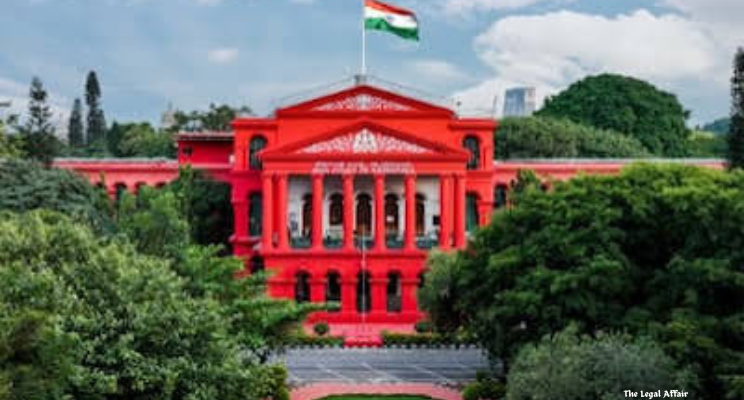
Introduction:
The Karnataka High Court has held that citizens cannot ordinarily be prevented from celebrating Independence Day merely on the basis of apprehensions regarding communal tension or possible disturbance of public order. In Hindu Jagarana Vedike v. State of Karnataka, Writ Petition No. 25036 of 2026, Justice Suraj Govindaraj quashed the police endorsement refusing permission for a proposed torchlight march in Mysuru and directed the authorities to permit the event subject to conditions intended to maintain public order and regulate traffic.
The petition was filed by Hindu Jagarana Vedike challenging an endorsement dated August 6, 2026, issued by Mandi Police Station, Mysuru, refusing permission for an event proposed to be held on the evening of August 14, the eve of Independence Day. The proposed programme, described as “Akhanda Bharatha Sankalpa Diwas”, involved a torchlight march from the RMC Ganesha Temple to Doddagadiyara Circle in Mysuru, followed by a proposed stage programme.
The organisation approached the High Court after the police declined permission for the procession. The proposed march was to cover approximately four kilometres, with around 100 persons expected to participate. The petitioners contended that the event was intended to commemorate Independence Day and that the proposed route was sufficiently wide to permit the procession without creating significant traffic difficulties.
The dispute raised questions concerning the balance between citizens’ fundamental freedoms and the State’s responsibility to maintain public order. The State relied upon concerns relating to traffic, emergency vehicle movement, the sensitivity of the proposed route and the alleged criminal antecedents of certain organisers. The petitioners, on the other hand, maintained that participation in Independence Day celebrations was an important constitutional freedom and that a blanket denial could not be justified merely by referring to possible communal tension.
The State’s apprehension was not entirely limited to traffic management. The Additional Advocate General also pointed to criminal cases and chargesheets involving some members associated with the proposed event. It was argued that certain persons had allegedly been involved in unlawful activities and that their participation created a possibility of disruption of public peace.
The State also described the proposed route as passing through a particularly sensitive part of Mysuru. According to the authorities, the procession could potentially create communal tension or even lead to violence, particularly because the event was proposed to take place on Independence Day eve.
The matter had already received attention from the Court on August 13, when concerns were raised regarding banners allegedly erected in connection with the proposed march even though permission had not yet been granted. The Court had orally expressed displeasure over the conduct and indicated that the organisers could be held strictly responsible for any incident arising out of the event.
When the matter was taken up again, the petitioners sought permission to proceed with the march while undertaking to comply with conditions imposed by the Court. Senior Counsel Aruna Shyam, appearing for the petitioners, submitted that celebrating Independence Day was a fundamental right and that the proposed route did not present the traffic difficulties claimed by the State.
The petitioners also sought to distance themselves from the banners that had allegedly been put up in advance. It was submitted that the banners had been erected by third parties and not by the organisers themselves.
The petitioners further demonstrated their willingness to accept regulatory conditions. They identified nine persons who would be responsible for ensuring that the procession remained peaceful and orderly. A memo containing their details and Aadhaar documents was placed before the Court so that the authorities would have sufficient information to identify and contact the responsible organisers if necessary.
The State, however, maintained that the proposed procession should not be permitted on the requested route. Additional Advocate General Bhanu Prakash submitted that the procession could interfere with the movement of emergency vehicles and ambulances and could cause traffic congestion. An alternative route was suggested by the State.
The State also relied upon the alleged antecedents of some persons associated with the organisation. It was submitted that certain accused persons had criminal cases against them and that there was a possibility of their participation leading to unlawful activities.
The High Court was therefore called upon to decide whether the police had acted lawfully in refusing permission altogether or whether the concerns raised by the authorities could instead be addressed through reasonable conditions regulating the procession.
At the heart of the dispute was the principle that public order can justify reasonable regulation of public assemblies, processions and celebrations, but restrictions must have a rational connection with the apprehended threat. A mere possibility of disturbance cannot automatically result in a complete prohibition, particularly where the activity itself involves a legitimate public celebration.
The Court ultimately found that the proposed march could be permitted subject to safeguards. It accordingly quashed the police endorsement and directed the authorities to allow the procession within the specified time and subject to the conditions laid down by the Court.
Arguments of the Parties:
The petitioners challenged the police endorsement dated August 6, 2026, which had denied permission for the proposed torchlight march. Their principal argument was that the event was connected with Independence Day celebrations and that citizens could not be prevented from participating in such celebrations merely because the authorities apprehended the possibility of communal tension.
Senior Counsel Aruna Shyam argued that the proposed procession was peaceful in character and that the organisers were willing to accept reasonable conditions imposed by the Court or the authorities. The petitioners maintained that the proposed route was a wide road and that the participation was expected to be limited to approximately 100 persons.
The petitioners also disputed the State’s concern that the procession would seriously obstruct traffic. It was submitted that the march would cover around four kilometres and would remain a moving procession rather than a stationary gathering. According to the petitioners, the nature of the event therefore meant that its impact on traffic would be limited.
The petitioners also offered a concrete mechanism for ensuring accountability. They identified nine organisers who would be responsible for the peaceful conduct of the event and supplied their details to the authorities. They undertook to ensure that no untoward incident occurred during the march.
The petitioners argued that the existence of criminal cases against some members could not automatically deprive them of the right to participate in an Independence Day celebration. A criminal case or chargesheet, they submitted, does not amount to a finding of guilt and cannot by itself establish that a person will engage in unlawful conduct during a proposed public event.
This submission became particularly important because the State had relied heavily upon the alleged criminal antecedents of some persons associated with the organisation. The petitioners effectively argued that individual allegations could not be converted into a blanket presumption that the entire procession would necessarily become unlawful.
The petitioners also addressed the issue of banners that had allegedly been erected before permission was granted. They submitted that the banners were not put up by the organisers but by third parties. The petitioners nevertheless indicated their willingness to cooperate with the authorities and comply with directions intended to prevent disorder.
The State took a different position. Additional Advocate General Bhanu Prakash argued that the procession could create significant difficulties for traffic management. The State specifically expressed concern about the movement of ambulances and other emergency vehicles.
According to the State, public authorities have a responsibility to ensure that public processions do not obstruct essential services. Even a comparatively small procession can create disruption if it passes through a busy or sensitive area at an inappropriate time.
The State also proposed an alternative route which, according to the authorities, would reduce the potential disruption.
More seriously, the State alleged that certain persons associated with the event had criminal antecedents and could become involved in unlawful activities. The authorities referred to FIRs and chargesheets involving some organisers and expressed apprehension that their participation could affect public peace.
The State also referred to the sensitivity of the proposed route. It was submitted that the procession would pass through what the authorities considered one of the most sensitive areas of Mysuru. In the State’s assessment, the timing of the event and the nature of the proposed march created a possibility of communal tension.
The authorities had previously also raised allegations concerning certain persons who were said to have engaged in vigilantism by identifying individuals at railway stations and accusing them of being Bangladeshis before allegedly attacking them. These allegations were relied upon to underline the State’s apprehension regarding the participation of particular persons.
The State therefore maintained that refusal of permission was justified as a preventive measure. Its position was that the authorities should not be required to wait for an actual incident of violence before taking steps to prevent a foreseeable threat to public order.
The State also pointed to the conduct of the organisers in relation to banners. The fact that banners had allegedly been erected before judicial permission was granted was presented as evidence of a lack of discipline or control over persons associated with the event.
The Court had itself expressed concern about this conduct during the earlier hearing and warned that strict responsibility could be imposed upon the organisers for any untoward incident.
The competing arguments consequently presented two different approaches to public-order regulation. The petitioners emphasised the constitutional importance of allowing peaceful public participation in Independence Day celebrations, while the State emphasised preventive policing, traffic management and the possibility of communal disturbance.
The Court’s task was not to ignore either consideration. Rather, it had to determine whether the concerns could be addressed through appropriate restrictions or whether they were sufficient to justify an outright prohibition.
Court’s Judgment:
Justice Suraj Govindaraj allowed the writ petition and quashed the police endorsement refusing permission for the proposed torchlight march. The Court directed the authorities to permit the procession from the RMC Ganesha Temple to Doddagadiyara Circle in Mysuru between 5:30 p.m. and 7:30 p.m. on August 14, 2026, subject to the conditions specified in the order.
A significant part of the Court’s reasoning concerned the nature of the event. The Court observed that Independence Day is an occasion that is required to be celebrated by citizens throughout the country. Therefore, when citizens propose to celebrate Independence Day peacefully, the authorities cannot prevent such activity merely by invoking a general apprehension of communal tension.
The Court rejected the proposition that the possibility of communal tension, standing alone, could justify the denial of permission.
The Court’s reasoning did not mean that the State has no authority to regulate Independence Day celebrations or public processions. On the contrary, the authorities remain responsible for maintaining public peace and ensuring that public events do not interfere with essential services.
However, regulation and prohibition are different exercises of power. Where an event can be safely conducted through reasonable conditions, an outright refusal may not be justified.
The Court found that the proposed march involved only around 100 participants and covered approximately four kilometres. It was a moving procession rather than a stationary gathering at a particular location. On these facts, the Court was not persuaded that the procession would create the degree of traffic obstruction suggested by the State.
The Court nevertheless imposed an important condition to address traffic concerns. It directed that only five persons should walk in each row, thereby leaving sufficient space on the road for the movement of other vehicles.
This condition demonstrated the Court’s attempt to balance the right to conduct the procession with the State’s legitimate responsibility to maintain traffic flow.
The Court also took note of the petitioners’ undertaking. Senior Counsel Aruna Shyam had assured the Court that the organisers would take responsibility for the conduct of the procession and ensure that no untoward incident occurred.
The petitioners had filed a memo identifying nine organisers who would be responsible for the event. Their identification documents and addresses were also furnished to the authorities. The Court considered this undertaking and the availability of identifiable persons responsible for the procession as an additional safeguard.
The Court’s treatment of the alleged criminal antecedents of some organisers was particularly significant. The Additional Advocate General had argued that certain persons associated with the organisation had FIRs and chargesheets against them and might become involved in unlawful activities.
The Court rejected the suggestion that the existence of chargesheets, by itself, could justify preventing those persons from participating in Independence Day celebrations.
It observed that merely because chargesheets had been filed against certain individuals did not mean that they could automatically be prevented from participating in an Independence Day celebration.
This reflects the broader principle that criminal allegations and criminal conviction are legally distinct. The filing of a chargesheet signifies that the investigating agency has completed its investigation and presented its case; it does not, by itself, establish guilt.
The Court therefore declined to treat criminal antecedents as an automatic basis for restricting a public celebration.
At the same time, the Court did not ignore the State’s concerns. The organisers were made responsible for maintaining discipline and ensuring that the procession remained peaceful. The conditions imposed by the Court were therefore designed to address the risks identified by the authorities without completely prohibiting the event.
The Court also made clear that the permission granted was limited. It did not extend to the stage programme proposed by the petitioners at the Anjaneya Swami Devasthana.
The Court specifically clarified that its order did not authorise the stage programme. If the organisers had separately obtained the necessary permission for that programme, they could conduct it in accordance with such permission.
This distinction was important because the Court was dealing specifically with the refusal of permission for the torchlight procession. It did not grant an unrestricted licence for every component of the proposed event.
The Court also required the authorities to receive and implement the operative portion of the order promptly. The Additional Advocate General was asked to communicate the Court’s order to the concerned authorities through email or telephone.
The judgment must also be understood against the background of the Court’s earlier concern regarding banners put up before permission had been granted. On August 13, the Court had orally criticised the organisation for allegedly putting up banners despite the absence of judicial permission at that stage.
The Court had indicated that such conduct could demonstrate a lack of control over persons associated with the organisation. It had also warned that the organisers could be held strictly responsible for any incident arising out of the procession.
The final order nevertheless adopted a pragmatic approach. Rather than allowing the earlier concern regarding banners to become a permanent reason for denying the procession, the Court focused on whether the proposed event could be conducted safely under enforceable conditions.
This reflects a broader judicial approach to public assemblies. Where concerns regarding public order can be addressed through route management, crowd control, identification of responsible organisers and other reasonable safeguards, restrictions should ordinarily be calibrated to the actual risk.
The Court also considered the State’s concern regarding emergency vehicles and ambulances. By limiting the number of participants in each row to five, the Court sought to preserve adequate road space for emergency and ordinary traffic.
The Court’s conclusion that the procession would have minimal adverse impact was also influenced by its moving nature. Unlike a stationary public meeting occupying a particular location for a prolonged period, a moving procession of approximately 100 persons over a four-kilometre route presents a different traffic-management challenge.
The Court therefore found that the State’s traffic concerns did not justify an absolute prohibition.
The ruling also has an important constitutional dimension. Freedom of speech and expression, peaceful assembly and participation in public life are subject to reasonable restrictions, including restrictions in the interests of public order. But the existence of these permissible restrictions does not mean that authorities can prohibit public activities based upon vague or speculative fears.
A restriction must bear a rational relationship to the concern it seeks to address. Where the risk can be controlled through conditions, imposing those conditions may be more proportionate than refusing permission altogether.
The Court’s observation that citizens should not be prevented from celebrating Independence Day must be understood in this context. The Court was not declaring an unlimited right to conduct any procession at any place or in any manner. It was holding that a peaceful celebration cannot be prohibited simply because authorities apprehend communal tension, particularly when the event can be regulated through appropriate safeguards.
The judgment also places responsibility upon organisers. The Court accepted the petitioners’ undertaking that the nine identified organisers would be responsible for ensuring peaceful conduct. This creates a clear line of accountability and gives the authorities identifiable persons to approach if violations occur.
The Court’s approach therefore combines protection of civic participation with institutional responsibility. The State must not unnecessarily prohibit peaceful public activity, but organisers cannot treat permission as immunity from legal consequences.
If any participant engages in unlawful conduct, the availability of the organisers’ details enables the authorities to take appropriate action in accordance with law.
The Court’s decision also demonstrates the importance of distinguishing between an individual’s criminal history and the conduct of a proposed public event. The mere fact that an organiser or participant has faced crminal proceedings does not automatically establish that the event itse