


Introduction:
In an important judgment dealing with the intersection of electoral discipline and criminal law, the Madras High Court has reiterated that criminal prosecution cannot be permitted to proceed on vague, generalized, and unsupported allegations merely because the incident arose during an election. The Court emphasized that while free and fair elections are fundamental to democratic governance, criminal law cannot be invoked mechanically in the absence of the essential ingredients of an offence.
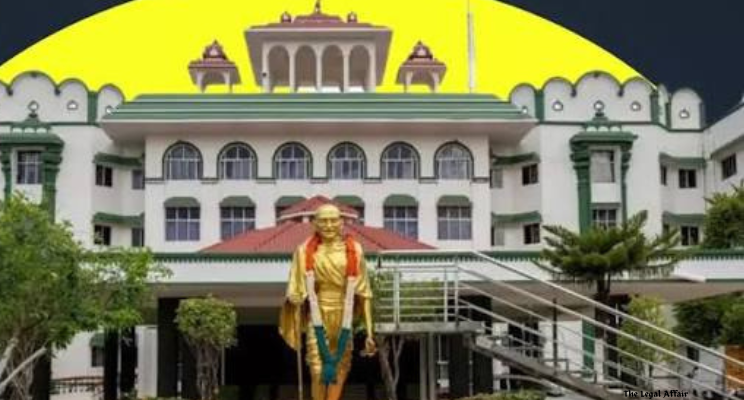
The decision was rendered by Justice Victoria Gowri in Pitchai and Others v. State of Tamil Nadu and Another, reported as 2026 LiveLaw (Mad) 240. The Court was called upon to decide petitions seeking quashing of criminal proceedings pending before the Judicial Magistrate, Pattukottai, in which six individuals had been accused of committing various offences under the Indian Penal Code as well as the Representation of the People Act, 1951.
The petitioners had been charged under Sections 147, 294(b), 353, and 506(i) of the IPC along with Sections 130 and 132 of the Representation of the People Act. According to the prosecution, the accused had entered a prohibited zone within one hundred metres of a polling station during the Tamil Nadu Assembly elections and allegedly canvassed for votes. It was further alleged that when a police officer questioned their conduct, they threatened him and obstructed him from performing his official duties.
The allegations stemmed from an incident said to have occurred on April 6, 2021, at approximately 6:00 p.m. The prosecution asserted that the petitioners violated election regulations by engaging in political activity near a polling booth and that their conduct amounted to unlawful assembly, obstruction of a public servant, criminal intimidation, and violations of electoral law.
However, the case soon raised broader concerns regarding the quality of the investigation and the evidentiary foundation of the charges. The accused contended that the prosecution was politically motivated and that the criminal proceedings had been initiated solely because of their affiliation with an opposition political party. More importantly, they argued that the prosecution lacked independent evidence and had failed to establish even the most basic factual elements required for the offences alleged.
The matter thus presented the High Court with an opportunity to examine the limits of criminal prosecution in election-related disputes and to determine whether allegations unsupported by reliable evidence could be allowed to proceed to trial merely because they arose during an electoral process.
The judgment ultimately emerged as a significant reaffirmation of the principle that criminal law must be invoked with caution and precision. The Court underscored that judicial scrutiny becomes especially important when criminal proceedings appear to be founded upon assumptions rather than demonstrable facts.
Arguments of the Parties:
The petitioners challenged the criminal proceedings on multiple grounds, contending that the prosecution case was fundamentally flawed and incapable of sustaining a criminal trial.
A principal argument advanced by the petitioners was that the entire case rested exclusively upon the statements of police personnel without any independent corroboration. The alleged occurrence was said to have taken place in the vicinity of a polling station during an election, a setting where numerous officials, voters, and members of the public would ordinarily be present. Despite this, the prosecution failed to secure statements from any neutral witnesses.
The petitioners pointed out that no polling officials, Presiding Officers, election observers, or independent members of the public had been cited as witnesses. This omission, according to them, was particularly significant because such persons would have been best positioned to verify whether any disruption of the electoral process had actually taken place.
The petitioners further argued that the allegation relating to the prohibited one hundred metre zone was unsupported by objective evidence. They highlighted that the observation mahazar did not identify the specific reference point from which the one hundred metre radius was measured. Without identifying the starting point of measurement, the prosecution could not establish that the accused had in fact entered a legally prohibited area.
Another important submission made by the petitioners was that the essential ingredients of the offences invoked by the prosecution were entirely absent. It was argued that the materials collected during investigation did not disclose any unlawful assembly, obstruction of a public servant, criminal intimidation, or violation of the Representation of the People Act.
The petitioners maintained that the allegations were vague and lacking in particulars. According to them, the prosecution had failed to describe the specific words used, the precise acts committed, or the manner in which any official duty had been obstructed. Such generalized allegations, they argued, could not form the basis of a criminal trial.
The petitioners also asserted that the prosecution was politically motivated. They claimed that their affiliation with an opposition political party had led to the registration of the case and that the criminal process was being used as a tool of harassment rather than a genuine mechanism for enforcing electoral law.
The State opposed the petitions and argued that the truthfulness of the allegations could not be examined at the stage of quashing proceedings. According to the prosecution, the High Court should refrain from conducting a detailed evaluation of evidence and should allow the trial to proceed.
The prosecution emphasized that election-related offences possess serious implications for democratic governance and electoral integrity. It was submitted that allegations involving interference with election processes should not be prematurely terminated through the exercise of inherent jurisdiction.
The State contended that the materials collected during investigation disclosed the commission of cognizable offences and that disputed questions of fact ought to be resolved during trial. It was argued that the Court should not substitute its own assessment of evidence for that of the trial court at the preliminary stage.
Accordingly, the prosecution urged the High Court to dismiss the petitions and permit the criminal proceedings to continue.
Court’s Judgment:
Justice Victoria Gowri undertook a careful examination of the allegations, the statutory provisions involved, and the evidentiary foundation of the prosecution case. The Court ultimately concluded that the continuation of criminal proceedings would constitute an abuse of the process of law.
At the outset, the Court reiterated the settled principle that the inherent jurisdiction preserved under Section 528 of the Bharatiya Nagarik Suraksha Sanhita exists to prevent misuse of criminal proceedings and to secure the ends of justice. While courts must remain vigilant against criminal conduct, they must be equally vigilant against unwarranted prosecutions lacking legal foundation.
The Court emphasized that election-related offences are undoubtedly serious because they concern the functioning of democratic institutions. However, the seriousness of an allegation cannot compensate for the absence of evidence. Criminal law requires satisfaction of statutory ingredients, and courts cannot permit prosecutions to continue merely because the allegations arise in an electoral context.
A major weakness identified by the Court was the complete absence of independent corroboration. The prosecution case rested entirely upon police witnesses, particularly the defacto complainant who was himself the Sub-Inspector of Police.
Justice Gowri observed that the absence of independent witnesses is not invariably fatal in every criminal case. However, in the context of election-related offences allegedly committed in crowded public places, the absence of any neutral testimony assumes substantial significance.
The Court found it difficult to accept that an incident occurring near a polling station during an election would leave behind no independent witness whatsoever. Polling officials, Presiding Officers, election staff, and members of the public would ordinarily have been available to corroborate the prosecution version if the allegations were true.
The Court noted that none of these potentially crucial witnesses had been examined during the investigation. In particular, the failure to secure the testimony of the Presiding Officer or polling officials was viewed as a serious deficiency because such persons would have been the most competent witnesses regarding any disruption of polling activities.
Another important aspect considered by the Court was the allegation relating to canvassing within the prohibited one hundred metre zone. The Court observed that although the prosecution repeatedly asserted that the petitioners entered the restricted area, it failed to identify the reference point from which the one hundred metre radius was measured.
Without establishing the location of the polling station and the methodology used to determine the prohibited area, the allegation remained unsupported by objective evidence. The Court held that such a foundational deficiency went to the root of the prosecution case.
The Court then examined the ingredients of the offences invoked under the IPC and the Representation of the People Act. Upon scrutiny, it found that the allegations lacked the specificity required to constitute the offences charged.
The Court observed that the prosecution had not clearly explained how the petitioners formed an unlawful assembly, how official duties were obstructed, or how criminal intimidation was committed. The allegations were broad, generalized, and devoid of the particulars necessary to satisfy statutory requirements.
Justice Gowri remarked that even if the allegations contained in the FIR and final report were accepted at face value, they appeared to disclose, at best, a minor election-time commotion occurring in the heat of political activity. There was no material indicating any actual disruption of polling or interference with the democratic process.
The Court was particularly critical of attempts to transform routine political disagreements into criminal prosecutions. It observed that electoral contests are often accompanied by tensions and disagreements, but criminal law cannot be stretched beyond its legitimate limits to criminalize every instance of political friction.
In a significant observation, the Court stated that democracy undoubtedly requires strict adherence to electoral discipline. Nevertheless, the existence of electoral regulations does not mean that every alleged violation automatically warrants a full-fledged criminal trial.
The judgment stressed that courts perform a dual role. They protect society against criminal conduct, but they also protect citizens against misuse of criminal process. This balancing function becomes especially important when criminal proceedings appear to be based on vague accusations rather than concrete evidence.
The Court held that permitting the prosecution to continue despite the glaring deficiencies in the case would amount to subjecting the petitioners to an unnecessary and unjustified criminal trial. Such a course would be contrary to the very purpose of the inherent jurisdiction vested in superior courts.
After evaluating the record as a whole, Justice Gowri concluded that the essential ingredients of the alleged offences had not been established. The prosecution was founded upon vague and generalized allegations unsupported by reliable evidence and lacking the foundational facts necessary for criminal prosecution.
Accordingly, the High Court exercised its inherent powers and quashed the criminal proceedings pending against the petitioners.
The judgment serves as an important reminder that criminal law must remain a tool for addressing genuine wrongdoing rather than a mechanism for pursuing speculative or politically motivated accusations. It also reinforces the principle that courts must carefully scrutinize election-related prosecutions to ensure that democratic values are protected without sacrificing the fundamental rights of individuals.
By insisting upon adherence to statutory requirements and evidentiary standards, the Madras High Court reaffirmed a cornerstone of criminal jurisprudence: no person should be subjected to criminal prosecution unless the allegations disclose a legally sustainable offence supported by credible material. The ruling therefore stands as a significant contribution to both electoral jurisprudence and the law governing the exercise of inherent judicial powers.