


Introduction:
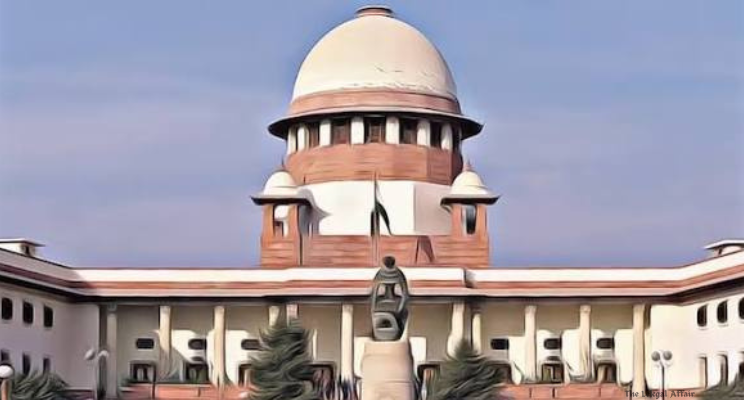
The Supreme Court of India, in Kishan Chand (Dead) through LRs v. Gautam Gaur Hitkarak Sabha, Kota & Ors. (2026 LiveLaw (SC) 463), delivered a significant ruling clarifying the principles governing title disputes involving religious properties. The judgment, authored by Justice Vikram Nath and concurred by Justice Sandeep Mehta, underscores a foundational rule of civil law: ownership cannot be presumed merely from managerial or supervisory control.
The dispute centered around a temple known as “Moorti Swarup Shri Govardhan Nath Ji” located in Kota, Rajasthan. The respondent-plaintiff, a society, claimed title over the temple property primarily on the basis of its long-standing involvement in the administration of temple affairs, including appointing priests and exercising supervisory control. The trial court accepted this claim and granted a decree declaring title in favour of the respondent. This decision was subsequently affirmed by the Rajasthan High Court.
The appellant, who claimed to be the rightful caretaker of the temple through a hereditary line of succession, challenged this finding before the Supreme Court. The appellant contended that the respondent had failed to produce any legally admissible evidence establishing ownership of the temple, and that the courts below had erred in granting a declaration of title based solely on administrative involvement.
This case thus raised a critical legal question: whether managerial control over a religious institution can, in the absence of documentary evidence, be sufficient to establish ownership. The Supreme Court’s ruling provides a clear and authoritative answer, reaffirming settled principles of property law and evidentiary standards in title suits.
Arguments of the Parties:
The appellant, representing the lineage of the temple’s caretakers, argued that the decree in favour of the respondent-society was fundamentally flawed in law. It was submitted that in a suit for declaration of title, the burden lies squarely on the plaintiff to establish their ownership through credible and legally admissible evidence. The appellant emphasized that the respondent had failed to produce any document of title, such as a deed of dedication, endowment, or any record indicating that the temple property vested in the society.
The appellant further contended that the courts below had misdirected themselves by focusing on the alleged weaknesses in the appellant’s case rather than examining whether the respondent had independently discharged its burden of proof. It was argued that even if the appellant’s claim of ownership was not fully substantiated, such failure could not automatically result in a decree in favour of the respondent.
Additionally, the appellant highlighted the distinction between management and ownership. It was submitted that participation in the administration of temple affairs, including appointment of priests or supervision of rituals, does not confer proprietary rights. Such functions, the appellant argued, are often carried out by committees or societies in a representative capacity and cannot be equated with ownership.
On the other hand, the respondent-society defended the findings of the lower courts by relying on its long-standing involvement in the management of the temple. It was argued that the society had been exercising control over the temple for several years, including appointing “pujaris” and overseeing religious activities, which demonstrated its de facto authority over the institution.
The respondent also sought to rely on the appellant’s inability to establish his own title, contending that this failure strengthened the society’s claim. It was argued that in the absence of a competing title from the appellant, the courts were justified in recognizing the respondent’s rights based on its established role in the administration of the temple.
However, the respondent’s case was notably deficient in terms of documentary evidence. As highlighted during the proceedings, no deed of dedication, endowment, or any other legal instrument was produced to substantiate the claim of ownership. The respondent’s reliance was thus primarily on circumstantial factors relating to management and control.
Court’s Judgment:
The Supreme Court, after a careful examination of the record and the applicable legal principles, allowed the appeal and set aside the judgments of the trial court and the High Court. The Court categorically held that managerial or supervisory control over a temple does not, by itself, establish ownership or title.
Justice Vikram Nath, writing for the bench, emphasized that in a suit for declaration of title, the plaintiff must succeed on the strength of their own case and not on the weakness of the defendant’s case. This principle, deeply rooted in civil jurisprudence, was found to have been overlooked by the courts below.
The Court observed that the respondent-society had failed to produce any documentary evidence establishing its ownership of the temple property. There was no deed of dedication, no document of endowment, and no legally admissible material to show that the property vested in the society. In the absence of such evidence, the claim of title could not be sustained.
Importantly, the Court rejected the notion that managerial functions could be equated with ownership. It held that activities such as supervising temple affairs or appointing priests may indicate involvement in administration but do not confer proprietary rights. The Court clarified that such functions are often performed by individuals or groups in a fiduciary or representative capacity and cannot be treated as evidence of title.
The judgment further criticized the approach adopted by the High Court, which had affirmed the decree in favour of the respondent by relying on the appellant’s failure to prove his own title. The Supreme Court held that this reasoning was legally untenable, as it effectively shifted the burden of proof away from the plaintiff. The Court reiterated that the plaintiff must independently establish their title, and any deficiencies in the defendant’s case cannot fill this gap.
In strong terms, the Court described the approach of the lower courts as contrary to settled legal principles governing title suits. It noted that such reasoning undermines the integrity of the adjudicatory process and risks granting ownership rights without proper evidentiary basis.
By setting aside the impugned judgments, the Supreme Court reaffirmed the importance of strict proof in property disputes, particularly those involving religious institutions where claims of management and control are often intertwined with assertions of ownership.
The ruling has broader implications for disputes involving temples, trusts, and other religious properties across the country. It serves as a clear reminder that administrative involvement, however extensive, cannot substitute for legal title. The judgment thus reinforces the principle that ownership must be established through clear, cogent, and legally admissible evidence.