


Introduction:
In a significant judgment addressing the intersection of rural livelihoods and urban governance, the Himachal Pradesh High Court clarified that the predominance of agriculture in a region cannot, by itself, be a ground to resist its inclusion within a municipal framework. The case, Ravi Chand v. State of Himachal Pradesh & Others, arose from the State’s decision to upgrade Nagar Panchayat Jawalamukhi into a Municipal Council by incorporating surrounding villages. The petitioner, Ravi Chand, challenged the inclusion, contending that it would adversely impact the rural population, particularly those dependent on agriculture and government subsidies. The matter had a procedural history, as an earlier notification had already been quashed by the High Court with directions to reconsider objections and grant a personal hearing. Following compliance with these directions, the State issued a fresh notification, once again including the villages, which led to the present petition. A division bench comprising Justice Vivek Singh Thakur and Justice Ranjan Sharma examined the legality of the notification and ultimately upheld the State’s decision, emphasizing that statutory considerations governing municipal reorganization cannot be overridden by generalized apprehensions or anticipated inconveniences.
Arguments by the Petitioner:
The petitioner mounted a detailed challenge against the State’s decision, primarily focusing on the socio-economic implications of transitioning from a rural to an urban governance structure. It was argued that the inclusion of predominantly agrarian villages into a Municipal Council would fundamentally alter the character of the region, adversely affecting those who depended on agriculture, horticulture, and allied activities for their livelihood. According to the petitioner, the rural economy in the concerned areas was fragile and heavily reliant on traditional agricultural practices, often rain-fed, and the imposition of an urban administrative framework would disrupt this delicate balance.
A key contention raised by the petitioner was the potential loss of benefits associated with rural status, including subsidies, welfare schemes, and government support systems specifically designed for rural populations. It was submitted that these benefits were essential for the sustenance of farmers and economically weaker sections, and their withdrawal would lead to financial distress and increased vulnerability. The petitioner emphasized that such consequences were not merely incidental but had a direct bearing on the quality of life and economic stability of the affected population.
The petitioner also questioned the adequacy of consultation and the manner in which objections were considered by the State authorities. It was argued that the decision-making process lacked genuine engagement with local stakeholders and that the objections raised by residents and Panchayats were not meaningfully addressed. The petitioner suggested that the hearing granted was more of a formality than a substantive exercise, thereby violating principles of natural justice.
Another significant argument pertained to the infrastructural readiness of the proposed Municipal Council. The petitioner contended that the existing civic infrastructure in Jawalamukhi was insufficient to cater to an expanded population. It was argued that the inclusion of additional villages would exacerbate existing deficiencies in essential services such as water supply, sanitation, roads, and waste management. Instead of improving governance, the petitioner claimed, the reorganization would lead to administrative inefficiencies and deteriorating living conditions.
Further, the petitioner relied on resolutions passed by local Panchayats opposing the inclusion, arguing that such resolutions reflected the democratic will of the people. It was submitted that ignoring these resolutions undermined grassroots democracy and local self-governance, which are fundamental principles underlying the Panchayati Raj system.
The petitioner also expressed concerns about increased taxation and financial burdens that would accompany municipal inclusion. It was argued that residents would be subjected to higher taxes and fees without commensurate improvements in services, thereby placing an unfair burden on already struggling rural households.
In essence, the petitioner’s case was built on the premise that the State’s decision was arbitrary, inadequately reasoned, and failed to account for the ground realities of the affected areas. It was urged that the Court intervene to protect the interests of rural residents and set aside the impugned notification.
Arguments by the Respondents:
The respondents, representing the State of Himachal Pradesh, robustly defended the decision to upgrade the Nagar Panchayat and include the surrounding villages within the Municipal Council. At the outset, they emphasized that the entire process had been carried out strictly in accordance with statutory provisions governing municipal reorganization. It was pointed out that the earlier directions of the High Court had been fully complied with, including reconsideration of objections and granting of a personal hearing to affected parties.
The State argued that the decision was based on objective criteria such as administrative feasibility, contiguity, population growth, and the need for integrated urban planning. It was submitted that the expansion of municipal limits was a necessary step to ensure planned development, efficient delivery of services, and better governance in the region. The inclusion of adjoining villages, according to the respondents, was essential to address the challenges posed by urbanization and to prevent unregulated growth.
Addressing the petitioner’s concerns regarding agricultural livelihoods, the respondents clarified that inclusion within a municipal area does not prohibit agricultural or allied activities. They argued that farmers would continue to carry on their occupations without any legal restriction and that the apprehensions regarding disruption of agricultural practices were unfounded.
On the issue of loss of rural subsidies and benefits, the respondents contended that such consequences were incidental to the transition from a rural to an urban governance framework. It was argued that policy decisions regarding the allocation of benefits are within the domain of the legislature and the executive, and cannot be used as a ground to challenge a statutory notification issued in public interest.
The respondents also refuted allegations of inadequate consultation, stating that all objections were duly considered and addressed in a reasoned manner. They emphasized that the decision-making process was transparent and complied with the principles of natural justice.
Regarding infrastructural concerns, the State submitted that the very purpose of municipal reorganization was to improve infrastructure and service delivery. It was argued that the inclusion of villages would enable better planning, allocation of resources, and implementation of development projects, ultimately benefiting the residents.
The respondents further argued that local opposition, including Panchayat resolutions, cannot override statutory decisions taken in public interest. While acknowledging the importance of local self-governance, they maintained that such bodies do not possess a veto over decisions made under the relevant municipal laws.
In conclusion, the respondents urged the Court to dismiss the petition, asserting that the challenge was based on speculative and generalized apprehensions rather than any concrete legal infirmity.
Court’s Judgment:
The Himachal Pradesh High Court, after a comprehensive examination of the facts and legal issues, dismissed the petition and upheld the State’s decision to include the villages within the Municipal Council. The Court’s judgment is notable for its clear articulation of the principles governing municipal reorganization and its firm rejection of arguments based on generalized apprehensions.
At the outset, the Court observed that the objections raised by the petitioner were largely speculative and lacked substantive legal basis. It noted that the concerns regarding loss of subsidies, increased taxation, and infrastructural deficiencies were founded on anticipated consequences rather than demonstrable violations of statutory provisions.
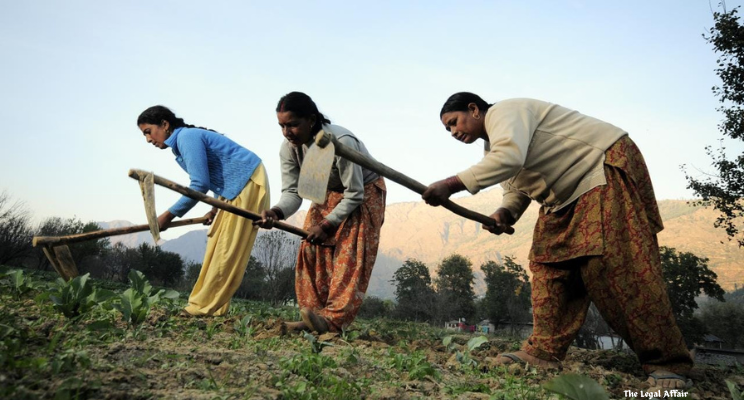
A central aspect of the Court’s reasoning was its clarification that agricultural activities are not prohibited within municipal areas. The Court categorically held that the predominance of agricultural or rain-fed land, or dependence on rural livelihoods, cannot by itself constitute a valid ground to challenge municipal inclusion. It emphasized that individuals engaged in agriculture, horticulture, or animal husbandry are free to continue their lawful activities even after inclusion in a municipal framework.
The Court also addressed the issue of loss of rural benefits, describing it as a consequential aspect of the transition from rural to urban governance. It held that such considerations, while relevant from a policy perspective, cannot override statutory criteria governing municipal reorganization. The Court made it clear that judicial review in such matters is limited to examining the legality of the decision-making process and not the merits of policy choices.
Importantly, the Court found that the State had complied with its earlier directions by reconsidering objections and granting a personal hearing. It observed that the competent authority had duly applied its mind to the objections raised and had passed a reasoned order addressing the concerns.
The Court further held that municipal inclusion is guided by factors such as administrative feasibility, contiguity, and the need for integrated urban planning. It noted that these considerations had been duly evaluated by the State and that there was no evidence of arbitrariness or illegality in the decision.
On the issue of local opposition, the Court clarified that while Panchayat resolutions and public sentiment are relevant, they do not have a veto over statutory decisions taken in public interest. It emphasized that allowing such opposition to override legal processes would undermine the authority of the State and hinder planned development.
The Court also rejected the argument that the Municipal Council lacked adequate infrastructure, observing that such concerns are precisely what municipal reorganization seeks to address. It held that the inclusion of villages would facilitate better planning and resource allocation, ultimately improving governance and service delivery.
In conclusion, the Court held that the petitioner had failed to establish any statutory infirmity, jurisdictional defect, or legal impediment in the impugned notification. Accordingly, the petition was dismissed, and the State’s decision to upgrade the Nagar Panchayat and include the surrounding villages was upheld.