


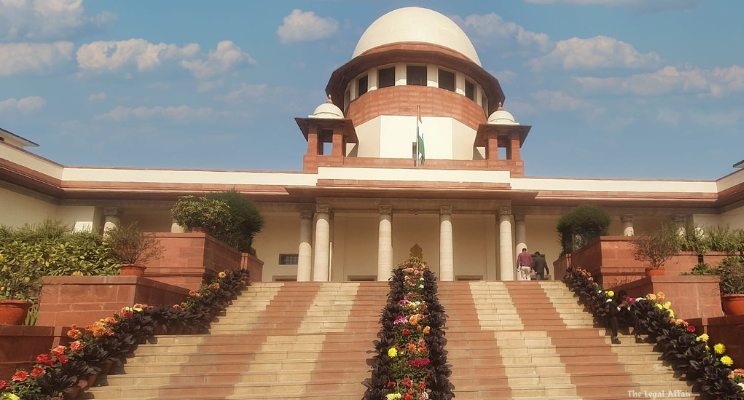
Introduction:
The Supreme Court of India, in Arvind Dham v. Directorate of Enforcement (Citation: 2026 LiveLaw (SC) 7), delivered a significant judgment reaffirming the constitutional primacy of the right to a speedy trial under Article 21 of the Constitution of India. The case arose from proceedings initiated by the Directorate of Enforcement (ED) under the Prevention of Money Laundering Act, 2002 (PMLA), wherein the appellant, a former promoter of Amtek Auto, had been in custody since 9 July 2024. Despite the filing of prosecution complaints, the trial had not commenced, cognizance had not been taken, and the matter remained at the stage of scrutiny of documents. With as many as 210 prosecution witnesses cited and no realistic prospect of an early trial, the appellant approached the Supreme Court after the Delhi High Court declined bail.
The Bench comprising Justice Alok Aradhe and Justice Sanjay Kumar was called upon to examine whether the seriousness of alleged economic offences could, by itself, justify prolonged pre-trial incarceration, even when the criminal justice system had failed to ensure a timely trial. The judgment is a reaffirmation of constitutional first principles and places the liberty of the undertrial at the heart of criminal jurisprudence, holding that pre-trial detention cannot be allowed to become a substitute for punishment.
Arguments on Behalf of the Appellant:
On behalf of the appellant, it was contended that continued incarceration without commencement or reasonable progress of trial was a direct violation of Article 21. The defence emphasised that the right to life and personal liberty includes the right to a speedy trial, which does not stand diluted merely because the allegations relate to an economic offence. It was argued that the appellant had already spent a substantial period in custody, and despite the filing of prosecution complaints, the case had not moved beyond the preliminary stage. The absence of cognizance, coupled with the sheer volume of witnesses cited by the prosecution, made it evident that the trial would not commence in the near future.
The appellant relied heavily on the Supreme Court’s earlier decision in Javed Gulam Nabi Shaikh v. State of Maharashtra, where it was held that if the State or prosecuting agency lacks the wherewithal to ensure a speedy trial, it cannot oppose bail solely on the ground of seriousness of the offence. The defence submitted that the present case was on a stronger footing, as the delay was not systemic alone but was substantially attributable to the Enforcement Directorate itself. After the Special Court issued notice to proposed accused persons in September 2024, the ED challenged the said order before the High Court, securing a stay that stalled proceedings for nearly eight months. Though the petition was later withdrawn, the damage to the appellant’s liberty had already been done.
It was further argued that the allegations of witness influence and dissipation of proceeds of crime were unsupported by material evidence. The principal witness was arrayed long after the appellant’s arrest, and there was no demonstrable link between the appellant and the alleged sale of attached properties. The defence pointed out that the evidence in the case was predominantly documentary, already in the custody of the prosecution, thereby reducing any apprehension of tampering. In such circumstances, continued detention served no investigatory purpose and amounted to punitive incarceration without trial.
The appellant also challenged the tendency to treat economic offences as a separate and homogeneous class warranting stricter standards for bail. It was submitted that under the PMLA, the maximum punishment prescribed is seven years, and statutory rigours cannot be interpreted in a manner that sanctions indefinite pre-trial detention. Bail, it was argued, remains the rule, and jail the exception, especially when constitutional rights are at stake.
Arguments on Behalf of the Respondent (Directorate of Enforcement):
The Directorate of Enforcement opposed the grant of bail primarily on the ground of the gravity and seriousness of the alleged economic offence. It was contended that money-laundering offences have far-reaching consequences on the financial system and public interest, and therefore require a strict approach in matters of bail. The ED argued that the statutory framework of the PMLA envisages stringent conditions, and courts must be slow in granting bail in such cases.
The respondent further submitted that the appellant wielded substantial financial influence and there existed a real apprehension of tampering with evidence and influencing witnesses if he were released on bail. It was also alleged that the appellant had a role in dissipating proceeds of crime and facilitating transactions involving attached properties. According to the ED, the complexity of the case, the multiplicity of transactions, and the large number of witnesses justified the time taken in proceedings, and the delay could not be construed as a violation of Article 21.
The ED sought to distinguish precedents relied upon by the appellant by asserting that economic offences constitute a distinct category, where considerations of societal interest outweigh individual liberty. It was urged that granting bail at an early stage would send a wrong signal and undermine the deterrent effect of the law. The respondent maintained that the High Court had rightly exercised its discretion in refusing bail and that no interference was warranted.
Court’s Judgment:
The Supreme Court, after carefully considering the rival submissions, allowed the appeal and set aside the order of the Delhi High Court denying bail. The judgment, authored by Justice Alok Aradhe, is a clear and emphatic restatement of the constitutional guarantee of a speedy trial.
At the outset, the Court reiterated that the right to a speedy trial is an integral part of Article 21, and this right is not eclipsed by the nature of the offence. The Bench observed that prolonged incarceration of an undertrial, without commencement or reasonable progress of trial, has the inevitable effect of converting pre-trial detention into a form of punishment, which is constitutionally impermissible. The seriousness of allegations, howsoever grave, cannot by itself justify such deprivation of liberty.
Relying on Javed Gulam Nabi Shaikh, the Court held that if the State, the prosecuting agency, or even the court concerned lacks the capacity to secure an accused’s fundamental right to a speedy trial, it cannot oppose bail merely on the ground that the alleged crime is serious. This principle, the Court noted, has been consistently applied in a line of decisions including Manish Sisodia, Padam Chand Jain, and V. Senthil Balaji, where prolonged incarceration pending trial was held to weigh decisively in favour of bail.
A crucial aspect of the judgment is the Court’s rejection of the argument that economic offences form a homogeneous class warranting blanket denial of bail. The Bench categorically held that economic offences differ in degree, factual context, and statutory punishment, and therefore cannot be treated as a monolithic category. Under the PMLA, where the maximum sentence is seven years, statutory restrictions cannot be interpreted to legitimise indefinite pre-trial detention in violation of Article 21.
The Court placed significant emphasis on the stage of the proceedings. Despite the filing of prosecution complaints, cognizance had not been taken, and the matter was still at the stage of scrutiny of documents. With 210 prosecution witnesses cited, the Court found no realistic likelihood of the trial commencing in the near future. This, coupled with the fact that the evidence was largely documentary and already in the custody of the prosecution, substantially diluted the ED’s apprehensions regarding tampering.
Importantly, the Court found that a substantial part of the delay was attributable to the Enforcement Directorate itself. The ED’s decision to challenge the Special Court’s order issuing notice to proposed accused persons resulted in an eight-month stay of proceedings. Though the petition was eventually withdrawn, the trial had already been stalled for a considerable period. The Court made it clear that an accused cannot be made to suffer incarceration for delays caused by the prosecuting agency’s own actions.
Addressing allegations of witness influence and dissipation of proceeds of crime, the Court found no material substantiating these claims. The principal witness was arrayed much after the appellant’s arrest, and there was no evidence linking the appellant to the alleged sale of attached properties. Mere assertions, the Court held, cannot justify continued detention when liberty is at stake.
Reaffirming constitutional first principles, the Court held that Article 21 applies irrespective of the nature of the crime. If the justice system is unable to ensure a timely trial, continued incarceration of an undertrial cannot be justified by invoking the seriousness of allegations alone. The Bench therefore quashed the High Court’s order and directed the appellant’s release on bail, subject to conditions to be fixed by the trial court, including surrender of passport and restrictions on travel.