


Introduction:
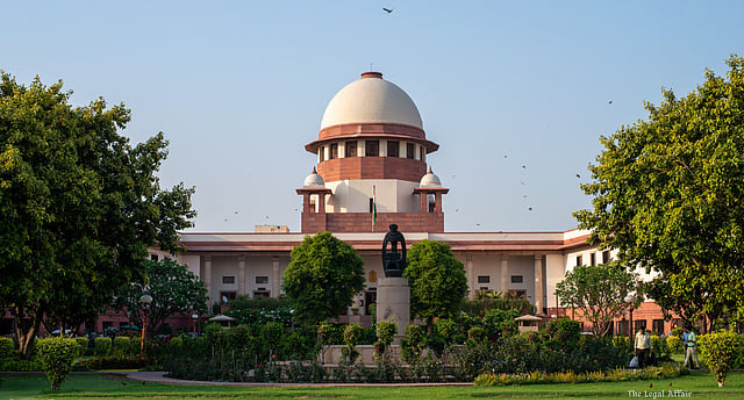
In a landmark development shaping the future of gender representation within the legal profession, the Supreme Court of India delivered a significant ruling in the petitions Yogamaya M.G. vs Union of India (W.P. (C) No. 581/2024) and Shehla Chaudhary vs Union of India (W.P. (C) No. 1060/2025). Filed by advocates Yogamaya M.G. and Shehla Chaudhary, the petitions sought mandatory reservation for women in State Bar Councils, citing the persistent underrepresentation of women in elected legal bodies. The matter was placed before a bench comprising Chief Justice of India Surya Kant and Justice Joymalya Bagchi, who undertook an extensive review of structural gender imbalances, the statutory framework of Bar Councils, and the urgent need for institutional reforms. Bar Council of India (BCI) Chairperson Senior Advocate Manan Kumar Mishra, along with several senior advocates such as Meenakshi Arora, Shobha Gupta, and Vinay Navare, contributed to a dynamic dialogue addressing constitutional principles, practical constraints, and the aspiration for gender parity in professional governance. The Court’s final directions represent a balanced yet progressive stride aimed at enhancing participation of women advocates in State Bar Councils, reinforcing the spirit of equality under Articles 14 and 15 of the Constitution.
Arguments from the Petitioners’ Side:
The petitioners, represented by Senior Advocate Shobha Gupta and Advocate Dr. Charu Mathur, urged the Court to recognise the systemic barriers faced by women in law, ranging from gender stereotypes to limited access to leadership roles. They argued that although women constituted a growing share of practising advocates, their presence in Bar Council leadership was dismally low, often less than 5% in many states. They contended that this disparity not only undermined the constitutional vision of equality but also weakened the representative character of these statutory bodies. The petitioners submitted that reservation was not merely a matter of representation but a necessary intervention to undo decades of entrenched exclusion. They emphasised that structural reforms must begin at the governance level, for elected institutions set the tone for inclusivity, mentorship, and equitable professional opportunities. Further, they argued that any hesitancy toward implementing reservation on grounds of inadequate numbers of practising women advocates was flawed, as it perpetuated the very inequality that reservation sought to correct. They also highlighted that other professional bodies, both national and international, had adopted affirmative-action measures to foster women’s leadership, setting a global standard that India must emulate.
The petitioners also stressed that the absence of women in authoritative positions within Bar Councils contributed to hostile work environments, limited gender-sensitised policy-making, and insufficient redressal mechanisms for harassment or discrimination. According to them, women lawyers often face invisible barriers when contesting elections—ranging from financial constraints to lack of electoral support networks—making it essential that space be created through reservation. They urged the Court to direct a uniform 30% reservation across all State Bar Councils, implemented through the election process, ensuring genuine participation and empowerment rather than tokenistic inclusion. The petitioners further asserted that the BCI had not taken proactive steps despite long-standing concerns over gender disparity, thereby necessitating judicial intervention.
Arguments from the Bar Council of India and Intervenors:
On the other side, BCI Chairperson Senior Advocate Manan Kumar Mishra submitted that the Bar Council of India was, in principle, supportive of 30% reservation for women in State Bar Councils. However, he argued that immediate implementation through elections might not be feasible in many states due to low numbers of practising women advocates. He proposed a model where a significant portion of seats for the current election cycle be filled through co-option, allowing Bar Councils to nominate eligible women lawyers to ensure representation. Specifically, he suggested that 15% of seats be co-opted for the present year, with the remaining percentage to be developed through a long-term structural plan. Mishra submitted that forcing a sudden electoral reservation might lead to uncontested seats or insufficient candidates, diluting the democratic process.
Senior Advocate Meenakshi Arora expressed pragmatic concerns, emphasising that while the goal of reservation was laudable, a uniform mandate across all states ignored stark variations in demographics. In certain states, the percentage of practising women was extremely low, and imposing a 30% quota might place unrealistic pressure on women advocates or compel nominating underqualified individuals, thereby causing reputational harm. She cautioned that the reform should be implemented to empower, not burden, women lawyers.
Senior counsel K. Balu, co-chairman of the Tamil Nadu Bar Council, supported the 30% representation and highlighted the entrenched hierarchy within Bar Councils, stating there existed an unhealthy norm of “once a chairman, always a chairman,” which hindered new entrants, especially women. Senior counsel Vinay Navare, appearing for Jan Adalat, an NGO advocating legal profession reforms, echoed this sentiment, adding that reservation would break long-standing monopolies and revitalise Bar Council democracy.
The intervenors also drew attention to the logistical realities: Bar Council elections in several states—Andhra Pradesh, Punjab & Haryana, Uttar Pradesh, Telangana, Bihar, and Chhattisgarh—were already notified or underway, making it administratively improper to introduce reservations at this stage. They urged the Court to ensure that ongoing elections were not disrupted while still directing earnest steps toward gender inclusivity.
Court’s Judgment:
After taking note of competing viewpoints, constitutional obligations, and administrative realities, the Supreme Court delivered a carefully balanced and forward-looking judgment. The Court began by acknowledging the stark underrepresentation of women advocates in Bar Councils and held that gender equality was not merely aspirational but a constitutional imperative. While appreciating the BCI’s willingness to implement reservation, the Court held that partial or delayed measures would not adequately address the serious gender deficit. Therefore, for all State Bar Councils where election processes had not yet been initiated, the Court directed that 30% of seats must be represented by women advocates. Out of this, 20% shall be elected seats and 10% shall be filled through co-option. The Court clarified that co-option was to be used only where the number of contesting women candidates was insufficient.
At the same time, the Court recognised that six State Bar Councils had already notified or commenced elections—namely Andhra Pradesh, Punjab & Haryana, Uttar Pradesh, Telangana, Bihar, and Chhattisgarh. It ruled that introducing reservation at this stage might unfairly disrupt ongoing electoral processes. However, the bench issued a positive exhortation: women contesting elections in these states must be encouraged by the legal fraternity, and advocate-voters should consciously promote gender-balanced representation within existing frameworks.
The Court rejected the proposal of 15% co-option suggested by the BCI, holding that co-option should be limited to 10% to preserve the democratic character of elections. It also directed the BCI to place before the Court a detailed proposal for operationalising co-option in states where women advocates may be too few or hesitant to contest. The Court emphasised that co-option must not become a substitute for elections; rather, it was a supplementary measure to ensure the representation target was met without compromising democratic principles.
The bench further noted that progressive transformation in professional institutions required dismantling entrenched power structures. The observations by intervenors regarding repetitive leadership and concentration of authority were acknowledged, with the Court indicating that reservation could help decentralise governance and enable fresh participation.
Ultimately, the judgment underscored that meaningful representation of women in Bar Councils was essential not only for gender justice but also for institutional health, policymaking sensitivity, and building a supportive professional ecosystem. By mandating reservation while respecting ongoing elections, the Court crafted a nuanced remedy balancing fairness, feasibility, and constitutional progressiveness.