


Introduction:
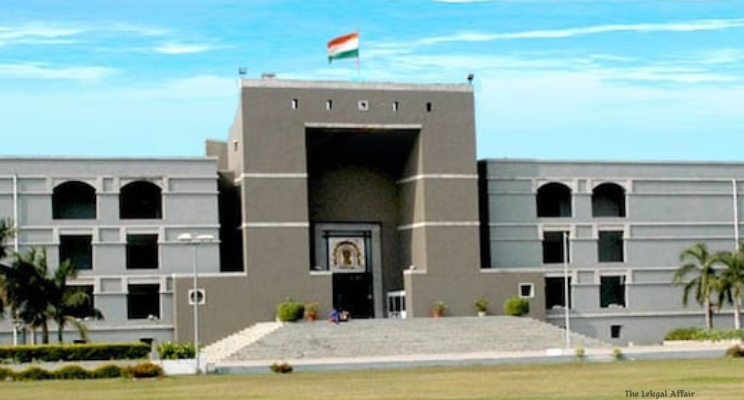
In the matter of Deputy Director, Animal Husbandry & Another v. State of Gujarat & Another, the Gujarat High Court was called upon to interpret the scope and applicability of the State Government’s 2019 Circular that consolidated wages of part-time employees and granted a fixed pay of ₹14,800 per month from 01.01.2019. The dispute arose when a part-time worker whose employment required him to work for four hours a day sought to claim the benefits of the 2019 Circular. A Single Judge of the High Court had earlier directed the State authorities to verify the working hours of the employee, and if found that he worked four or more hours, to process his entitlement under the Circular. Aggrieved by this direction, the State Government filed a Letters Patent Appeal, contending that the 2019 Circular extended benefits only to part-time employees who worked more than four hours per day. The Division Bench comprising Justice AS Supehia and Justice LS Pirzada examined the rival submissions, parsed the text and intention of the Circular, and ultimately upheld the Single Judge’s order by reaffirming that employees must have actually worked a minimum of four hours to qualify for the fixed-pay benefit of ₹14,800. The Court stressed that the Circular did not intend to extend benefits to those who worked less than four hours and that any interpretation allowing otherwise would defeat the purpose, structure, and spirit of the government’s pay-fixation policy.
Arguments of Both Sides:
The matter presented sharply contrasting interpretations of a single phrase in the 2019 Government Circular: “part-time employees who are working up to four hours.” The State Government, as the appellant, argued that the Circular must be construed in a restrictive manner. According to the State, only part-time workers employed for “more than four hours” per day were eligible for the consolidated fixed pay of ₹14,800. The government asserted that employees working exactly four hours did not automatically qualify, as the Circular intended a differential structure between workers rendering work up to four hours and those rendering more than four hours. Historically, the State explained, the wage structure was divided into two categories: employees working four hours were paid ₹110 per day, while those working four hours or more were paid ₹220 per day. The State claimed that in harmonizing and consolidating wages, the government’s intention was to grant ₹14,800 only to those who had been receiving the higher bracket of daily wages—i.e., those working “more than four hours.” The State insisted that extending such benefits to those working exactly four hours would contradict administrative intention, inflate expenditure, and undermine the structured classification historically applied by the Finance Department.
On the other hand, the respondent employee and the State of Gujarat (as respondent No. 1) argued that the interpretation advanced by the appellants was incorrect and based on a fragmented reading of the Circular. They maintained that the phrase “employees working for four hours or more” had always been treated as the threshold category for enhanced benefits—first in daily wages, and later in the consolidated fixed pay regime. They pointed out that it was admitted by the appellant-State even before the Single Judge that the respondent employee had been continuously working for four hours as a part-time worker. Once the factual position regarding the working hours stood admitted, the only legal question was whether the Circular intended to exclude workers who worked exactly four hours. The respondents argued that the Circular’s objective was to provide uniformity, remove wage disparity, and ensure dignified compensation for part-time employees who render substantial service. Thus, any interpretation that excludes persons working precisely four hours would contradict the beneficial intent of the Circular. They further argued that the Single Judge had only directed verification—a standard administrative exercise—which the State had no reasonable ground to oppose, especially when it was not disputed that the respondent worker performed a minimum of four hours of service daily. The respondents emphasized that beneficial legislation and beneficial circulars must be interpreted liberally to favor employees and prevent arbitrary denial of rights.
Court’s Judgment:
The Division Bench, after examining the entire factual matrix, legislative background, and the specific wording of the 2019 Circular, upheld the Single Judge’s order and dismissed the State’s appeal. The Court first recorded that it was not disputed by the appellants that the respondent employee was indeed working four hours a day as a part-time employee. The Single Judge had merely asked the authorities to verify the working hours and, in case the employee was found to be working four or more hours, extend benefits under the Circular. The Division Bench held that such a direction was entirely consistent with both the language and purpose of the Circular.
The Court carefully analyzed the State Government’s previous wage structure, noting that employees working four hours were paid ₹110 per day, whereas those working actually for more than four hours received ₹220 per day. However, once the government consolidated the wages and declared that all part-time employees who work “four hours or more” would be entitled to the fixed pay of ₹14,800, the distinction between “four hours” and “more than four hours” ceased to apply for the purpose of entitlements. The Bench emphasized that the State Government’s Circular never granted the benefit to those working less than four hours and that the wording clearly required that an employee must work “four hours or more” to qualify. The Court observed that interpreting the Circular to include employees who worked less than four hours would lead to absurd consequences—such as a person working only one hour being entitled to ₹14,800—which could never have been the government’s intention.
Thus, the Court concluded that the State’s argument—that exactly four hours did not qualify—was flawed, hyper-technical, and contrary to the plain meaning of the Circular. The Court further held that the appeal lacked merit because the Single Judge had already applied the correct legal approach by directing verification rather than automatic benefit, ensuring fairness and factual accuracy. Finding no infirmity in the Single Judge’s reasoning or conclusions, the Division Bench dismissed the Letters Patent Appeal. The judgment firmly reaffirms the principle that part-time employees who have actually rendered a minimum of four hours of work are eligible for the fixed pay of ₹14,800 under the State’s 2019 Circular.