


Introduction:
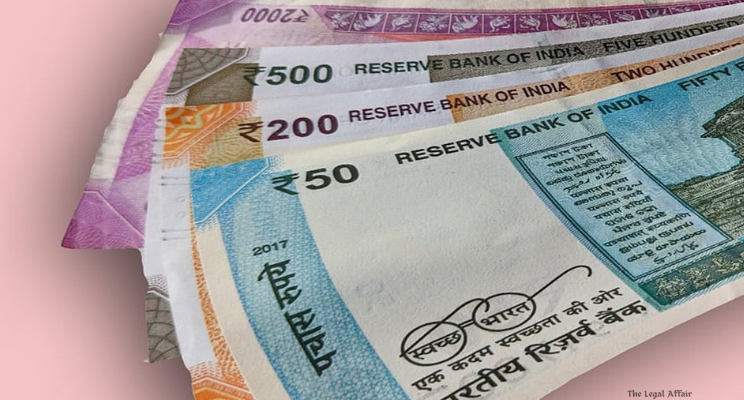
In a significant public interest litigation that revolved around the rights and accessibility of persons with visual impairment, the Delhi High Court recently delivered an order in a batch of petitions led by Rohit Dandriyal v. Reserve Bank of India & Anr. along with other connected matters including petitions filed by the All India Confederation of Blind, Blind Graduates Forum of India, and George Abraham. These petitioners collectively raised serious concerns about the accessibility of Indian currency, particularly smaller denomination notes such as ₹50 and below, which are difficult for visually impaired citizens to identify. A division bench comprising Chief Justice DK Upadhyaya and Justice Tushar Rao Gedela presided over the matter and sought a holistic approach from the Government of India and the Reserve Bank of India (RBI) to address these grievances. The Court emphasized that the difficulties of the visually impaired community cannot be ignored and must be considered while designing and printing new currency notes, thereby upholding the spirit of inclusivity enshrined under the Rights of Persons with Disabilities Act, 2016.
Arguments:
The petitioners’ primary argument stemmed from the real-life challenges faced by visually impaired individuals in handling physical currency. They argued that despite technological advances and policy discussions, the actual usability of currency notes and coins in daily transactions remains difficult for blind or low-vision citizens. Notes, particularly in the ₹50 and below denominations, lack adequate tactile features, distinct sizes, or easily recognizable markers, making them indistinguishable by touch alone. The petitioners contended that this situation results in dependence on others, leading to loss of autonomy and dignity, while also making the visually impaired more vulnerable to cheating and financial exploitation. Petitioners like Rohit Dandriyal urged the Court to intervene by issuing directions to the RBI to design banknotes with internationally accepted accessibility features such as varying sizes, textured patterns, or raised markings. The All India Confederation of Blind and Blind Graduates Forum of India argued that this was not merely a matter of convenience but of fundamental rights under Articles 14 and 21 of the Constitution, as equal participation in financial life is intrinsic to the right to equality and the right to live with dignity. They also stressed that India is a signatory to the United Nations Convention on the Rights of Persons with Disabilities (UNCRPD), which obligates the State to ensure accessibility in all aspects of life, including financial systems. They highlighted how several countries have adopted inclusive practices in currency design, thereby proving that such reforms are neither unprecedented nor technically impossible. Further, the petitioners criticized the RBI for its delay and lack of urgency in addressing these issues, arguing that while pilot measures were discussed, the ground reality for visually impaired citizens remained unchanged.
On the other side, the RBI and the Central Government defended their actions by submitting multiple status reports and pointing out the steps already taken to address accessibility concerns. They informed the Court that a High Powered Committee had been constituted to examine these issues comprehensively and provide workable solutions. This committee, which comprised experts from various fields including disability rights and banking, had submitted suggestions, many of which were already being implemented. The RBI argued that digital accessibility had improved substantially, with several banks now offering services tailored for visually impaired customers. Mobile banking apps, talking ATMs, and digital wallets were cited as tools that had made significant headway in empowering this community. The RBI also emphasized that the process of redesigning currency notes involves complex technical and financial considerations, including security features, international counterfeiting safeguards, and cost factors. The government added that the issuance of specially designed notes or digital currency for persons with disabilities fell squarely within the realm of policy-making, and the judiciary should exercise restraint in issuing mandamus that interferes with such policy domains. The authorities assured the Court that they were mindful of the obligations under the Rights of Persons with Disabilities Act and UNCRPD but stressed the need for phased implementation rather than immediate structural overhaul of the currency system.
Judgement:
After carefully considering the arguments, the Delhi High Court adopted a balanced stance. The Court acknowledged the real and pressing challenges faced by visually impaired individuals, noting that accessibility in currency is indeed a vital aspect of inclusive governance. It recorded its appreciation for the efforts of the petitioners in bringing this issue before the Court, as it concerned one of the most vulnerable sections of society. However, the Court also recognized the limits of judicial power in matters involving technical and financial policy-making. It referred extensively to the report of the High Powered Committee, which had already provided detailed and workable suggestions for improving accessibility. The Court noted with satisfaction that many banks had already implemented measures for digital accessibility and stressed the importance of scrupulous monitoring by the RBI to ensure consistency and uniformity across the financial system. Importantly, the bench directed both the RBI and the Government of India to take into account the suggestions of the High Powered Committee before issuing or printing any new currency notes. The Court made it clear that while it could not mandate the exact design or features of fresh currency, it expected the authorities to act with a sense of responsibility and urgency toward alleviating the difficulties of visually impaired citizens.
In its judgment, the Court emphasized that the provisions of the Rights of Persons with Disabilities Act were promulgated precisely to safeguard and promote the dignity and autonomy of vulnerable groups. Thus, any neglect in ensuring accessible currency would run contrary to the letter and spirit of this legislation. While disposing of the petitions, the Court refrained from issuing binding directions regarding the design of fresh notes, as it deemed such intervention inappropriate in matters squarely within the domain of policy. Instead, it expressed hope and positive anticipation that the RBI and the Centre would meaningfully implement the recommendations of the High Powered Committee and ensure an inclusive framework in the issuance of currency going forward. The bench concluded by observing that while mandamus could not be issued in this regard, the expectation of accountability and inclusivity was implicit in the constitutional scheme. In essence, the judgment struck a fine balance between judicial restraint and social justice, recognizing the role of the judiciary as a facilitator of inclusive governance without overstepping into executive prerogatives.
This decision marks an important juncture in the ongoing conversation about disability rights in India. It highlights the judiciary’s willingness to engage with structural barriers faced by persons with disabilities while also respecting the boundaries of policy-making. For the visually impaired community, the judgment offers reassurance that their concerns are being heard and considered at the highest levels, even as practical implementation lies with the executive agencies. For the RBI and the government, the judgment reinforces the responsibility to act in good faith and with urgency in designing policies that address the needs of all citizens. Ultimately, the case reflects the evolving understanding of accessibility as a fundamental aspect of equality, not as an afterthought or optional consideration. By directing the RBI and the government to proactively consider workable suggestions before printing new notes, the Court ensured that inclusivity becomes an integral part of financial decision-making.