


Introduction:
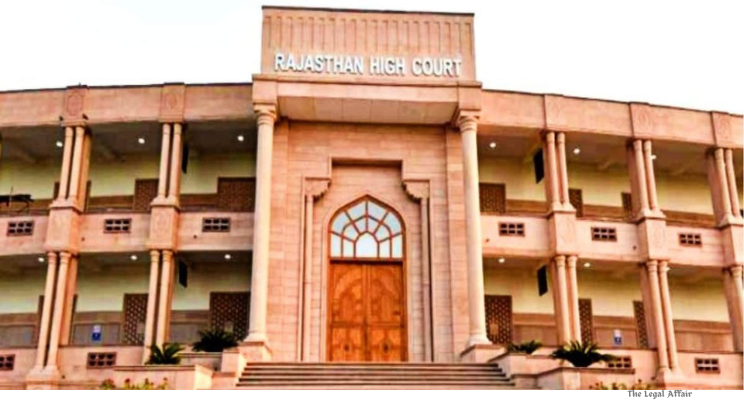
In the case State of Rajasthan v. Mohanlal Alias Sukhram & Another, 2025 LiveLaw (Raj) 300, the Rajasthan High Court came down heavily on the State Government for its negligent conduct in a fatal accident compensation matter. The case revolved around the tragic death of the son of respondents Mohan Lal and Hansa Bai in 2014 at a construction site where the State had handed over work to RSRTC, which further outsourced it to a contractor. The parents, who came from a humble background, sought compensation under the Fatal Accidents Act, 1855. Despite being served with notice as early as 2017, the State remained silent for nearly eight years and only in 2025 approached the Court claiming wrongful impleadment of the Secretary, Medical and Health Department as a party, instead of the concerned Department of Medical Education, RUHS, or RSRTC. The Court, while hearing the matter, not only criticized the State for its lethargy but also imposed costs and directed that any burden of costs must be recovered from the responsible Secretary or officer, even from his pension if retired. Justice Sameer Jain ensured that the rights of the victim’s family were prioritized while balancing the State’s belated objections.
Arguments of the Petitioners (State of Rajasthan):
The petitioners, representing the State, argued that the execution proceedings in the fatal accident compensation claim should be stayed because the Secretary, Medical and Health Department, had been wrongfully impleaded as a party. According to them, the proper authorities should have been either the Department of Medical Education, RUHS, or RSRTC, who were responsible for the construction work where the accident occurred. The State contended that the wrongful impleadment created a jurisdictional flaw in the proceedings and therefore the execution of the compensation award ought not to continue. The petitioners pleaded that the execution order should be set aside or kept in abeyance until the error was corrected. Furthermore, they emphasized that the State’s responsibility was wrongly fastened upon the Medical and Health Department when in reality the matter concerned other entities. They claimed that such a fundamental defect in party impleadment could not be ignored merely because time had lapsed, and therefore a stay was necessary to prevent wrongful execution.
Arguments of the Respondents (Mohan Lal and Hansa Bai):
The respondents, parents of the deceased, strongly opposed the State’s plea and highlighted the extreme delay in raising objections. They pointed out that the State was served with notice as early as 2017 but had taken no action for nearly eight years. Instead, it silently allowed proceedings to continue and only now, in 2025, claimed wrongful impleadment. According to the respondents, this silence amounted to acceptance of the impleadment under the doctrine of non-traverse. They further emphasized that they had been waiting for justice for over a decade since their son’s death in 2014, and any further delay caused immense hardship to them as elderly parents dependent on the compensation. They argued that the State’s conduct reflected gross negligence and disregard for their plight, and that the execution proceedings should not be stayed merely because of the State’s belated claims. The respondents pleaded that justice and fairness demanded that the compensation be released immediately, without any further obstacles.
Court’s Judgment:
Justice Sameer Jain of the Rajasthan High Court delivered a scathing order against the conduct of the State. The Court noted that the petitioners had been served with notice in 2017 but had “remained silent” for years and failed to take timely action. Raising objections only in 2025, after execution proceedings had commenced, was termed unworthy conduct of the State and its instrumentalities. The Court observed that the respondents, being senior citizens from a humble background, had been rejected for nearly ten years due to the State’s negligence, and such a situation was unacceptable. The Court applied the doctrine of non-traverse, holding that the State’s silence indicated admission of its bona fide mistake and it could not now escape liability by raising technical objections.
To ensure fairness, the Court imposed a cost of ₹1 lakh on the State, directing that it be paid to Mohan Lal and Hansa Bai. Importantly, the Court clarified that this cost would not be borne by the State treasury but recovered directly from the concerned Secretary or responsible officer, either from their salary or pension if retired. This direction was meant to fix accountability on individual officers for negligence, rather than burdening taxpayers. Additionally, the Court gave a conditional stay on the execution proceedings, but only if the State deposited 50% of the compensation in favor of the respondents. It also directed that the remaining ₹1 lakh must be deposited by cross cheque or demand draft within three weeks, failing which the petition would be dismissed automatically.
The Court further underlined that the fundamental rights of victims and their families to speedy justice and fair compensation could not be defeated by bureaucratic lapses or negligence. The judgment reinforced the principle that public authorities are accountable for their inaction and cannot escape liability by shifting blame years later. The balance struck by the Court allowed for legal correction but only at a cost, ensuring the victim’s family was not deprived of justice.
In conclusion, the Rajasthan High Court’s decision highlighted judicial intolerance towards state negligence, emphasized accountability of individual officers, and protected the rights of victims’ families who had already suffered for over a decade. The ruling sends a strong message to government departments that delay and lethargy will not be tolerated, especially when the rights of ordinary citizens are at stake.