


Introduction
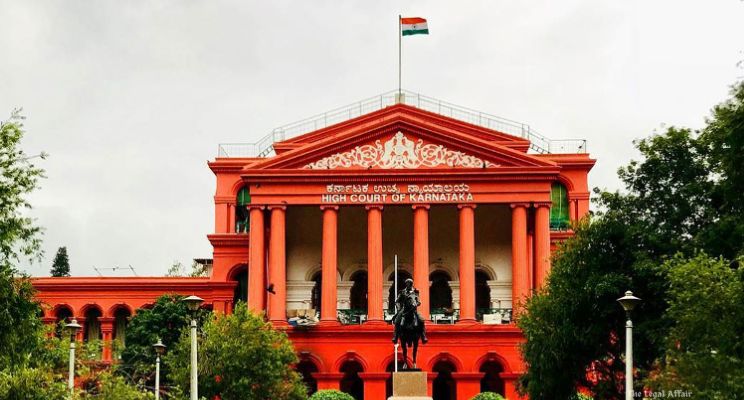
In a significant ruling that strengthens the rights of complainants in cheque dishonour cases under the Negotiable Instruments Act, the Karnataka High Court, in the case of M/s Banavathy & Company vs Mahaveer Electro Mech (P) Ltd & Others (CRIMINAL REVISION PETITION No. 996 OF 2016), emphasized that trial courts must not only determine the fine and compensation but also include an order for future interest at 9% per annum on the compensation amount. Justice Shivashankar Amarannavar, while allowing the petition filed by M/s Banavathy & Company, underlined the need for such a directive to safeguard complainants during lengthy appellate and revision proceedings. The court highlighted how delays—common in trials under Section 138 of the Negotiable Instruments Act—can severely disadvantage the complainant, rendering compensation inadequate by the time of actual recovery. The matter originated from a cheque bounce dispute where the trial court convicted the accused and awarded Rs.7,10,000 in fine (Rs.7,00,000 to be paid as compensation). However, this amount was reduced by the appellate court to Rs.4,70,000 without assigning proper reasoning, prompting the complainant to move the High Court.
Arguments of Both Sides:
The petitioner, represented by Advocate Sona Vakkund, argued that the cheque in question was part of a commercial transaction, and hence, the trial court rightly imposed a fine of Rs.7,10,000, of which Rs.7,00,000 was directed to be paid as compensation to the complainant. The petitioner asserted that the appellate court, while affirming the conviction of the accused, had erroneously reduced the fine and compensation to Rs.4,70,000 without assigning any logical or legal reasoning. This, the petitioner argued, was unjust, especially since the accused had never sought any reduction of compensation during the appellate proceedings. The petitioner emphasized that the trial court, while awarding compensation, had rightly considered the nature of the commercial transaction and the provisions under Section 80 of the NI Act which permits awarding interest from the date of the cheque.
Further, the petitioner contended that the purpose of Section 138 of the NI Act would be defeated if the complainant, after undergoing protracted litigation and years of legal battle, receives compensation that is nearly equivalent to the original cheque amount without any interest or incremental value. The delay in disposal at both appellate and revision stages—running into several years—was also flagged by the petitioner as a reason for granting future interest to ensure meaningful relief.
On the other hand, the respondents, represented by Advocate Dinesh Goankar, submitted that the appellate court was well within its rights to review and reduce the quantum of compensation. They did not produce any substantial argument on why the reduction was justified nor did they contest the quantum determined by the trial court on valid grounds. The respondents appeared to rely on the fact that the complainant had not challenged the compensation awarded by the trial court earlier and hence should not seek enhancement or revision through the current petition. They further sought to assert that there was no statutory mandate to award interest on the compensation amount under Section 138 read with Section 143 of the NI Act.
Court’s Judgment:
The High Court critically analyzed the factual matrix and statutory provisions and rendered a detailed and balanced judgment. It first addressed the legislative intention behind Section 138 and Section 143 of the Negotiable Instruments Act. Justice Shivashankar Amarannavar observed that the intent behind Section 143(3) is to ensure that cases under the NI Act are disposed of expeditiously—ideally within six months. However, the ground reality paints a different picture. The court acknowledged that these cases often stretch over four to five years at the trial level, followed by additional delays in appellate and revision courts. Such prolonged litigation significantly diminishes the real value of compensation received by the complainant, thus defeating the purpose of justice and the deterrence intended under Section 138.
Highlighting the doctrine of restitution and equitable relief, the court held that trial courts must not only award compensation under Section 138 but also include an explicit direction for the payment of future interest on the compensation amount. The judgment set a precedent by suggesting a standard future interest rate of 9% per annum and a compliance period of one to two months for the accused to deposit the amount. This, the court held, would insulate the complainant from the erosive effects of prolonged litigation and ensure that the value of compensation remains proportionate and just over time.
Furthermore, Justice Amarannavar clarified that in cases where interim compensation is already deposited under Section 143-A of the NI Act, the interest component on that amount can be excluded from the future interest calculation. This clarification aims to prevent double imposition of interest and ensures fair computation.
Importantly, the court drew upon the provisions of Section 357 of the Criminal Procedure Code (CrPC), which allows courts to order compensation to be paid to victims from the fine imposed. However, it distinguished between ‘fine’ as a penalty payable to the state treasury and ‘compensation’ payable to the victim. The judgment emphasized that while fines are penal in nature and go to the state, a part of it may be legitimately directed to victims as compensation. In cases under Section 138 of the NI Act, though the dispute originates as a private complaint, the machinery and resources of the state are engaged—such as summoning, warrants, and imprisonment. Hence, the court opined that the exchequer’s involvement in these cases must be acknowledged, but the complainant’s claim for compensation must remain a priority.
Coming to the merits of the present case, the High Court noted that the appellate court had reduced the compensation amount from Rs.7,10,000 to Rs.4,70,000 without providing any logical reasoning or reference to facts on record. The court held that such a reduction was arbitrary and unjustified, especially considering the trial court’s well-reasoned order, which took into account the commercial nature of the transaction and the statutory framework under the NI Act. Therefore, the High Court found merit in the petitioner’s contention and allowed the revision petition.
However, the court also made it clear that since the complainant had not challenged the sentence or fine imposed by the trial court earlier, it could not enhance the same in the current revision. Thus, the complainant would have to remain content with the original compensation amount awarded by the trial court, i.e., Rs.7,10,000, out of which Rs.7,00,000 was to be paid as compensation.
This judgment is particularly significant as it sets a judicial standard for lower courts to follow in cheque bounce cases. It recognizes the economic realities and time-value of money, affirming that justice delayed must not become justice denied due to financial erosion. The ruling is also a reminder to appellate courts that reductions in compensation must be accompanied by solid reasoning and legal justification, failing which such orders may not stand judicial scrutiny.
The judgment is also likely to have wider implications for the criminal justice system dealing with economic offences. By mandating future interest on compensation, the court has infused a new dimension of financial realism and victim-centricity in sentencing. It will serve as a guiding principle for trial courts and a protective shield for complainants navigating long legal battles.