


Introduction:
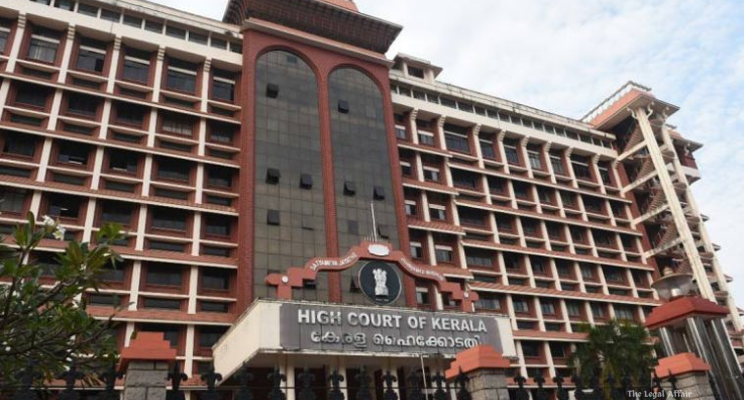
In Sajudheen & Ors v. Sub Inspector of Police & Anr (CRL.A NO. 2913 OF 2008), the Kerala High Court, presided by Justice Jobin Sebastian, examined whether the solitary testimony of a victim could be sufficient to convict an accused under Section 498-A of the Indian Penal Code (IPC). The case revolved around a complaint lodged by a woman alleging cruelty and harassment by her husband and in-laws, including a serious accusation of forced abortion. The trial court had earlier convicted the appellants—husband, father-in-law, and mother-in-law—under Section 498-A IPC, sentencing them to one year of rigorous imprisonment along with a fine of ₹5,000 each, while acquitting them under Sections 313, 406, and 506(i) IPC. In appeal, the High Court clarified that while the testimony of a domestic violence victim can be relied upon as sole evidence, such testimony must be both reliable and convincing. In this particular case, the Court acquitted all accused due to inconsistencies and lack of substantive proof for the allegations of cruelty.
Arguments:
The appellants, represented by Advocate T.G. Rajendran, argued that the prosecution failed to provide credible evidence to support the conviction under Section 498-A IPC. They highlighted that the trial court’s judgment was based almost entirely on the uncorroborated testimony of the complainant (PW1), whose statements were riddled with contradictions, particularly regarding the allegation of forced abortion. They pointed out that the medical records and the deposition of the treating doctor (PW4) disproved the complainant’s version, as she was diagnosed with a missed abortion—a natural medical condition where the fetus was already nonviable—before any pills were administered. The defense further contended that there was no evidence of misappropriation of gold ornaments or cash and that the allegations of physical assault were unsupported by medical evidence or independent testimony. They also emphasized that minor disagreements and ordinary marital disputes, as described by the complainant, do not constitute cruelty under Section 498-A IPC. On the other hand, the State, represented by Senior Public Prosecutor Alex M. Thombra, argued that domestic violence often occurs within the private confines of a household, making independent witnesses difficult to procure. The State urged the Court to give due weight to the wife’s testimony, claiming that it reflected a pattern of harassment for dowry, misappropriation of assets, and coercion leading to her abortion. The prosecution relied on the statutory explanation of Section 498-A, asserting that acts of harassment and emotional abuse should be viewed collectively to amount to cruelty, even if no medical evidence exists.
Judgement:
After reviewing the evidence and legal arguments, Justice Jobin Sebastian observed that while the testimony of a victim of domestic violence can indeed form the sole basis for conviction, it must be trustworthy and capable of inspiring confidence. The Court clarified that not every disagreement or minor quarrel between spouses amounts to cruelty under Section 498-A. For an act to constitute cruelty, it must fall under either of the two limbs of the statutory explanation—namely, conduct that drives a woman to commit suicide or causes grave injury (mental or physical), or harassment related to unlawful demands for property or valuable security. In the present case, the Court found that the main allegation of forced abortion, which was critical to establishing cruelty, was not substantiated by evidence. The treating doctor’s testimony directly contradicted the complainant’s claim, and no contemporaneous disclosure of forced administration of pills was made to either the doctor or her mother when she was first admitted. Additionally, the Court found that there was no credible evidence to prove misappropriation of the complainant’s gold ornaments or cash, as these were voluntarily entrusted. The alleged instances of physical abuse were not corroborated by medical reports or any witness testimony. While acknowledging that a single act of cruelty can be sufficient for conviction if it is severe, the Court noted that the allegations in this case did not meet the threshold of cruelty as defined by law. Consequently, the High Court set aside the trial court’s conviction and acquitted the appellants of all charges, ordering that any fine already deposited be refunded as per legal procedure. In doing so, the Court reiterated that while the rights and voices of domestic violence victims must be respected, convictions cannot be sustained on uncorroborated or unreliable testimony.