


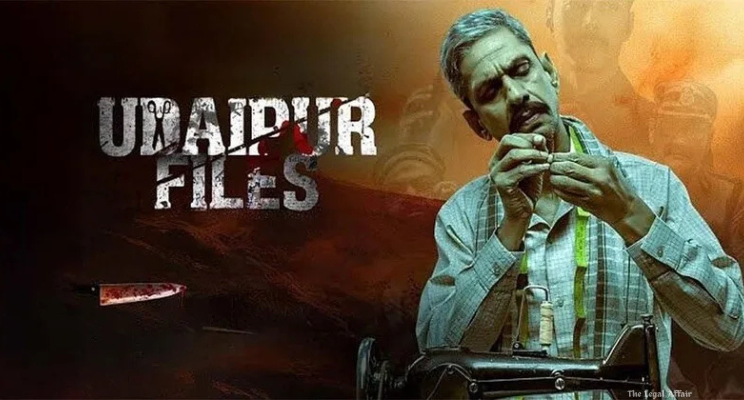
Introduction:
The Delhi High Court recently intervened in the scheduled release of the controversial film “Udaipur Files: Kanhaiya Lal Tailor Murder” following multiple petitions including one filed by the President of Jamiat Ulama-i-Hind, Maulana Arshad Madani. The petitioners raised significant concerns about the film’s potential to incite communal disharmony, its negative portrayal of the Muslim community, and alleged violations of statutory norms. A division bench comprising Chief Justice DK Upadhyaya and Justice Anish Dayal stayed the film’s release temporarily and directed the petitioners to approach the Central Government under Section 6 of the Cinematograph Act, 1952, which empowers the Government to revise or suspend a film’s certification. The Court’s decision underscores the delicate balance between freedom of expression and the imperative to maintain communal harmony and statutory compliance.
Arguments by the Petitioners:
The primary petition in the matter was filed by Jamiat Ulama-i-Hind through its President, Maulana Arshad Madani, who contended that the film “Udaipur Files” was communally provocative and vilified the Muslim community. Senior Advocate Kapil Sibal, representing the petitioners, argued that the movie depicted the minority community in a negative light and went beyond the scope of depicting the crime it claimed to portray. He cited scenes from the film, such as Muslim men throwing meat in Hindu areas and students being arrested, which he argued were unrelated to the Udaipur murder but intended to incite communal hatred. Sibal emphasized that the film also included scenes portraying a member of the minority community engaging in homosexuality with a minor and statements attributed to a character modeled on politician Nupur Sharma, renamed Nutan Sharma, which allegedly contributed to previous communal violence. He termed the film as “cinematic vandalism” and not art, and insisted that the Court should review the film in full before deciding on its public exhibition.
Additional arguments were advanced regarding the film’s trailer, which, according to the petitioners, did not adhere to CBFC norms and featured scenes that had previously been cut or modified in the final version of the film. Sibal highlighted that the CBFC had issued a show-cause notice to the producers for exhibiting excised content in the teaser. Petitioners also relied on a private screening of the film that was held after the High Court ordered the producer to arrange a viewing, which, according to Sibal, revealed the persistence of objectionable content even after alleged cuts. The petitioners argued that the certification process failed to adequately consider Section 5B of the Cinematograph Act, which prohibits certification of films that can incite communal disharmony or are against public decency. They also cited the 1991 Central Government notification that discourages content promoting communal disharmony. Menaka Guruswamy, appearing for another petitioner, argued that the film was simply hateful and only superficial changes were made to satisfy the CBFC, with the essence of provocative content remaining intact.
Arguments by the Respondents:
The respondents, including the Central Board of Film Certification (CBFC) and the film’s producers, strongly opposed the petitions. Additional Solicitor General (ASG) Chetan Sharma, appearing on behalf of the Union Government and CBFC, argued that the movie had undergone thorough scrutiny and 55 cuts were made based on 13 identified objectionable elements. He asserted that the film had been certified by experts in film content and that the objections raised now pertained not to specific content but to the thematic interpretation of the film, which is protected under Article 19(1)(a) of the Constitution. ASG Sharma clarified that objectionable references, including those to Deoband, Nutan Sharma, and Gyanvapi, had been removed. He asserted that the film was crime-specific, focusing on the murder of Kanhaiya Lal, and not community-specific. He emphasized that the film highlighted how seeds of communal disharmony are planted by foreign forces and contained messages promoting communal harmony.
Addressing the issue of the trailer, Sharma admitted that a teaser version had been released with uncensored portions, prompting the CBFC to issue a show cause notice on July 1. Following this, the producer took down the objectionable content, and the trailer with the required cuts was released on July 2. He referred to a Bombay High Court judgment that mandates the CBFC to issue such notices but clarified that CBFC was not responsible for monitoring social media content. Sharma also highlighted that significant financial stakes were involved, with over 1,800 theaters booked and more than 1 lakh tickets sold in advance, implying substantial commercial repercussions of a stay.
The producer’s counsel further defended the storyline by stating that the controversial scenes were derived from materials found in the NIA chargesheet relating to the actual Udaipur murder case. However, the Court questioned the validity of using investigative material to justify film content, emphasizing that chargesheets form part of ongoing trials and cannot be relied upon as the sole basis for cinematic narratives. The producers maintained that they had complied with all CBFC guidelines and that the petitioners were targeting the broader theme of the film, which was a matter of subjective interpretation.
Court’s Observations and Judgment:
The Delhi High Court refused to entertain the writ petition under Article 226 immediately, stating that the petitioners must first exhaust the statutory remedy available under Section 6 of the Cinematograph Act, 1952. The Court held that even third parties, not just the applicant for certification, could approach the Central Government for revisional powers under Section 6. While acknowledging that extraordinary jurisdiction under Article 226 is not barred even when alternative remedies exist, the bench concluded that the statutory framework should first be utilized, especially given the regulatory mechanism provided under the Cinematograph Act.
The Court also addressed the confusion regarding an oral statement attributed to the Supreme Court about allowing the film’s release. During the High Court hearing, it was alleged that the Supreme Court had stated “let the movie be released” while refusing urgent listing of a petition filed by Mohammed Javed, one of the accused in the Udaipur murder case. However, after clarifications from Sibal and a mention before a Supreme Court bench comprising Justice Sudhanshu Dhulia and Justice Joymalya Bagchi, it was confirmed that no such order was passed and that the apex court had merely declined an urgent hearing.
In its detailed order, the High Court noted that the CBFC had indeed issued a show-cause notice to the producer for releasing uncertified content via teaser trailers on social media. The producer admitted to uploading a teaser containing portions of the film that had been excised as per the Board’s directives. The Court pointed out that such acts violated Rule 27 of the Cinematograph Certification Rules, 2024, and were liable for penal consequences. Despite this, the CBFC had not taken any penal action beyond issuing a warning.
The Court was unconvinced by the ASG’s argument that the CBFC was not responsible for trailers on digital media, especially since the Board had acknowledged the violation by issuing a notice. The bench remarked that if violations were apparent and acknowledged, enforcement must follow. The Court also questioned the CBFC’s rationale for certifying the film, given that the theme seemed to propagate communal disharmony and did not merely depict a crime.
Ultimately, the High Court stayed the release of the film until the Central Government decides on the interim relief to be sought by the petitioners under Section 6. The petitioners have been granted time till Monday to file a revision petition before the Government, and the latter has been directed to consider the same within a week, including a request for interim relief. The Government must also provide an opportunity to the producer under Section 6(3) of the Cinematograph Act.
The Court stressed that the nature of content, context of its release, and its potential to disturb communal peace warranted a cautious approach. While freedom of speech and artistic expression are constitutionally protected, the bench held that these rights must be balanced against the interest of public order, as enshrined under Article 19(2).