


Introduction:
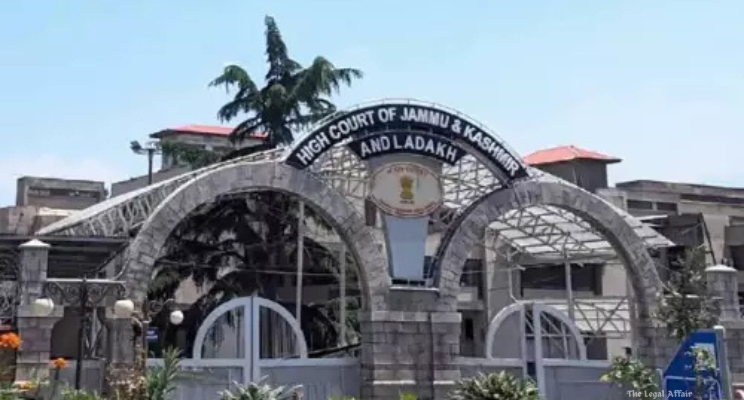
In the case of Tsewang Thinles Vs UT Of Ladakh, cited as 2025 LiveLaw (JKL) 166, the Jammu & Kashmir and Ladakh High Court, through Justice Sanjay Dhar, delivered a significant ruling regarding the jurisdiction of Special Courts under the Protection of Children from Sexual Offences Act (POCSO), 2012. The Court clarified that a Special Court is vested not only with the authority to determine the age of the accused but also of the prosecutrix, i.e., the victim. The case arose from allegations made in a 2019 FIR where Tsewang Thinles, the President of the Ladakh Buddhist Association, was accused of sexually assaulting a young woman at multiple locations. After the Trial Court determined the victim’s age based solely on a school certificate and cancelled Thinles’ anticipatory bail, he challenged both the age determination and the denial of bail before the High Court. Justice Dhar’s judgment remanded the matter for a fresh inquiry into the victim’s age and denied the petitioner’s bail plea, emphasising the seriousness of the accusations and the petitioner’s conduct.
Arguments:
The counsel for the petitioner, Tsewang Thinles, contended that the trial court erred in determining the victim’s age based solely on a school certificate issued by Jawahar Navodaya Vidyalaya, Leh, indicating a date of birth of 05.02.2002. He argued that the school certificate’s veracity had not been verified through summoning original records or examination of school officials. Further, he pointed to an earlier police charge sheet from 2005 in which the prosecutrix’s age was recorded differently, suggesting a date of birth of 05.02.2000, which would mean she was above 18 years at the time of the alleged incidents. The petitioner also argued that POCSO provisions should not apply if the victim was not a minor and challenged the cancellation of his bail on that ground. He urged the Court to consider these discrepancies seriously and prayed for the reinstatement of his anticipatory bail, highlighting that the allegations arose from a vulnerable situation that might have led to misunderstandings. On the other hand, the prosecution opposed the petition strongly, asserting that the Special Court under Section 34 of the POCSO Act is fully empowered to determine the age of both the accused and the victim. It was contended that the trial court had acted appropriately within its jurisdiction while recognising the prosecutrix as a minor based on available documentary evidence. The State highlighted the petitioner’s past conduct, including absconding from proceedings and potential influence over witnesses due to his influential societal position, as further grounds to deny him bail. The prosecution maintained that, given the serious nature of the repeated sexual assaults and exploitation of the victim’s vulnerable circumstances, granting bail to the petitioner would be detrimental to the interest of justice and might intimidate the prosecutrix during the trial.
Court’s Judgment:
Justice Sanjay Dhar of the Jammu & Kashmir and Ladakh High Court carefully examined the contours of Section 34 of the POCSO Act, concluding decisively that the Special Court has the jurisdiction to determine the age of both the offender and the victim. The Court emphasised that Section 34(2) does not restrict its application to offenders alone but is broad enough to include victims as well, making the Special Court the competent authority whenever any question about age arises during bail, inquiry, or trial. Supporting this interpretation, Justice Dhar cited the judgment of the Manipur High Court in Longjam Pinky Singh v. State of Manipur (2018 Crilj 1673), where a similar view had been upheld. The Court also relied on the Supreme Court’s decision in P. Yuvaprakash v. State (AIR 2023 SC 3525), which underscores that whenever the age of the prosecutrix is disputed, the inquiry must be conducted in line with Section 94 of the Juvenile Justice Act, 2015. This involves a hierarchical examination starting with matriculation certificates, followed by municipal records, and finally medical opinion when documentary evidence is unavailable. Critiquing the trial court’s method, Justice Dhar pointed out that the trial court had relied solely on the school certificate without calling for the original school admission records or examining the Record Keeper to verify how the date of birth was entered. The Court held that such a superficial approach was erroneous and mandated that a thorough inquiry must be conducted, including summoning necessary records and witnesses to determine the authenticity of the age evidence. Furthermore, the Court observed that even if the victim were marginally above 18 years old, the allegations revealed a grave abuse of position by the petitioner, a person in his 50s, against a young woman in distress, thereby constituting an act of exploitation rather than a consensual relationship. Taking into account the petitioner’s previous act of absconding, his influential status, and the seriousness of the allegations, the Court ruled that granting him bail at this stage could thwart the course of justice and possibly endanger the victim’s safety and the trial’s fairness. Consequently, the Court dismissed the petitioner’s bail plea but granted him the liberty to reapply for bail after the statement of the prosecutrix is recorded during the trial. At the same time, it set aside the trial court’s previous age determination order and directed a fresh inquiry following proper procedural standards under law.