


Introduction:
In a landmark judgment underscoring the paramount importance of freedom of speech, the Supreme Court of India on March 28, 2025, quashed an FIR lodged by the Gujarat Police against Congress Rajya Sabha MP and noted poet, Imran Pratapgarhi. The FIR was filed in response to Pratapgarhi’s Instagram post featuring a video clip with the poem “Ae khoon ke pyase baat suno” playing in the background. The Court’s decision reaffirms the constitutional commitment to protect individual liberties, even when the expressed views are unpopular or controversial.
Background of the Case:
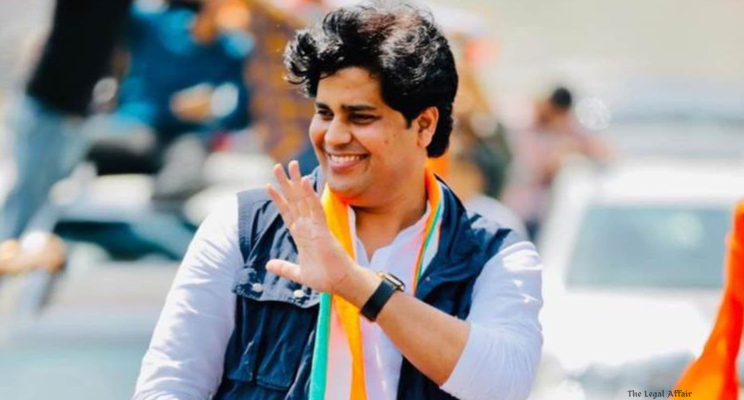
The controversy began when Imran Pratapgarhi attended a wedding in Jamnagar, Gujarat, and subsequently uploaded a 46-second video on his Instagram account. The video depicted Pratapgarhi walking amidst a shower of flower petals, accompanied by the poem “Ae khoon ke pyase baat suno” (“Hey bloodthirsty ones, listen to me”) playing in the background. The lyrics were deemed objectionable by certain individuals, leading to the registration of an FIR against Pratapgarhi on January 3, 2025, at the City A-Division Police Station in Jamnagar. The charges included Sections 196 (promoting enmity between different groups on grounds of religion, race, etc.), 197 (imputations, assertions prejudicial to national integration), 299, 302, and 57 of the Bharatiya Nyaya Sanhita, 2023.
The complainant alleged that the poem’s content was provocative, detrimental to national unity, and offensive to religious sentiments. The Gujarat High Court, on January 17, 2025, refused to quash the FIR, emphasizing the need for further investigation and citing Pratapgarhi’s non-cooperation with the police as a factor in its decision.
For the Petitioner (Imran Pratapgarhi):
- Freedom of Expression: Senior Advocate Kapil Sibal, representing Pratapgarhi, argued that the Instagram post was an exercise of the fundamental right to free speech guaranteed under Article 19(1)(a) of the Constitution. He contended that the poem conveyed a message of non-violence and did not incite enmity or hatred among different groups.
- Artistic Expression: The defense emphasized that literature, including poetry, often employs metaphor and allegory to comment on societal issues. Pratapgarhi, being a renowned poet, used his art to express his views, which should be protected under the freedom of artistic expression.
- No Intent to Incite Violence: It was asserted that there was no intention to promote enmity or disrupt social harmony. The poem did not target any specific community or individual and should be interpreted in the context of artistic expression.
For the Respondent (State of Gujarat):
- Potential to Disturb Public Order: Solicitor General Tushar Mehta, representing the State, argued that the poem’s content had the potential to disturb public order and incite violence. He highlighted that responses to the post suggested a possible disturbance in social harmony.
- Responsibility as a Public Figure: The State contended that as a Member of Parliament, Pratapgarhi had a heightened responsibility to avoid actions that could disrupt social harmony. His status required him to exercise greater caution on social media platforms.
- Non-Cooperation with Investigation: The State pointed out that Pratapgarhi had not cooperated with the investigation and failed to respond to notices requiring his presence before the police, necessitating further inquiry into the matter.
Supreme Court’s Judgment:
A bench comprising Justices Abhay S. Oka and Ujjal Bhuyan delivered the judgment, emphasizing the crucial role of free expression in a democratic society. The Court observed that “free expression of thoughts and views by individuals or groups of individuals is an integral part of a healthy civilized society. Without freedom of expression of thoughts and views, it is impossible to lead a dignified life guaranteed under Article 21 of the Constitution.”
The judgment underscored that in a healthy democracy, differing views should be countered with alternative perspectives rather than suppression. The Court stated, “Even if a large number of persons dislike the views expressed by another, the right of person to express the views must be respected and protected. Literature, including poetry, dramas, films, satire, and art, make the life of human beings more meaningful.”
Addressing the role of the judiciary, the bench remarked, “The Courts are duty-bound to uphold and enforce the fundamental rights guaranteed under the Constitution of India. Sometimes we the judges may not like the spoken or written words, but still, it is our duty to uphold the fundamental rights under Article 19(1). We judges are also under an obligation to uphold the Constitution and the respective ideals.”
The Court also highlighted the duty of police officers to respect constitutional ideals, noting that “the police officer must abide by the Constitution and respect the ideals. The philosophy of the constitutional ideals can be found in the Constitution itself. In the preamble, it is laid down that the people of India solemnly decided to constitute India into a sovereign, socialist, secular, democratic republic and to secure for all its citizens liberty of thought and expression. Therefore, liberty of thought and expression is one of the ideals of our constitution.”
Furthermore, the Court emphasized that for an offence under Section 196 of the Bharatiya Nyaya Sanhita, the effect of spoken or written words should be assessed based on the standards of a reasonable, strong-minded, firm, and courageous individual, not those with weak and oscillating minds. The Court observed, “The effect of spoken or written words cannot be judged on the basis of standards of the people who always have the sense of insecurity or those who always perceive criticism as a threat to their power or position.” Implications of the Judgment:
This judgment has far-reaching consequences for freedom of speech in India. By reinforcing the judiciary’s role in safeguarding fundamental rights, the Supreme Court has sent a strong message that state action must align with constitutional values.
Strengthening Free Speech Protections:
- The ruling clarifies that literary and artistic expressions, even when provocative, are protected under Article 19(1)(a).
- It reaffirms that citizens have the right to express dissent, critique power structures, and use artistic mediums without fear of legal repercussions.
Judicial Role in Protecting Constitutional Ideals:
- The Court’s remarks highlight the judiciary’s responsibility to uphold freedom of expression, even if personal or popular sentiment opposes certain viewpoints.
- Judges must evaluate speech restrictions objectively, ensuring that fundamental rights are not curtailed due to political or social pressures.
Guidelines for Law Enforcement:
- The verdict underscores that police officers must respect constitutional principles and not initiate legal action based on subjective interpretations of speech.
- It sets a precedent that frivolous FIRs cannot be used to harass individuals exercising their rights.
Impact on Future Speech-Related Cases:
- The ruling may influence ongoing and future cases involving allegations of hate speech, sedition, or religious offence.
- It provides a legal basis for challenging similar FIRs filed against politicians, activists, artists, and social media users.
Conclusion:
The Supreme Court’s decision in Imran Pratapgarhi’s case marks a significant victory for free speech in India. By quashing the FIR against the Congress MP, the Court has reaffirmed that the constitutional guarantee of free expression cannot be curtailed simply because certain views are unpopular or uncomfortable. The ruling also serves as a crucial reminder that artistic and literary expressions must be evaluated through the lens of reason and courage, rather than fear or political expediency. This landmark judgment strengthens India’s democratic framework, ensuring that fundamental rights remain safeguarded against arbitrary state action.