


Introduction:
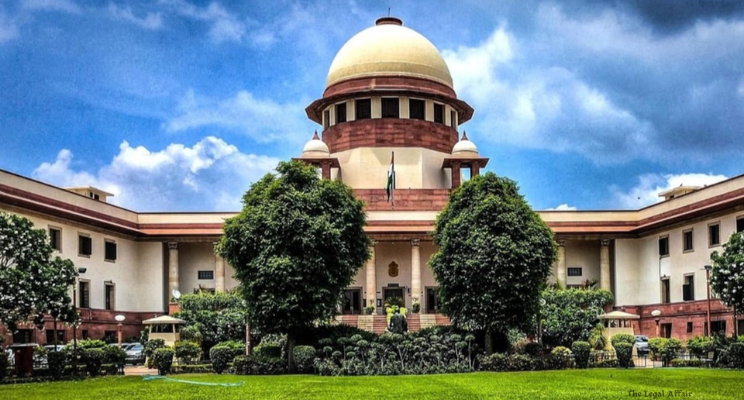
In a significant ruling on February 28, 2025, the Supreme Court of India addressed a Public Interest Litigation (PIL) concerning the educational rights of Rohingya refugee children. The petition, filed by the Rohingya Human Rights Initiative (ROHRINGYA) and others against the Government of the National Capital Territory (NCT) of Delhi and associated parties, sought directives to grant school admissions and government benefits to Rohingya families without insisting on Aadhaar cards or citizenship verification.
Petitioners’ Arguments:
Represented by Senior Advocate Colin Gonsalves, the petitioners contended that Rohingya children face significant barriers in accessing education due to the lack of Aadhaar cards and formal citizenship status. Gonsalves highlighted a prior assurance by Solicitor General Tushar Mehta, stating that Rohingya children should be treated “at par” with other children regarding access to education. He urged the Court to reaffirm this assurance, suggesting that a clear directive could facilitate immediate school admissions for approximately 500 Rohingya children.
Respondents’ Position:
The respondents, representing the Government of NCT of Delhi and other authorities, maintained that while education is a universal right, procedural requirements such as residential verification are essential. They emphasized the need to ascertain the residential status of Rohingya families to ensure appropriate allocation of educational resources and to maintain systemic integrity.
Court’s Judgment:
The bench, comprising Justices Surya Kant and N Kotiswar Singh, disposed of the PIL with specific directives. The Court emphasized that Rohingya children should proactively approach government schools for admission, implying their entitlement to education. Justice Kant remarked, “The very fact that we are asking them to go to school means they are entitled… once we are saying, we are creating a right.” The Court also preserved the liberty for these children to approach the Delhi High Court if they face denial of admission despite their eligibility.
The bench declined to incorporate additional language referencing the Solicitor General’s prior assurance, as requested by Gonsalves, stating that their current order sufficiently addresses the issue. Justice Kant further observed that upon securing admission, children would be entitled to necessary provisions such as uniforms and books.
This ruling aligns with a previous order in a similar case, where the Court suggested that Rohingya children first approach the concerned government schools for admission. The Court had also indicated that the mechanism to impart education might differ based on the families’ residential status, especially if they reside in camps, to prevent potential issues arising from movement out of designated areas.
In summary, the Supreme Court’s decision reinforces the principle of non-discrimination in education, urging Rohingya children to seek admission in government schools and providing a legal pathway should they encounter unjust denial.