


Introduction:
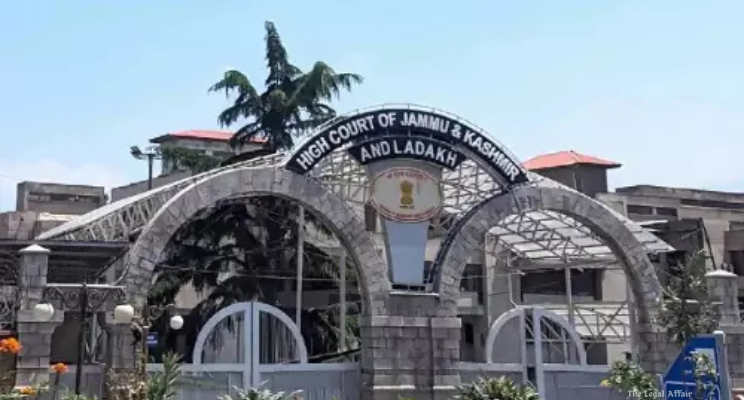
In a significant ruling, the Jammu & Kashmir and Ladakh High Court quashed a summons issued by the Anti-Corruption Bureau (ACB) to Bharat Bhushan, Managing Director of J&K Cooperative Housing Corporation Ltd., under Section 91 of the Code of Criminal Procedure (CrPC). The court, led by Justice Javed Iqbal Wani, held that Section 91 CrPC, which empowers authorities to summon documents, can only be exercised during an inquiry, investigation, or trial—not at the stage of preliminary verification. The case arose from preliminary verification proceedings initiated by the ACB against the Ladies Cooperative House Building Society Limited, Samba, during which the petitioner was directed to produce records related to the Society. The petitioner challenged this summons, arguing that preliminary verification is not an “investigation” under CrPC, and thus, the ACB lacked the jurisdiction to issue such an order. The High Court agreed, ruling that preliminary verification is a limited fact-checking exercise meant only to determine whether a cognizable offence has been committed and does not grant investigative powers. Citing legal definitions and precedents, the court found the summons issued by the ACB to be legally unsustainable and quashed it.
Petitioner’s Contentions:
The petitioner, Bharat Bhushan, represented by Advocate Salih Pirzada, argued that the summons issued under Section 91 CrPC were without jurisdiction, as preliminary verification does not amount to an investigation, inquiry, or trial under the Code. He contended that Section 91 CrPC could only be invoked when a formal investigation is underway or when a case is at the inquiry or trial stage. He emphasized that preliminary verification is merely a pre-investigation stage conducted to assess whether a complaint warrants the registration of an FIR. Relying on legal definitions under Sections 2(g) and 2(h) of the CrPC, he pointed out that “inquiry” refers to judicial proceedings, while “investigation” refers to evidence-gathering by an authorized officer, neither of which applied in this case. The petitioner further relied on the Supreme Court’s ruling in Lalita Kumari vs. Government of U.P. [(2014) 2 SCC 1], which held that preliminary verification is meant only to ascertain whether a complaint discloses a cognizable offence and does not grant investigative powers to law enforcement agencies. Therefore, the ACB had acted beyond its legal authority by summoning records under Section 91 CrPC.
Respondent’s Arguments:
The Anti-Corruption Bureau (ACB) defended its decision to issue the summons, arguing that it was necessary to obtain relevant documents to assess the allegations against the Ladies Cooperative House Building Society Limited. The ACB contended that while preliminary verification is not a full-fledged investigation, it still requires access to relevant records to determine the legitimacy of complaints. The ACB maintained that the CrPC does not explicitly bar the use of Section 91 during preliminary verification and that summoning records at this stage was justified to ensure transparency and efficiency in corruption-related complaints. The Bureau further asserted that even if preliminary verification is not considered an investigation, gathering records is essential for assessing whether the matter requires an FIR. Additionally, the ACB argued that refusing to allow Section 91 CrPC at this stage would limit the agency’s ability to conduct effective verifications, potentially allowing fraudulent activities to go unchecked.
Court’s Judgment:
Justice Javed Iqbal Wani, after examining the provisions of Section 91 CrPC, ruled that the summons issued by the ACB was legally unsustainable. The court clarified that Section 91 CrPC grants powers to summon documents only when an investigation, inquiry, or trial is underway. The court emphasized that these terms—“inquiry,” “investigation,” and “trial”—have specific legal meanings under the CrPC. Referring to Sections 2(g) and 2(h), the court explained that an “inquiry” is a judicial function undertaken by a magistrate, and an “investigation” is a process conducted by police or authorized officials to collect evidence. The court further noted that a “trial” denotes formal judicial proceedings where an accused’s guilt or innocence is determined. The court stressed that a preliminary verification, by its very nature, is not an investigation but a mere fact-checking process to assess whether an FIR should be registered. Citing Lalita Kumari vs. Government of U.P., the court reiterated that preliminary verification is a limited exercise and does not confer the same powers as a full-fledged investigation. Since the case was still in this preliminary stage, the court ruled that the ACB lacked the jurisdiction to invoke Section 91 CrPC. Consequently, the summons issued on April 2, 2024, was quashed. The court also observed that law enforcement agencies must operate within their statutory limits and cannot assume investigative powers without first registering an FIR. By quashing the summons, the court reinforced the principle that preliminary verification is a restricted process and does not permit the use of coercive measures such as compelling the production of documents.
Conclusion:
This ruling reinforces the fundamental distinction between preliminary verification and formal investigation under criminal law. The High Court’s decision underscores that law enforcement agencies must adhere to procedural safeguards and cannot invoke investigative powers without an FIR. By quashing the summons, the court has reaffirmed the principle that preliminary verification is a fact-checking process and does not permit authorities to compel the production of records. This judgment serves as an important precedent in ensuring that anti-corruption agencies operate within their legal framework while maintaining transparency and accountability in corruption investigations.