


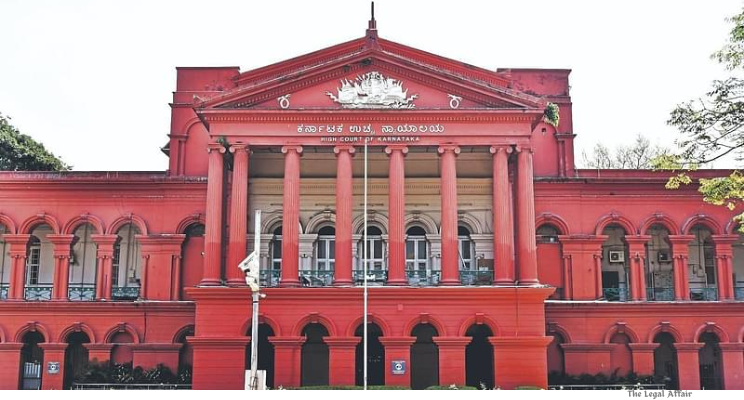
Introduction:
In a landmark judgment, the Karnataka High Court overturned the conviction of two individuals, Prema and Basavalinge Gowda, who were previously found guilty of abetting the suicide of Prema’s husband, Shivamadashetty. The court found that the evidence presented did not support the prosecution’s claim that the accused’s illicit relationship led to the deceased’s suicide. Justice Shivashankar Amarannavar, presiding over the appeal, examined the legal definition of abetment and concluded that mere acts of infidelity and allegations of harassment could not substantiate a conviction under Section 306 of the Indian Penal Code (IPC) for abetment to suicide. The court emphasized that for a conviction under Section 306 to stand, there must be clear evidence that the accused instigated or actively caused the suicide, a criterion that was not met in this case.
Prosecution’s Argument:
The prosecution claimed that Prema and Basavalinge Gowda were having an illicit relationship, which the deceased, Shivamadashetty, repeatedly objected to. Despite his objections, Prema continued her relationship with Gowda. The prosecution argued that on July 10, 2010, Gowda allegedly confronted the deceased in front of his house, urging him to die so that he and Prema could live happily together. The deceased reportedly committed suicide five days later, on July 15, 2010, by hanging himself from a tree. Based on these facts, the prosecution maintained that the accused’s actions, particularly the provocative statement made by Gowda, amounted to abetment under Section 306 of the IPC.
The prosecution also relied on testimonies from witnesses who claimed to have knowledge of the illicit relationship and the events leading up to the suicide. They argued that the overall conduct of the accused, including the purported assault by Gowda on the deceased 15 days before his death, contributed to the deceased’s fragile state of mind and led to his tragic decision to end his life.
Defence’s Argument:
The defence, represented by Advocate A.N. Radha Krishna, strongly contended that the prosecution’s case lacked sufficient evidence to prove that the accused intended to instigate the deceased to commit suicide. The defence argued that having an illicit relationship alone could not amount to abetment to suicide, as it did not meet the legal requirements for such a charge under Section 107 of the IPC.
Furthermore, the defence highlighted that the prosecution had failed to establish key facts, including the date of the panchayat (a community meeting) that allegedly took place to resolve the dispute over the illicit relationship. The defence also pointed out that the prosecution had not called important witnesses, such as the panchayatdars (members of the panchayat), who could have provided crucial information about the events. The defence also dismissed the claims of an assault made by a witness, arguing that if the deceased had been assaulted, he had other legal options, such as filing a complaint, and his suicide could not be attributed to such a claim.
Court’s Judgment:
The Karnataka High Court carefully examined the definition of “abetment” under Section 107 of the IPC, which stipulates that abetment occurs when an individual instigates, aids, or conspires to cause another person to commit a crime. The Court noted that for a charge of abetment to stand, there must be evidence that the accused specifically intended to provoke or incite the deceased to take his life.
Justice Amarannavar pointed out that while it was clear that the deceased was distressed by his wife’s illicit relationship with Basavalinge Gowda, there was no direct evidence suggesting that the accused intended to provoke the deceased to commit suicide. The Court found that the accused’s actions, such as continuing the affair and the alleged provocative comment made by Gowda, did not amount to instigation as legally defined.
The Court emphasized that the mere existence of an illicit relationship and the subsequent arguments between the deceased and his wife did not satisfy the legal criteria for abetment to suicide. The Court also noted that although one witness testified that Gowda had assaulted the deceased, there was no substantial evidence to support this claim. If an assault had indeed occurred, the deceased could have pursued legal action rather than taking his own life.
Regarding the statement allegedly made by Gowda, urging the deceased to “go and die” so they could be happy, the Court ruled that such a statement, even if true, did not amount to instigation. The Court observed that this remark was not a direct or specific incitement to suicide, and there was no evidence to suggest that it had a direct causal link to the deceased’s decision to end his life.
The Court further remarked that the deceased might have been emotionally sensitive due to the illicit relationship but found no evidence that the accused had intentionally pushed him toward suicide. The judgment reiterated that while the death was tragic, the evidence did not prove that the accused had actively encouraged or instigated the deceased to take such a drastic step.
In conclusion, the Court stated that the trial court had erred in convicting the accused under Section 306 of the IPC, as the prosecution failed to establish the necessary elements of abetment. The appeal was therefore allowed, and the conviction was set aside.
Conclusion:
The Karnataka High Court’s ruling in this case highlights the importance of clear and convincing evidence when it comes to convictions for serious charges such as abetment to suicide. While the case involved a deeply tragic and complex family situation, the Court underscored that the mere presence of an illicit relationship or quarrels between spouses is not sufficient to convict someone under Section 306 of the IPC. Abetment requires clear evidence of instigation or active encouragement, which was not present in this case. The judgment serves as a reminder that legal proceedings must rely on facts and evidence, and that emotional distress, while tragic, does not automatically lead to criminal liability.