


Introduction:
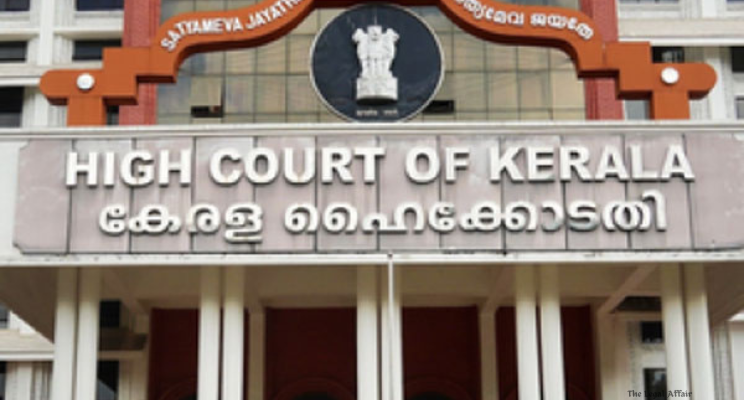
The Kerala High Court, in a significant judgment, refused to quash the proceedings initiated against a man under Section 153 of the Indian Penal Code (giving provocation with intent to cause riot) and Section 119 (a) of the Kerala Police Act (punishment for atrocities against women). The petitioner, who had made allegations against a Muslim woman, claimed she had violated Shariat Law by shaking hands with Dr. Thomas Issac, the former Finance Minister of Kerala, during an interactive session at her college. Justice P.V. Kunhikrishnan delivered the ruling, emphasizing that religious practices are a matter of personal choice protected by the Constitution of India and that no one has the right to impose religious beliefs on others. The Court firmly upheld the principle that personal liberty and religious freedom should not be intruded upon, dismissing the petition.
Arguments of the Petitioner:
The petitioner contended that the de facto complainant, a Muslim woman and law graduate, violated Shariat Law by engaging in physical contact with a non-relative man, specifically the former Finance Minister. This handshake, according to the petitioner, was contrary to Islamic principles forbidding physical contact between unrelated men and women. He made his allegations in a Facebook post, also circulating a WhatsApp video, bringing these claims to public attention. His argument was that by shaking hands with the Minister, the complainant had not only breached her religious duties but also acted in a manner that disrespected the religious beliefs of the Muslim community.
The petitioner thus sought to challenge the proceedings against him, claiming that his statements were not intended to provoke any form of riot or insult the complainant, but rather to point out a violation of religious law. He argued that shaking hands was a sensitive issue in Islam, and his comments reflected a religious standpoint, which should not attract criminal liability under the provisions of the Indian Penal Code or Kerala Police Act.
Arguments of the Respondent:
The de facto complainant, a Muslim woman and law graduate, opposed the petitioner’s claims, stating that the allegations brought disgrace to her and her family. The handshake occurred during a public event where she had the opportunity to interact with the former Finance Minister, who rewarded participants with gifts. According to the complainant, the handshake was a simple gesture of goodwill and not a religious act or an affront to Islamic law. She argued that shaking hands is a common, universally accepted gesture of respect, confidence, and professionalism, especially in modern times.
Furthermore, she contended that the petitioner’s actions, by spreading misinformation through social media platforms, had caused her emotional distress and public shame. The complainant invoked her right to practice her religion in her own way, free from interference or imposition by others. She further argued that her personal liberty, as guaranteed under the Constitution of India, was violated by the petitioner’s unwarranted interference with her religious beliefs and actions.
Court’s Judgment:
In its judgment, the Kerala High Court made several crucial observations that upheld the principles of personal liberty and religious freedom. Justice P.V. Kunhikrishnan, while acknowledging that some Islamic traditions prohibit physical contact between unrelated men and women, noted that religious practices are a matter of personal choice. The Court observed that individuals have the right to interpret and follow religious practices in their own way, and no one has the authority to impose their religious views on others. The Constitution of India, the Court highlighted, guarantees every citizen the right to religious freedom and personal liberty.
The Court cited verses from the Quran, such as Surah Al-Kafirun and Surah Al-Baqarah, to emphasize that Islam itself promotes the concept of personal choice in matters of religion, stating that “there is no compulsion in religion.” The Court observed that, while religious laws and practices hold personal significance, they should not override the constitutional values of personal freedom and individual rights.
The Court also highlighted that the gesture of a handshake, while forbidden by some in Islam, is widely accepted in modern society as a sign of respect and professionalism. It dismissed the petitioner’s attempt to use religious doctrine to infringe upon the personal liberty of the respondent, stating that such actions, if proven, could have serious implications for the complainant’s constitutional rights.
The High Court further underscored the importance of not imposing one’s religious beliefs on others and reiterated that the Indian Constitution is supreme over any religious law or practice. In this case, the respondent’s decision to shake hands with the Finance Minister was an expression of her own personal choice, and no one, including the petitioner, had the right to criticize or punish her for that decision.
The Court stated that the question of whether the petitioner’s actions constituted offenses under Section 153 of the IPC and Section 119(a) of the Kerala Police Act would be decided by the trial court based on evidence. It ruled that the present case did not warrant the invocation of the High Court’s extraordinary jurisdiction to quash the proceedings against the petitioner.
While the Court declined to quash the charges, it provided a pathway for the petitioner to defend himself during the trial, stating that if he is proven innocent, he would be honorably acquitted by the jurisdictional court. Until then, the trial must proceed to ensure that justice is served. The petition was ultimately dismissed, with the Court directing the trial court to handle the case expeditiously.