


Introduction:
In a landmark judgment, the Delhi High Court has declared “Boroline,” a widely recognized antiseptic ayurvedic cream, as a well-known trademark under the Trade Marks Act. The ruling, delivered by Justice Mini Pushkarna, highlights the significance of the Boroline brand, a household name in India since before the country’s independence. The case was initiated by G.D. Pharmaceuticals Private Limited, the company behind Boroline, against Cento Products, which was accused of selling a deceptively similar product under the name “BOROBEAUTY.” The court’s decision reinforces the protection of well-known trademarks and underscores the importance of preserving the distinctiveness of iconic brands.
Background of the Case:
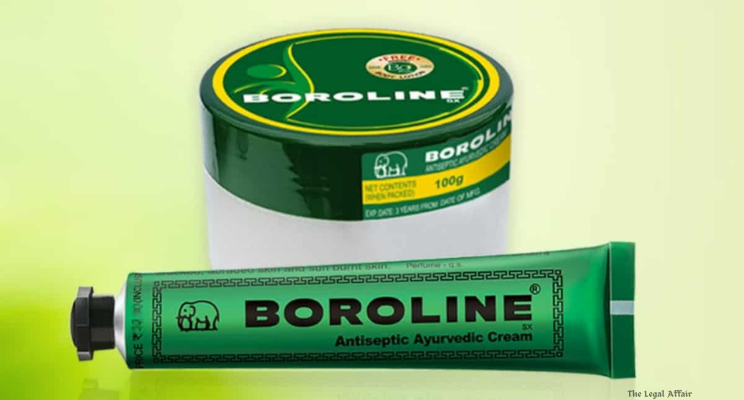
G.D. Pharmaceuticals Private Limited, the manufacturer of Boroline, filed a suit in 2019 against Cento Products, alleging trademark infringement and unfair competition. The dispute arose when Cento Products launched a product named “BOROBEAUTY,” which bore a striking resemblance to Boroline, both in name and trade dress. Boroline, a product trusted by generations in India, was first advertised on August 15, 1947. The plaintiff contended that the defendant’s product not only adopted a similar name but also imitated Boroline’s distinct packaging, including the dark green tube with an octagonal black cap, which could mislead consumers and dilute the brand’s reputation.
Arguments of Both Sides:
Plaintiff’s Arguments:
G.D. Pharmaceuticals, represented by its legal counsel, argued that “Boroline” has become synonymous with quality and reliability in the Indian market, earning the status of a well-known trademark due to its longstanding presence and widespread recognition. The plaintiff emphasized that the trademark “BOROLINE” is a legacy brand, associated with the highest standards of care and trust.
The plaintiff further argued that Cento Products’ use of the name “BOROBEAUTY” was a deliberate attempt to ride on the coattails of Boroline’s success. They contended that the similarity in names and packaging was likely to cause confusion among consumers, leading them to believe that “BOROBEAUTY” was in some way associated with or endorsed by Boroline. This, according to the plaintiff, constituted an infringement of their trademark rights and amounted to unfair competition.
The plaintiff supported their claim by presenting evidence of the extensive use and promotion of the Boroline brand over the decades, including advertisements from as far back as India’s independence. They argued that the defendant’s actions were not only harmful to their business but also detrimental to the public interest, as consumers could be misled into purchasing a product of potentially inferior quality under the mistaken belief that it was the trusted Boroline.
Defendant’s Arguments:
Cento Products, on the other hand, argued that their product “BOROBEAUTY” was distinct from Boroline and targeted a different segment of the market. They claimed that the prefix “BORO” was commonly used in the industry and did not exclusively belong to the plaintiff. The defendant also argued that there was no substantial evidence to prove that consumers were likely to confuse “BOROBEAUTY” with “BOROLINE,” and therefore, their product did not infringe on the plaintiff’s trademark.
The defense further contended that the plaintiff’s claim of trademark infringement was exaggerated and that the similarities in packaging were coincidental. They maintained that “BOROBEAUTY” was marketed as a beauty product, distinct from the antiseptic properties associated with Boroline, and thus, the likelihood of confusion among consumers was minimal.
Additionally, the defendant argued that the plaintiff’s claim to exclusive rights over the dark green color and octagonal cap was untenable, as these elements were not inherently distinctive to Boroline and could be used by other products in the market.
Court’s Judgment:
After hearing the arguments from both sides, the Delhi High Court delivered a comprehensive judgment in favor of G.D. Pharmaceuticals. Justice Mini Pushkarna recognized “Boroline” as a well-known trademark, noting its widespread recognition and long-standing presence in the Indian market. The court observed that Boroline had achieved the status of a household name and was one of the oldest trademarks in the country, with continuous use dating back to before India’s independence.
The court dismissed the defendant’s arguments, stating that the use of the name “BOROBEAUTY” was indeed likely to cause confusion among consumers, particularly given the similarities in packaging and trade dress. Justice Pushkarna emphasized that the prefix “BORO” was closely associated with Boroline, and any similar usage by other products would likely mislead consumers into believing there was an association with the well-known Boroline brand.
The court further noted that the dark green color and octagonal cap were distinctive features of Boroline’s trade dress, which had become integral to its brand identity over the years. The court ruled that Cento Products’ adoption of similar packaging was a clear attempt to imitate Boroline’s iconic trade dress, thereby infringing on the plaintiff’s trademark rights.
In light of these findings, the Delhi High Court permanently enjoined Cento Products from manufacturing, selling, or advertising any products under the name “BOROBEAUTY” or using any trade dress that resembled Boroline’s. The court ordered Cento Products to change both the name and packaging of their product to ensure that it was entirely distinct from Boroline. Specifically, the court directed that the defendant must not use the prefix “BORO” in any of its future products and must avoid any similarity in trade dress to prevent consumer confusion.
Furthermore, the court directed the Registrar of Trademarks to add “Boroline” to the list of well-known trademarks, formalizing its status as a protected brand under the Trade Marks Act. The court’s decision underscores the importance of protecting well-known trademarks from infringement and preserving the distinctiveness of established brands in the market.
Finally, considering the prolonged litigation and the clear infringement by the defendant, the court ordered Cento Products to pay costs of Rs. 2 lakhs to G.D. Pharmaceuticals.
Conclusion:
The Delhi High Court’s decision to declare “Boroline” a well-known trademark sets a significant precedent in the realm of intellectual property law in India. This ruling not only reinforces the protection granted to well-known trademarks but also serves as a warning to companies attempting to capitalize on the reputation of established brands. By upholding the sanctity of Boroline’s trademark and trade dress, the court has ensured that consumers can continue to trust the products they have relied on for generations. The decision also highlights the judiciary’s role in maintaining fair competition and preventing consumer deception in the marketplace.