


Introduction:
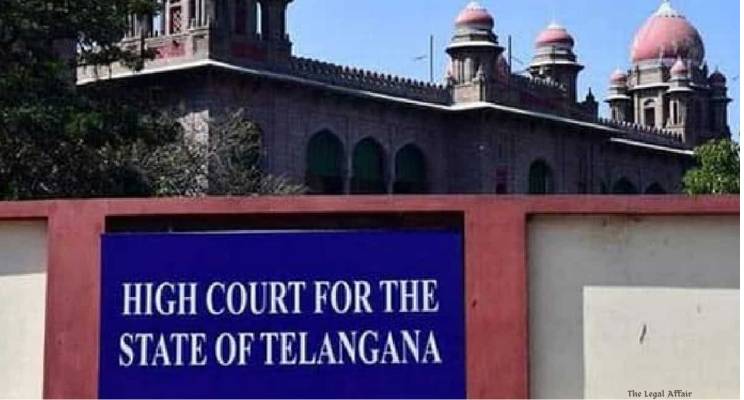
The Telangana High Court recently upheld the fundamental right of individuals to raise slogans in a public space without prior permission, provided it is done peacefully and without using offensive language. The decision came in response to a Criminal Petition filed by members of Telangana Vidyarthi Vedika (TVV), who sought to quash criminal proceedings initiated against them for allegedly conducting an unauthorized protest. Justice K. Sujana presided over the case, drawing on precedents such as the Anita Thakur judgment to reach a verdict.
Arguments of Both Sides:
Petitioners’ Arguments:
Represented by counsel T Rahul, the petitioners argued that they had not participated in the protest in a manner that justified the charges against them. They invoked the Supreme Court’s judgment in Anita Thakur vs. Government of Jammu and Kashmir, emphasizing that Article 19(1)(a) of the Constitution protects the freedom of speech and the right to raise slogans peacefully and without offensive language. The petitioners contended that there was no evidence of them causing public nuisance, obstructing traffic, or hindering public servants from their duties. They asserted that the charges under Sections 143, 341, 290, 186 read with Section 149 of the IPC were unfounded, as the prosecution failed to prove any common objective or disruption caused by their actions.
Respondents’ Arguments:
The Public Prosecutor argued that the petitioners had conducted a protest without prior permission, which constituted an unlawful assembly. They maintained that the protest at the Dr. B.R. Ambedkar statue for the release of Prof. G. N. Sai Baba and Varavara Rao disrupted public order and justified the charges under the IPC. The prosecution highlighted the necessity of adhering to procedural requirements for public gatherings to maintain law and order.
Court’s Judgment:
Justice K. Sujana, in delivering the judgment, underscored the importance of the fundamental right to freedom of speech and expression under Article 19(1)(a). The court noted that the petitioners had not used offensive language or caused public nuisance during the protest. There was no evidence to suggest that the protest obstructed traffic or hindered public officials. Citing the Anita Thakur case, the bench reaffirmed that peaceful and orderly protests are protected by constitutional rights.
The court observed that the prosecution had failed to establish a common objective among the petitioners or any specific actions that disrupted public order. Consequently, the charges under Sections 143, 341, 290, 186 read with Section 149 of the IPC were deemed untenable. The court concluded that the continuation of criminal proceedings against the petitioners was not justified and ordered the quashing of the charges.