


Introduction:
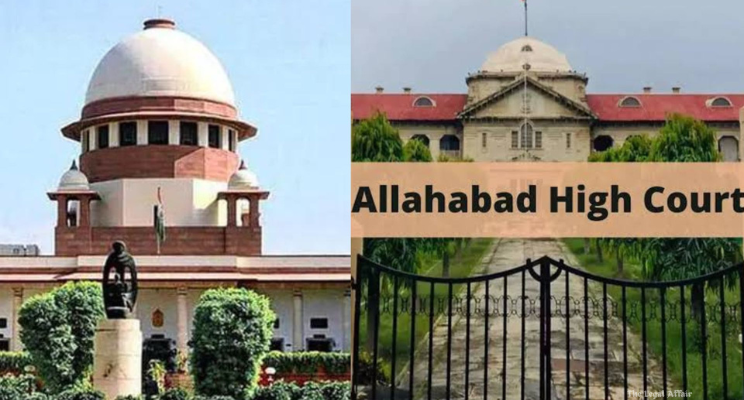
In a significant legal development, the Supreme Court of India has stayed parts of an order issued by the Allahabad High Court that mandated a new procedure for registering First Information Reports (FIRs) in civil and commercial disputes. The High Court had directed the Uttar Pradesh Police to seek legal opinions from government counsel before registering FIRs in cases that prima facie appeared to be civil transactions. Additionally, the High Court required Magistrates to ensure no prior civil dispute existed between the parties before ordering the registration of an FIR under Section 156(3) of the Criminal Procedure Code (CrPC). The Supreme Court’s decision has temporarily halted these directives, pending further review.
Background:
On April 18, 2024, a bench comprising Justices Arvind Singh Sangwan and Ram Manohar Narayan Mishra of the Allahabad High Court issued an order addressing concerns about the overreach in registering FIRs related to civil and commercial disputes. The High Court’s order was particularly focused on the potential misuse of the criminal justice system in matters that were essentially civil in nature. To curb this misuse, the High Court introduced a requirement for legal opinions from district government counsel before registering FIRs in cases involving sections such as 406, 408, 420, 467, and 471 of the Indian Penal Code (IPC). These sections pertain to offenses like criminal breach of trust, cheating, and forgery, which often overlap with civil disputes.
The High Court also directed Magistrates to ensure that FIRs were only registered under Section 156(3) of the CrPC after confirming that no prior civil dispute was pending between the parties. The High Court’s order was set to take effect from May 1, 2024, and included provisions for contempt proceedings against police officers who failed to comply with the new guidelines.
The State of Uttar Pradesh challenged the High Court’s order in the Supreme Court through a Special Leave Petition (SLP), arguing that the directives were overly restrictive and impeded the police’s ability to perform their duties effectively. The state contended that the High Court’s order added unnecessary layers of bureaucracy, which could delay the registration of legitimate criminal cases.
Arguments:
Arguments by the State of Uttar Pradesh:
The State of Uttar Pradesh, represented by senior legal counsel, argued that the High Court’s directives were problematic for several reasons. First, the state contended that the requirement to obtain legal opinions from district government counsel before registering an FIR would significantly delay the initiation of criminal investigations. This delay, the state argued, could allow suspects to destroy evidence, flee, or otherwise hinder the course of justice. The state also pointed out that the police already have procedures in place to ensure that FIRs are not registered in cases without prima facie evidence of a cognizable offense.
The state further argued that the High Court’s directive to Magistrates under Section 156(3) of the CrPC was an overreach. According to the state’s counsel, the requirement for Magistrates to ensure that no prior civil dispute existed between the parties before ordering the registration of an FIR was both unnecessary and impractical. The state argued that many disputes have both civil and criminal elements, and requiring Magistrates to make this determination could lead to significant delays in the registration of FIRs, potentially resulting in genuine criminal cases being ignored.
Moreover, the state contended that the High Court’s directives would create a dual standard for registering FIRs—one for ordinary cases and another for those involving civil or commercial disputes. This dual standard, the state argued, was not supported by the CrPC or any legal precedent, and it would lead to confusion and inconsistency in applying the law.
Arguments by the Respondents:
The respondents, who supported the High Court’s order, argued that the directives were necessary to prevent the misuse of the criminal justice system in civil disputes. They highlighted numerous instances where FIRs were registered in what were essentially civil disputes, often as a means of pressuring one party to settle a civil claim. The respondents argued that the High Court’s order was a necessary safeguard against such misuse and would help ensure that the criminal justice system was not used as a tool for harassment in civil and commercial disputes.
The respondents further contended that the requirement for legal opinions from government counsel would not unduly delay the registration of FIRs. They argued that in most cases, legal opinions could be obtained quickly and that this additional step would ensure FIRs were only registered where there was a clear prima facie case of a criminal offense. This, they argued, would help prevent the criminal justice system from being clogged with cases that were essentially civil in nature.
Regarding the directives to Magistrates under Section 156(3) of the CrPC, the respondents argued that these were necessary to ensure that FIRs were not registered in cases where there was an ongoing civil dispute. They pointed out that the Supreme Court itself, in the Lalita Kumari case, had emphasized the need for caution in the registration of FIRs, particularly in cases where the dispute was essentially civil. The respondents argued that the High Court’s directives were consistent with this precedent and that they would help ensure the criminal justice system was used appropriately.
Court’s Judgment:
After hearing arguments from both sides, the Supreme Court bench comprising Justices C.T. Ravikumar and Sanjay Karol decided to stay the implementation of the Allahabad High Court’s directives, specifically those contained in paragraphs 15 to 17 of the impugned order. The Supreme Court observed that while the High Court’s concerns about the misuse of the criminal justice system in civil disputes were valid, the directives issued could potentially interfere with the proper functioning of the police and the judicial system.
The Supreme Court noted that the CrPC already contains safeguards to prevent the misuse of FIRs, including provisions for quashing FIRs in appropriate cases and prosecuting individuals who file false complaints. The Court also expressed concern that the requirement to obtain legal opinions before registering FIRs could delay investigations and allow suspects to evade justice.
Furthermore, the Supreme Court highlighted that the requirement for Magistrates to ensure that no prior civil dispute existed between the parties before ordering the registration of an FIR under Section 156(3) of the CrPC was problematic. The Court observed that many disputes have both civil and criminal elements, and requiring Magistrates to make this determination could result in genuine criminal cases being overlooked.
In its interim order, the Supreme Court stayed the operation and implementation of paragraphs 15 to 17 of the Allahabad High Court’s order, pending further hearings. The Court also directed that the matter be listed for a detailed hearing at a later date, at which time the Court would consider the validity of the High Court’s directives in greater detail.
Conclusion:
The Supreme Court’s decision to stay the Allahabad High Court’s directives on registering FIRs in civil and commercial disputes underscores the complexity of balancing the need to prevent the misuse of the criminal justice system with ensuring that legitimate criminal complaints are investigated promptly. While the High Court’s concerns about the misuse of FIRs in civil disputes are valid, the Supreme Court’s intervention suggests that the measures proposed by the High Court may have gone too far in restricting the police’s ability to investigate criminal offenses. As the case proceeds, the Supreme Court’s final ruling will have significant implications for registering FIRs and handling cases involving both civil and criminal elements.